


Explore this content with AI:
The POV format has quietly become one of the most durable and effective tools in the social media creator’s arsenal. It survived algorithm shifts, platform pivots, and the great “authenticity era”. Brands are running serialized POV campaigns. B2B companies are humanizing dry product demos with it. And individual creators are building loyal communities one 15-second perspective shift at a time.
This guide covers exactly what it means on social media, how to use the platform by platform, what makes it work psychologically, and the mistakes that quietly kill your reach before you even get started.
What Does POV Mean on Social Media?
Literally, POV stands for Point of View. It’s a filmmaking term — the camera becomes the eyes of a character, putting the audience inside the scene rather than watching it from the outside.
Social media took that concept and stripped it down to its most essential form: a text overlay, a relatable situation, and the implicit promise that you are the one experiencing it.
The format comes in two flavors:
First-person POV puts the camera where your eyes would be. The viewer sees exactly what you’d see — the keyboard, the coffee, the meeting that should’ve been an email. This is the immersive, “GoPro on a helmet” style.
Second-person POV speaks directly to the viewer and casts them as a character. “POV: You’re the new hire, and your manager just said, ‘We’re like a family here.'” The camera may not even be first-person, but the caption places the viewer inside the story instantly.
That second-person style is where the real social media magic happens. It doesn’t require a chest rig or a wide-angle lens. It just requires knowing your audience well enough to describe an experience they’ve already lived.
How to Use POV Video Effectively on Social Media
1. Start by Nailing Your Angle
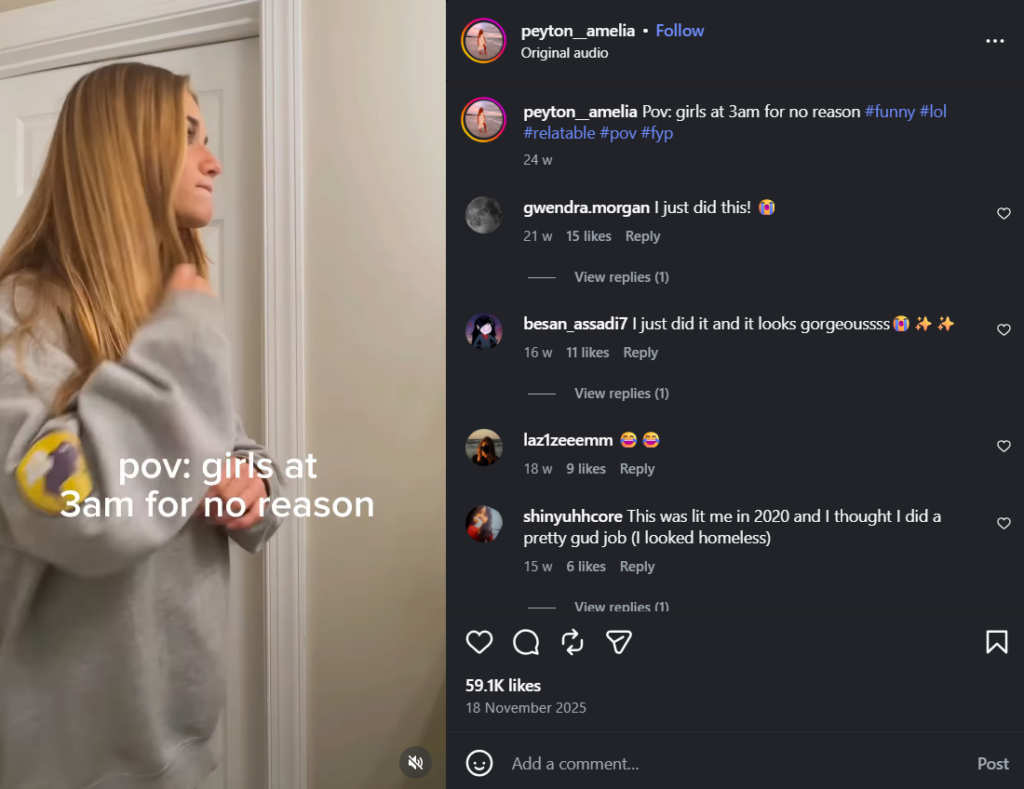
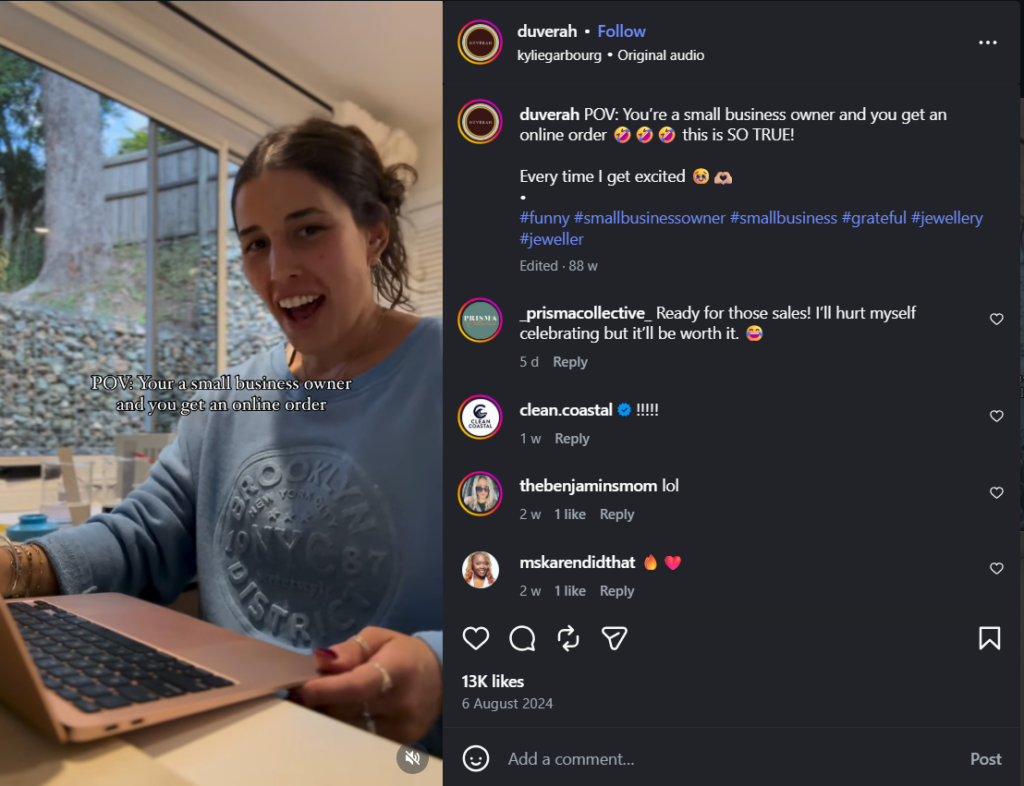
Before you hit record, answer one question: What is the viewer experiencing? The reason the angle in the above video works is that the creator chose a highly relatable experience, and it resonates, as we can see in the comment section.
This type of content tends to work best in three modes:
- Relatable/humorous — capturing a universal moment of frustration, awkwardness, or shared absurdity
- Educational — placing the viewer in the shoes of a student, new hire, or first-time user
- Aspirational/behind-the-scenes — giving access to a world or experience most viewers haven’t had
The mistake most creators make is being vague. “POV: Monday morning” is not an angle. “POV: Your alarm goes off, and your motivation is still on vacation” is an angle. Specificity is what earns the pause-and-read.
2. The Hook Caption Is Everything
The text overlay on a POV video does more work than the footage itself. It has to communicate the premise in under two seconds, spark immediate identification in the viewer, and make them curious enough to watch through.
The formula that consistently works: POV: [Who you are] + [what’s happening or about to happen]
Here is an example, where the creator nails this hook:
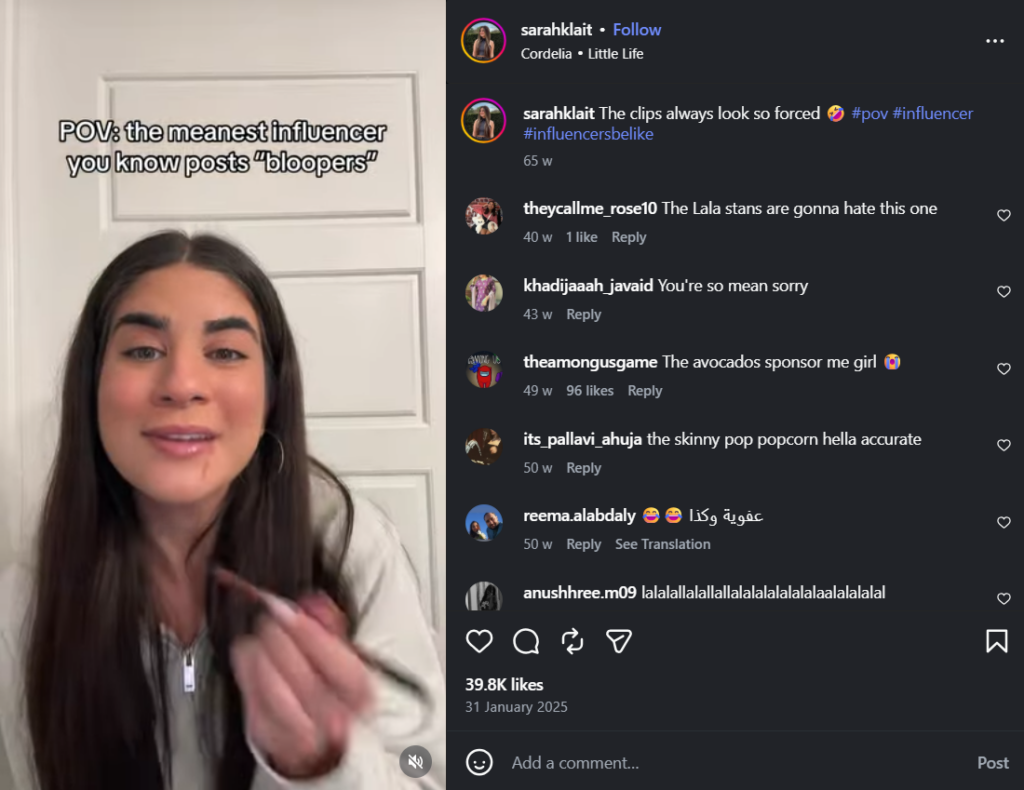
- ✅ “POV: It’s 4:55 PM on Friday, and a meeting just appeared on your calendar.”
- ❌ “POV: Work life.”
The first two drop you into a specific moment. The third makes you scroll.
3. Platform-Specific Differences
Not all POV content performs the same across platforms — and repurposing without adjustment is one of the most common reasons good ideas get buried.
| Platform | Ideal POV Style | Optimal Length | Key Factor |
|---|---|---|---|
| TikTok | Fast-paced, niche, conversational | 7–20 seconds | Trending audio + relatable premise |
| Instagram Reels | Aesthetic, lifestyle-forward, slightly more cinematic | 15–30 seconds | Visual quality + caption SEO |
| YouTube Shorts | Story-driven or educational | 30–60 seconds | Clear narrative arc, strong thumbnail text |
- TikTok rewards speed and specificity. Get your hook in the first second, not the third.
- Instagram Reels audiences are slightly more patient and respond to visual polish — the “quiet flex” aesthetic that’s dominating feeds, with neutral palettes and calm, confident energy.
- YouTube Shorts sit closer to mini-stories: the viewer expects a beginning, middle, and payoff, even in under a minute.
Why POV Works: The Psychology Behind the Format
There are three psychological mechanisms at play every time this video stops someone mid-scroll.
1. Empathy through shared experience
The best POV content taps into experiences that are common but rarely named out loud. When a caption describes something you’ve felt but never articulated, the reaction isn’t just “I get it” — it’s “someone sees me.” That emotional response is what drives saves, shares, and comments.
2. The authenticity factor
Lo-fi, unpolished content is resonating more than studio-grade productions because it feels real, relatable, and native to the platform.
POV content, by its nature, tends to look raw. A stabilized first-person shot filmed on a phone feels more trustworthy than a $10,000 brand video because it looks like something a real person made. That perception of authenticity builds trust faster than any polished ad campaign.
Common Mistakes to Avoid
1. Using POV When It Isn’t Actually POV
This one is rampant. Creators slap “POV:” on any video that doesn’t fit another format. If the caption doesn’t place the viewer inside a specific experience, you’re not making POV content marketing — you’re just using the tag as clickbait.
2. The Invisible Camera Problem
If you’re shooting first-person Point of view, the camera placement matters enormously. Looking slightly off-axis, filming against a cluttered background, rigs all break the immersion. The viewer’s brain is trying to “become” the character — and every distracting element pulls them out.
3. Generic Hooks
“POV: You’re watching this video” is not a hook. It’s a placeholder. Be specific enough that only a subset of your audience feels seen — paradoxically, that specificity is what makes the broadest number of people feel understood.
4. Ignoring the Audio Layer
POV videos pull the viewer into the situation, making them feel like they’re part of the action — and audio is 50% of that immersion. ASMR-style ambient sounds, trending audio tracks, or even intentional silence can make or break the experience.
A great visual premise with jarring background noise kills the mood instantly.
Pro Tips for POV Content in 2026
1. The 3-Second Rule is now the 1-Second Rule
On TikTok especially, your POV text and premise need to be readable and understood in the first second of playback. If the hook lands in the second three, you’ve already lost most of your potential audience.
2. Stay in character in the comments
Some of the most viral content has happened in the comment section, where creators continued the story or responded to viewers as the character. It extends the experience beyond the video and signals the algorithm that your content is generating conversation.
3. Optimize the audio for search
Social media search — especially on TikTok and Instagram — is increasingly indexing spoken audio and captions. If your POV is educational (“POV: You’re learning how to brief a designer”), say the keywords out loud. Don’t rely only on the text overlay.
4. Consider serialized POV
One-off videos can go viral, but serialized POV — where the viewer’s “character” returns across multiple videos — builds something more valuable: a reason to follow. Think of it as a recurring TV character. The viewer knows who they are every time they see your content in their feed.
POV Content Is About Invitation, Not Performance
Every social media format is ultimately asking the viewer to do something: watch, react, buy, or follow. POV asks for something different. It asks the viewer to step in.
That’s why it’s one of the few formats that works equally well for individual creators, consumer brands, and increasingly, B2B companies. More brands will likely integrate POV content into their marketing strategies, recognizing its effectiveness in humanizing their message and connecting with their audience.
Your first POV video doesn’t need a crew, a script, or a strategy deck. It needs a specific moment, a sharp caption, and the willingness to let your audience live inside it for 15 seconds. Start there. Tag what you make.
The algorithm will take care of the rest.
FAQ
Not at all. POV content can be emotional, scary, nostalgic, or purely educational. The format is emotionally flexible. Match the tone to your content and your audience, not to what you think the format “requires.”
Yes — and it’s one of the most underused tools in B2B marketing specifically. A POV that casts the viewer as a new employee discovering a software tool or a customer walking into a store for the first time instantly humanizes a brand.
Read your own comments. The moments your audience describes as relatable — in response to any of your content — are the raw material for POV scripts. Also, spend time on the For You Page and note which POV captions make you stop scrolling. If it worked on you, it’ll work on someone like you.