

Explore this content with AI:
We are currently living through a content saturation crisis. With AI now generating more content than humans, the sheer volume of “noise” makes it impossible to succeed by guessing what an audience likes. Relying on intuition is like trying to navigate a new city without GPS; you might eventually get there, but you’ll waste a lot of fuel along the way.
Social Media Analytics is the systematic process of gathering and analyzing data from social networks to inform business decisions. It transforms raw numbers—like how many people hovered over an image—into actionable intelligence, such as why they hovered but didn’t click. And this information is how you get from no direction to a clear roadmap.
The Algorithm Shift: Beyond the “Like”
The metric landscape has undergone a tectonic shift. Analytics has moved from counting passive signals (likes) to measuring Social SEO performance and Psychographic Impact.
- Social SEO: Platforms like Instagram and TikTok are now primary search engines. Analytics now tracks how well your content ranks for specific keywords within platform search bars.
- Community Impact: We no longer just measure reach; we measure “depth of connection”—how much of your content is being saved for later or shared in private DMs.
These shift from vanity metrics means it is important to impress your viewers on a deeper level, as that is what is valued by the algorithms as well.
What is Social Media Analytics?
The Core Concept
At its heart, social media analytics is about evaluating the success of human interaction. It is the “Scientific Method” applied to social media marketing: you form a hypothesis (e.g., “Educational Reels drive more leads than memes”), test it with content, and use the data to prove or disprove it.
The Scope: Looking Beyond Your Own Walls
Social analytics is no longer a “siloed” activity. It encompasses three distinct tiers:
- Owned Analytics: Your internal performance data.
- Competitor Benchmarking: Using AI to “scrape” and analyze the engagement rates of your direct rivals.
- Industry Trend Analysis: Identifying “micro-drama” or “nostalgic remix” trends before they go mainstream.
Why is it Important?
1. ROI Verification
Marketing departments are under more pressure than ever to justify every dollar spent. Analytics provides the “paper trail” from a single Instagram Story to a final website purchase, allowing you to show stakeholders exactly how social spend translates to revenue.
2. Audience Psychographics
Traditional demographics (age, location, gender) are secondary now. Data now reveals Psychographics: the values, vibes, and emotional triggers of your audience. Analytics tells you if your followers value “frugal optimism” or “high-octane luxury,” allowing you to tailor your brand voice accordingly.
3. Strategy Pivoting and Competitive Edge
Data acts as an early warning system. If a specific “content pillar” shows a 20% drop in retention over two weeks, you can pivot your strategy before the monthly budget is exhausted. Furthermore, analytics allows you to see where your competitors are “leaking” engagement—perhaps their comments are full of unanswered questions—allowing you to step in and capture that dissatisfied market share.
4. Algorithmic Favorability
Social media algorithms are essentially massive data-processing machines. By using analytics to identify high-performing content—such as posts with high initial save rates or shares—you can “feed the beast” what it wants.
Understanding these metrics allows you to trigger the algorithm’s distribution phase, ensuring your content reaches non-followers and grows your community organically rather than fighting against the system.
5. Resource Allocation & Burnout Prevention
Marketing teams often suffer from “content exhaustion” by trying to be everywhere at once. Analytics provides a heat map of effort vs. impact.
If data shows that 80% of your conversions come from LinkedIn despite you spending 50% of your time on TikTok, you can reallocate your human and financial resources to the platforms that actually move the needle, preventing team burnout on low-ROI tasks.
6. Predictive Trend Casting
Data isn’t just a rearview mirror; it’s a windshield. By tracking long-term sentiment shifts and keyword clusters, you can spot “micro-trends” before they hit the mainstream.
If you notice a gradual uptick in mentions of “sustainability” within your comment sections, you can lead the conversation with a dedicated campaign, positioning your brand as a pioneer rather than a latecomer.
7. Crisis Mitigation & Brand Health
Analytics serves as a digital “smoke detector.” A sudden spike in negative sentiment or a surge in mentions outside of your usual posting hours can signal a brewing PR crisis.
By monitoring these real-time data streams, you can address misinformation or customer service failures within minutes, protecting your brand equity before a small spark becomes a wildfire.
The Four Types of Social Media Analytics
To master the data, you must understand the distinct levels of analysis:
1. Performance Metrics (Content Health)
Analytics move beyond “vanity metrics” like likes to reveal the true vitality of your content. By tracking the Engagement Rate relative to Reach, you can determine if your content actually resonates or if it’s just passing through feeds.
This granular view helps identify which formats (e.g., short-form video vs. static carousels) drive meaningful actions, ensuring your creative energy is spent on what actually works.
2. Audience Analytics (Community Nuance)
While psychographics tell you who they are, audience analytics reveal how they behave. This involves tracking active hours, follower growth velocity, and retention rates.
Understanding these patterns allows you to optimize your posting schedule to hit peak “online” windows and identify which specific pieces of content are successfully converting casual viewers into long-term community members.
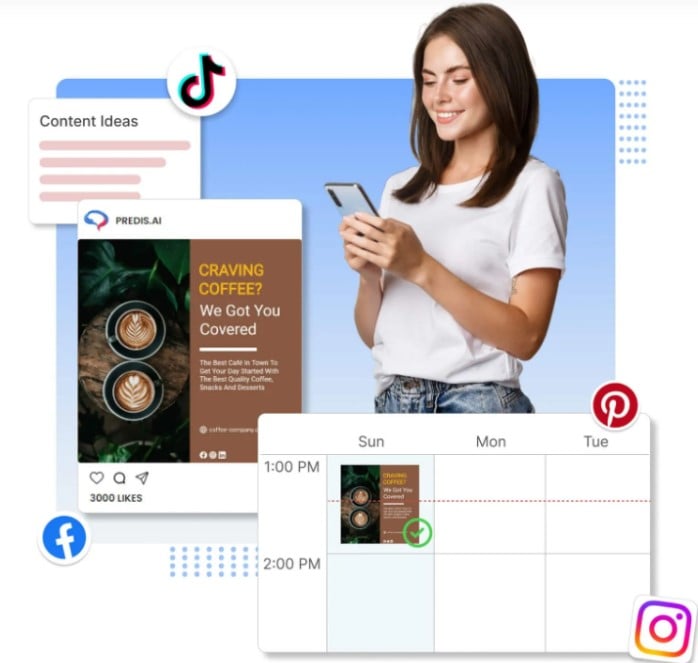
You can use tools like Predis AI to post content regularly. Based on the engagement rates, the AI will analyze and suggest active times that are tailored to your audience. This way, you can take the guesswork out of the equation.
3. Branding Analysis (Sentiment & Voice)
This is about measuring the “vibe check.” Branding analysis uses sentiment tracking to see if the conversation surrounding your brand is positive, neutral, or negative. It allows you to see if your intended brand voice is actually being perceived correctly by the public, providing a clear mirror to show if your messaging is landing with the intended emotional impact.
4. Competitor Analytics (Market Benchmarking)
You don’t operate in a vacuum. Competitor analytics allow you to benchmark your growth against industry rivals to see if your “slump” is a brand issue or a platform-wide trend.
By analyzing their most saved or shared posts, you can identify white space in the market—content gaps they are missing—that your brand can step in to fill.
With Predis AI, you can automate competitor analysis as well. Instead of pulling data from multiple sources and cross-verifying it manually, you can simply input your competitor’s social media handles and get the whole data in a single dashboard within minutes.
Similarly, if you are building a SaaS analytics product, internal reporting tool, or marketing performance platform, using a shadcn admin dashboard can help you create a polished dashboard interface with charts, tables, filters, and responsive layouts faster. You can also use a pie chart creator to visualize complex social media data and make performance insights easier to understand.
5. Paid Social Media Analytics (Budget Precision)
When real dollars are on the line, “guessing” isn’t an option. Paid analytics allow you to calculate the exact Cost Per Acquisition (CPA) and Return on Ad Spend (ROAS). By A/B testing creative elements through data, you can kill underperforming ads quickly and scale the “winners,” ensuring your paid budget works as a multiplier rather than a drain.
6. Influencer Analytics (Vetting & Validity)
In an era of “bought” followers, analytics act as a lie detector. Before partnering with creators, you can analyze their audience authenticity and historical performance. Post-campaign, these metrics show you if an influencer actually drove traffic or if they just provided high-level awareness, allowing for more data-driven partnership decisions.
For brands that do not have the budget for an influencer campaign, getting AI UGC video creators is the best option. These video makers are fast, easy to make changes to, and much less expensive than hiring an influencer to do your bidding.

Metrics: Choosing the Right Ones
The Hierarchy of Metrics
Not all data is created equal. They can be categorized into three buckets, and you have to choose the right metric based on what your campaign goals are:
| Category | Primary Metrics | Why It Matters |
| Awareness | Reach, Share of Voice | Determines if you are even “in the conversation.” |
| Engagement | Saves, Shares, Watch Time | Saves and Shares are now the “Gold Standard.” They signal high value to the algorithm. |
| Conversion | CTR, Sales, Lead Gen | The final proof of social media’s business value. |
The “Vanity vs. Value” Litmus Test
A post with a million views but a 0% conversion rate is a Vanity Metric. In contrast, a high-intent B2B post with only 100 views but 5 high-quality leads is a Value Metric. You have to prioritize the latter as conversions are where the money is.
The Role of AI in Social Media Analysis
AI is no longer just a “helper”—it is the engine of the analytics department. By delegating the number game to AI, you can focus on the creative side that requires more of your time.
- Pattern Recognition: AI can scan thousands of Reels in minutes to identify which visual hooks (e.g., a specific “green screen” layout) are currently holding attention longest.
- Sentiment Analysis: Modern Natural Language Processing (NLP) can distinguish between a user being genuinely excited and a user being sarcastic in the comments.
- Visual Intelligence: Platforms now use computer vision to “read” your video content without needing hashtags. Analytics tools use this same tech to tell you which objects or settings in your videos drive the most engagement.
- Predictive Analytics & Content Suggestions: AI tools like Predis.ai forecast post performance before you publish, generating tailored content ideas and creatives that bridge the gap between raw data and viral-ready execution.
- Optimal Posting Windows: By analyzing your specific followers’ real-time activity patterns, AI eliminates generic scheduling guesswork to pinpoint the exact minute your content will achieve maximum organic reach.
How to Track and Use Social Media Analytics
The Feedback Loop
The most successful brands operate on a continuous loop:
- Track (Collect data) > Analyze (Find patterns) > Optimize (Change the creative) > Repeat.
By incrementally improving your social media strategy through analysis, you get to keep your customers engaged, content thriving, and sales pipelines full.
Using Predis.ai for Deep Insights
Tools like Predis.ai have revolutionized the “Post-Level” analysis. Instead of just seeing how a post did, you can see a breakdown of why it worked compared to your rivals.
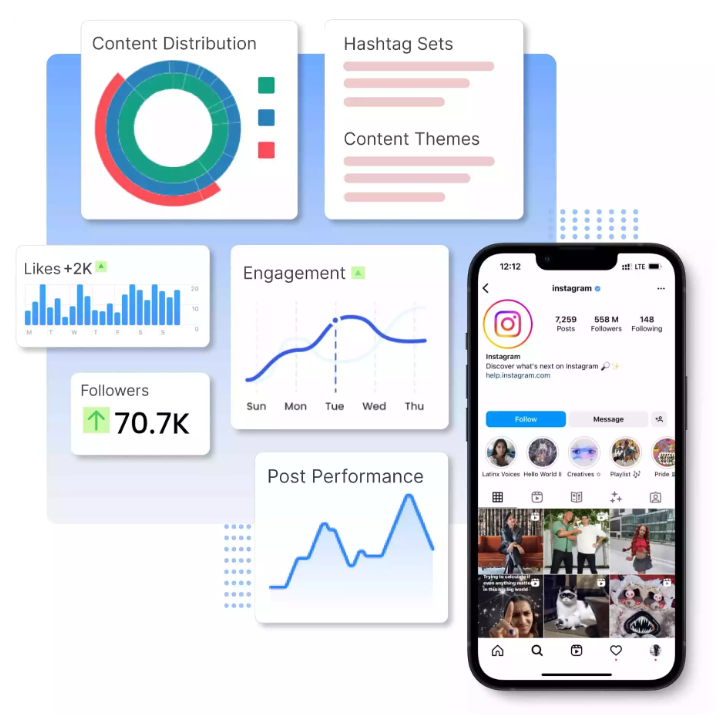
- Competitor Analysis: You can “spy” on a competitor’s most successful content pillars, seeing exactly which topics are giving them their highest engagement spikes.
- Content Audit: Use AI to identify “content gaps”—topics your audience is searching for that neither you nor your competitors have covered yet.
Incorporate AI into your analytics to enhance optimization and uncover patterns that could have slipped your gaze.
Essential Tools for Social Media Analytics
Getting the numbers behind your post is easier than you think, thanks to these platforms:
- Native Analytics: Instagram Insights and TikTok Creator Center remain the best for real-time, platform-specific engagement data. Without leaving the platform, you can access a wealth of information that you can use.
- Predis.ai: The leader for AI-driven competitor benchmarking and visual trend analysis. The key advantage is that it pulls data from multiple platforms and compiles it into a single dashboard, making analysis easy.
- Google Analytics 4 (GA4): Indispensable for tracking the “Social-to-Web” journey and calculating Customer Lifetime Value (CLV). This also helps make attribution easy if you can use it properly.
- Hootsuite/Sprout Social: Best for high-level aggregation across multiple brands and platforms.
Best Practices for Data-Driven Success
- Consistent Reporting: Check engagement daily, but only change your strategy based on monthly trends. Strategy requires a significant sample size.
- Context is Everything: High reach isn’t always good if the sentiment is negative. Always pair quantitative data (numbers) with qualitative data (sentiment).
- A/B Testing: Stop arguing over which headline is better. Run both for 24 hours, look at the CTR, and let the audience decide the winner.
Conclusion: Listening is the New Leading
Social media analytics is about more than just numbers on a screen; it is the most sophisticated form of “listening” in human history. The brands that win are the ones that don’t just broadcast—they observe, adapt, and respond to the data.
If you aren’t looking at your analytics, you aren’t marketing; you’re just making noise. Don’t make that mistake.
Ready to see what your data is actually telling you? Start your first AI-powered competitor audit today and uncover the hidden opportunities in your niche.
FAQ
Shares and Saves are the primary metrics now. They signal “high value” and “utility” to the algorithm, which triggers wider distribution than likes or comments.
Yes. Every major platform provides native “Professional” or “Creator” insights for free. Google Analytics for web is also a free platform that you can leverage.
Check daily to catch anomalies or engage with fans, but perform a deep-dive strategy audit once a month.