


Explore this content with AI:
One filter rules the world. But the story gets interesting after that.
Instagram users in 119 countries filter most of their photos with Clarendon — an almost implausible level of consensus for a platform that spans vastly different cultures, aesthetics, and visual traditions. And yet, once you look past the top spot, the data tells a genuinely fascinating story about how regional beauty standards, cultural vibes, and content categories quietly shape which filter gets tapped.
This isn’t just a list. It’s a window into how different parts of the world see — and want to be seen.
Why Instagram Photo Filters Are About More Than Aesthetics
Before diving into the data, it’s worth establishing why filter popularity is a meaningful signal and not just a design preference.
Filters are a proxy for cultural values around visual presentation. These filters aren’t random choices — they reflect what a given culture considers “natural,” “aspirational,” or “beautiful” in a photo.
There’s also the gap between most-used and most-liked. The filter that gets the most likes is the one that resonates emotionally with the viewer — and those two things are often very different.
Filtered photos receive 21% more views and 45% more comments than unfiltered ones, which proves Instagram photo filters aren’t aesthetic vanity — they’re an engagement mechanism. But choosing the right filter for the right context is where the performance gap opens up.
One Filter Rules the World: Clarendon
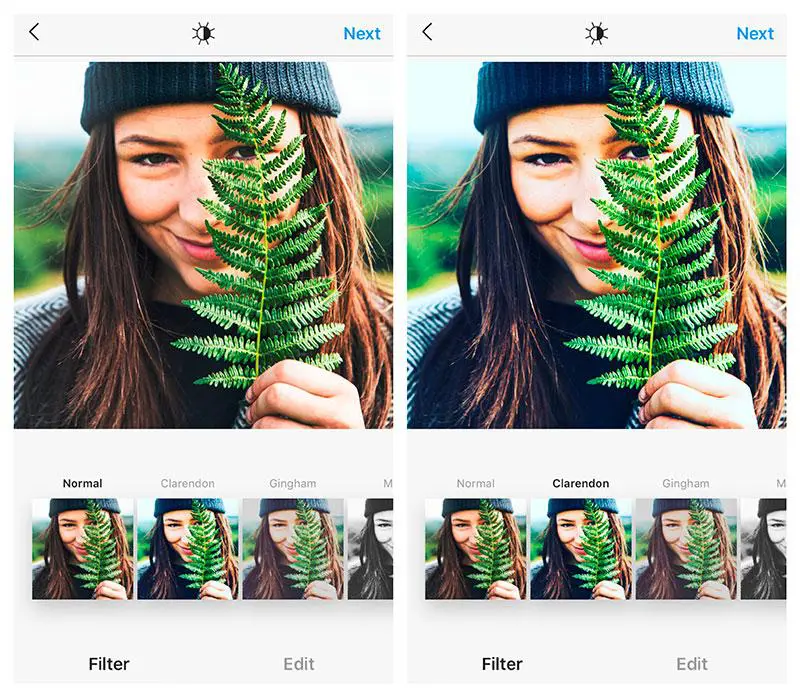
Clarendon tops the list of most used Instagram photo filters in every single U.S. state — probably because it’s an all-purpose filter that brightens, highlights, and intensifies shadows for color that pops. Another potential reason for the number one spot: Clarendon is typically the default filter after the Normal option in the editing interface.
That last point deserves more credit than it usually gets. Position in the UI is not a coincidence on a platform designed by engineers who study engagement at scale. Clarendon being first means it gets tried first, which becomes a habit, which becomes dominance.
Portraits, food, landscapes, cityscapes – Clarendon is genuinely versatile in a way that most filters aren’t, and that versatility is what cemented its global position.

One Filter Rules the World — But the Story Gets Interesting After That
Clarendon — The Undisputed Global Default
Clarendon’s dominance is a masterclass in User Experience (UX) design. When Instagram redesigned its filter lineup, it moved Clarendon to the front of the line. Before this, users had to scroll through dozens of options; by placing Clarendon first, Instagram essentially “voted” for us.
- The Physics of the Filter: Clarendon works by targeting the mid-tones of an image. It uses a “Dodge and Burn” technique algorithmically: it brightens the highlights and darkens the shadows simultaneously.
- The Signature Cyan: Why blue? In color psychology, cyan/blue highlights are associated with “clarity” and “cleanliness.” In a world of yellow-tinted indoor lighting, Clarendon acts as a digital corrective lens, making even a dingy living room look like a professional studio.
The Gap Between Popularity and Performance
While usage data shows what we do out of habit, engagement data shows what we actually enjoy. A study revealed that while Clarendon is used on many filtered posts, it only ranks in the middle of the pack for “Time Spent per Image.”
In contrast, filters like Mayfair—which adds a soft pink glow—tend to stop the scroll for longer. This suggests that “default” filters are great for the creator (ease of use), but “nuanced” filters are better for the viewer (aesthetic delight).
The Global Filter Map — Which Instagram Photo Filters Win Where
1. North America — The Battle of the States
In North America, the choice of filter is often a proxy for lifestyle branding.
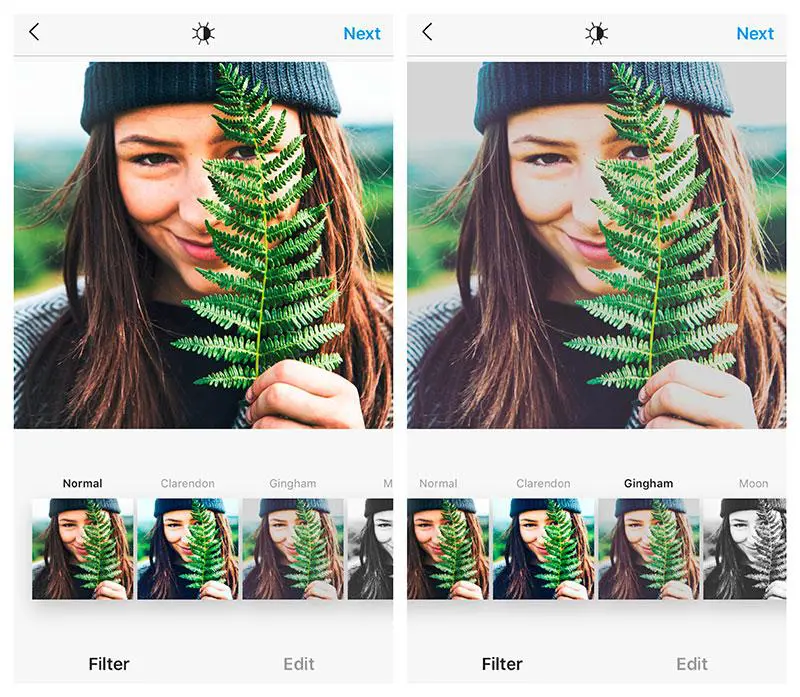
- The Gingham “Vibe”: In the Pacific Northwest, Gingham’s desaturated look mimics the natural fog and overcast skies of Seattle or Portland. It feels “authentic” to the environment. It removes the “digital shine,” giving photos a matte finish that looks like they were shot on a Fujifilm disposable camera.
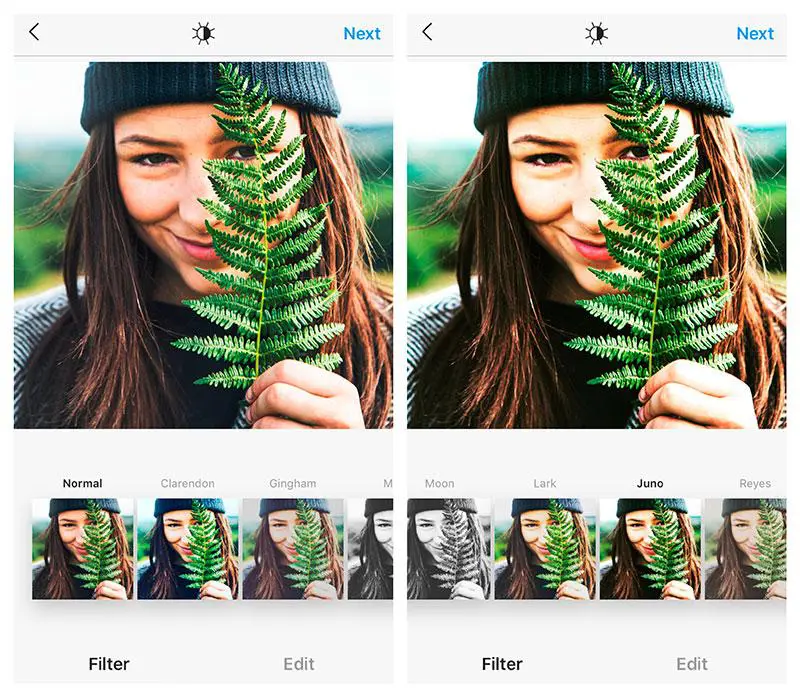
- The Juno “Energy”: In the American South and Florida, the high humidity and bright sun create a lot of “harsh” light. Juno’s ability to warm up the reds and oranges complements the tan skin tones and sunset-heavy content produced in these regions.
2. Europe — Artistic Subtlety
Europeans have long championed the “anti-filter” movement, but when they do filter, it’s about artistic intent.
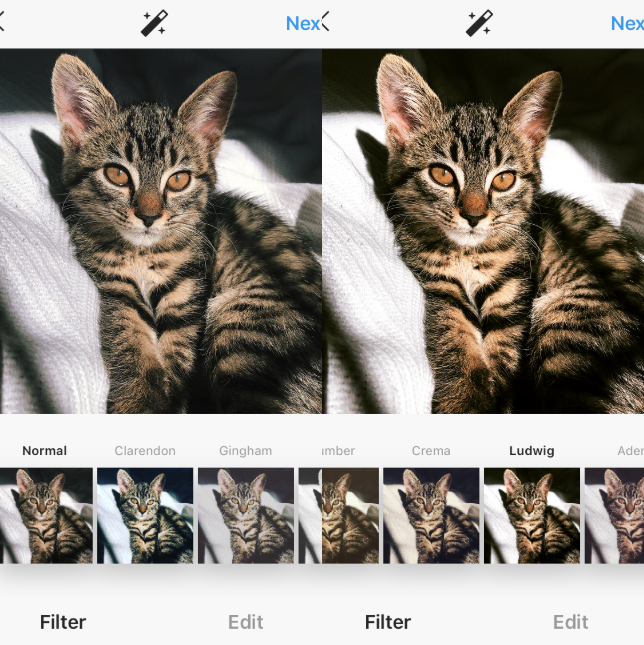
- Ludwig as Minimalism: Named after the architect Ludwig Mies van der Rohe (the “Less is More” pioneer), this filter is the gold standard in Northern Europe. It strips away unnecessary color information, emphasizing the photo’s structural integrity. It’s the favorite of the Berlin and Stockholm architecture scenes.
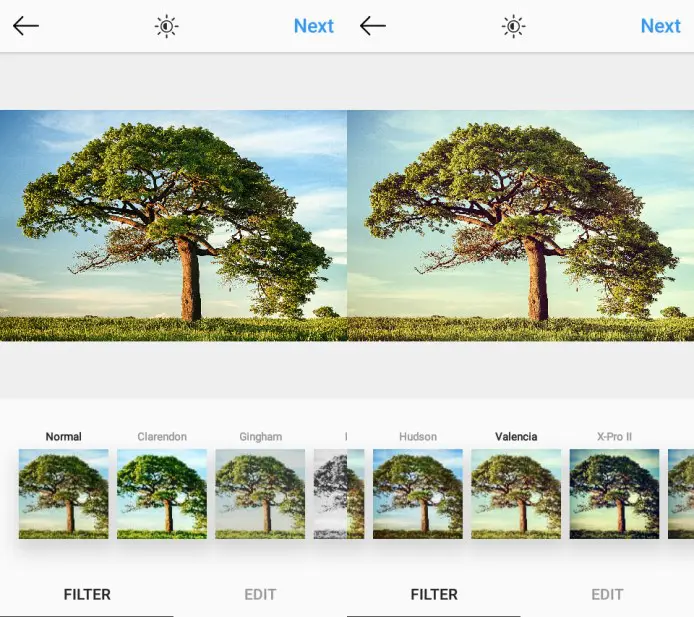
- The Valencia Warmth: Why does Valencia rule the Mediterranean? It mimics the natural “Golden Hour.” Adding a subtle yellow fade, it makes the ancient stones of Rome or the coastlines of Greece look like a memory from a dream.
3. Asia — The Pursuit of Softness
In many Asian markets, particularly South Korea and Japan, the trend is “Glass Skin” aesthetics.
- Slumber and Sierra: These filters act as a “low-pass filter” for the face. They reduce the “micro-contrast” (the tiny details like pores or fine lines) while maintaining the overall shape of the subject.
- High-Key Lighting: Asian users often prefer “high-key” photography—where the image is very bright with very few dark shadows. Filters that “crush” the blacks (making them gray or faded) are essential for this look.
Which Instagram Photo Filters Have Survived, and Which Ones Didn’t
The filters with long-term staying power share a single characteristic: they work with the image rather than imposing something on top of it. Clarendon, Juno, Valencia, and Gingham enhance what’s already present.
The filters that peaked and then faded — Lo-Fi, Kelvin, Earlybird, heavy X-Pro II usage outside Latin America — were products of a specific cultural moment. Early-2010s Instagram celebrated visible stylisation: strong vignettes, HDR-style processing, dramatic tonal compression.
That era ended when authenticity became the platform’s dominant value. Heavily processed images began signalling inauthenticity rather than artistry, and the filters associated with that look were quietly abandoned.
What Instagram Photo Filters Popularity Tells Marketers
1. Build Consistency by Choosing 2–3 Core Filter Styles
If you are a brand, you shouldn’t just “pick a filter.” You should build a Visual Style Guide.
- The “Heritage” Look: Use Valencia or Gingham for a brand that wants to feel established, nostalgic, and trustworthy.
- The “Tech” Look: Use Ludwig or Clarendon for a brand that is forward-thinking, clean, and high-energy.
- The “Lifestyle” Look: Use Juno or Slumber for a brand that is about comfort, warmth, and human connection.
2. Filter Preference by Content Category
- Nature and Landscapes: You want Dynamic Range. Filters like Valencia or No filter can pull detail out of the clouds and the shadows.
- Fashion: You want Color Fidelity. If you use a filter that turns a “Navy” dress into “Black,” you will face high return rates and unhappy customers. Stick to Ludwig or Normal.
Best Filters by Content Type
1. Selfies and Portraits: The #NoFilter Revolution
While Slumber is the top-performing filter for selfies, the real winner is the “Edited, but No Filter” tag. Using the manual adjustment tools (Brightness $+5$, Saturation $-2$, Warmth $+3$) often outperforms a preset filter because it looks “unfiltered” to the untrained eye, fostering a sense of intimacy and trust with the audience.
2. Urban and Street Photography
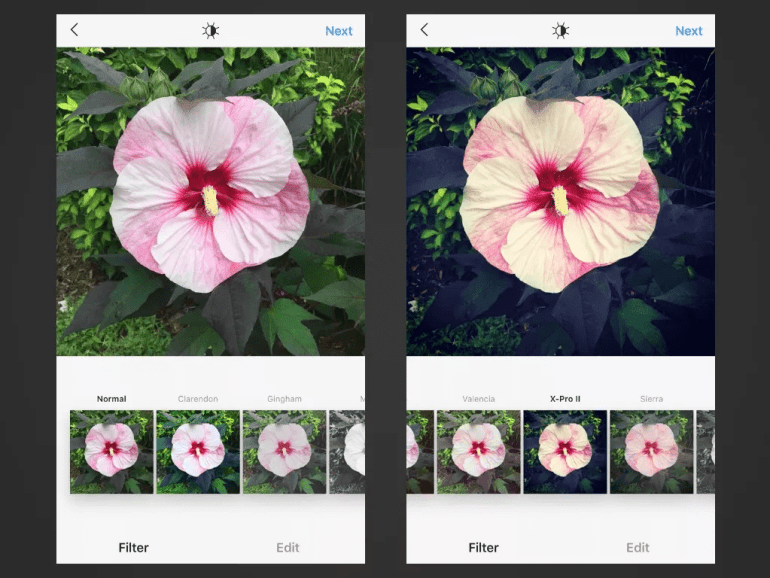
For the urban photographer, the goal is to emphasize texture—the cracks in the sidewalk, the rust on a railing, the glow of a neon sign. X-Pro II is the secret weapon here. It creates a “Lomo” effect that makes modern digital photos look like they were captured on high-contrast film from the 1990s.
3. Food Photography
Warm and bright wins without exception. Skyline leads in average likes per food post, driven by its colour intensification and brightness boost. Unfiltered content comes in a close second — a sign that the #nofilter approach has merit when the image is genuinely strong.
Valencia and Clarendon follow. Cool, muted, or low-contrast filters consistently suppress food photography performance by reducing the visual appeal that warm, saturated images create.
4. Nature and Landscapes
Unfiltered nature images outperform most filtered equivalents in average engagement. The outdoor photography community has a strong #nofilter ethos, and the data backs it up.
Where filters do improve nature content, warm-leaning ones work best: Brooklyn adds a flattering warmth that suits golden-hour landscape light, Amaro lifts brightness without distorting natural greens, and Lark’s enhancement of blue and green tones makes skies and water read as vivid without looking manipulated.
5. Minimalist and Editorial
The minimalist aesthetic lives in the desaturated end of the filter spectrum. Ludwig leads — it’s controlled quality of enhancing light while pulling back colour suits editorial and design content with precision. Aden offers a softer, dreamier variant. Inkwell and Willow belong in this category when the image has enough tonal contrast to carry the absence of colour.
| Content Type | Best Filter | Strong Second | Solid Third |
|---|---|---|---|
| Food | Skyline | Normal | Valencia |
| Nature & Landscape | Normal | Brooklyn | Amaro / Lark |
| Selfies & Portraits | Normal | Slumber | Aden |
| Fashion & Style | Valencia | Nashville | Kelvin |
| Urban & Street | Juno | Ludwig | X-Pro II |
| Minimalist & Editorial | Ludwig | Aden | Inkwell |
Choose Deliberately, Not by Default
Clarendon will keep dominating usage statistics for as long as it sits first in the filter queue and performs adequately across content types. But usage and effectiveness are two separate metrics — and the gap between them is where intentional creators and brands find their advantage.
The filter decision is ultimately a question of what you’re trying to communicate and to whom. A warm, high-saturation feed signals energy, vibrancy, and accessibility. A cool, minimal feed signals precision, restraint, and editorial seriousness. Neither is universally correct — both are correct for the right audience and the right content strategy.
Building familiarity with them right now puts you ahead of the accounts that will figure this out only after starting to post content.
FAQ
If you are a creator, #NoFilter (or manual edits that look like no filter) is best for building trust. If you are a brand, a consistent filter is better for “brand recall”—helping people recognize your post in their feed before they even see your username.
Filters like “Gotham” were removed because they were “destructive”—they deleted too much data from the photo, making it look low-quality on the high-resolution screens.