

Explore this content with AI:
More posts do not mean more reach. That’s the counterintuitive truth platform data keeps confirming, and it’s the reason most posting frequency advice is actively hurting the accounts that follow it.
The right answer isn’t a universal number — it’s a function of your platform, your content quality, your team’s capacity, and your business type. This guide breaks all of that down, platform by platform, with a framework for finding the frequency that actually works for your specific situation.
The Quick Answer: How often should a business post on social media
Before diving into the nuance, here’s the data-backed starting point. These are recommended ranges for business accounts — not content creators or media publishers — based on current platform behavior and engagement studies.
| Platform | Recommended Frequency | Top-Performing Format | Key Signal |
|---|---|---|---|
| 3–5x/week | Reels + Carousels | Saves, shares, watch time | |
| 1–2x/day | Text posts, native docs | Dwell time, comments | |
| 1–2x/day | Video, link posts | Shares, comments | |
| TikTok | 3–5x/week | Native vertical video | Completion rate, shares |
| X (Twitter) | 2–3x/day | Threads, short takes | Replies, reposts |
| YouTube (long-form) | 1–2x/week | Educational video | Watch time, subscribes |
| YouTube Shorts | 3–5x/week | Vertical clips | Views, follows |
The “post every day” rule is outdated — not because consistency doesn’t matter, but because daily posting without content quality and engagement signals actively suppresses reach on most platforms. What replaced it: value-per-post frequency, where the platform rewards fewer, higher-quality posts over higher-volume, lower-engagement content.
The one variable that matters more than frequency: content quality relative to your niche’s baseline. A business posting three exceptional Reels a week will consistently outperform one posting seven mediocre ones.

Instagram isn’t one content type — it’s three, and each has its own logic.
1. Reels

Reels drive reach to non-followers. They’re Instagram’s primary distribution engine for new audience acquisition. For businesses, 3–4 Reels per week is the current sweet spot. Above that, production quality tends to drop, which weakens watch-time and share signals.
2. Carousels
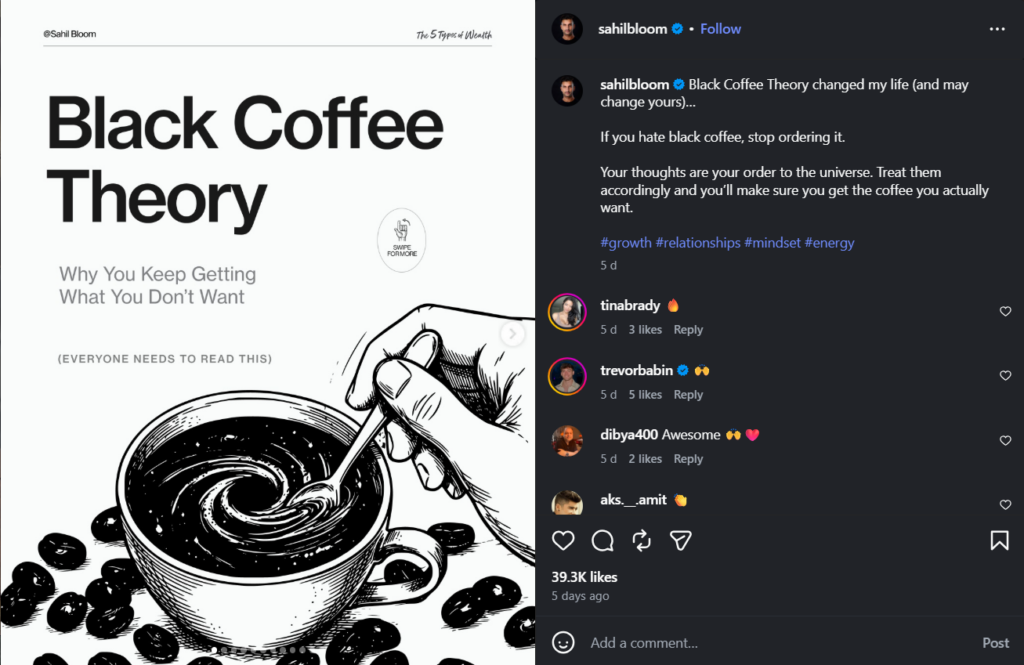
Carousel drives saves from existing followers. They’re the format that earns the “come back to this later” behavior — checklists, frameworks, step-by-step guides. 1–2 carousels per week, timed for when your existing audience is most active, are sufficient.
3. Stories

Stories are relationship maintenance, not reach. They don’t grow your audience, but they retain it. 2–3 frames per day keep you top-of-mind without fatiguing your followers.
For small business accounts, the priority is Reels frequency over everything else — this is where new followers come from. For mid-size accounts, carousels and Reels in combination tend to produce the best engagement-to-reach ratio.

LinkedIn’s algorithm has one behavior that separates it from every other platform: it heavily penalizes high-volume, low-value posting. Post five times in one day, and your organic reach collapses. Post once with a high-dwell-time text post that generates real comments, and the algorithm pushes it for 48–72 hours.
- For B2B brands and SaaS companies, 3–5 posts per week is the range where most accounts see consistent performance.
- Founder-led personal accounts, 3–4 posts per week, often produce stronger results than more.
Posts that generate genuine disagreement or strong agreement in the comments outperform polished, safe content by a wide margin.
Facebook’s organic reach for business pages is low relative to its audience size — but it hasn’t disappeared entirely, particularly for video content and community-driven posts.
For business pages, 1–2 posts per day is the practical cadence. An account that posts three videos per week, every week, builds algorithmic momentum differently from one that posts an erratic mix of link shares, photos, and occasional videos.
Facebook Groups operate under a completely different logic. Groups with active moderation and daily member interaction can support much higher posting frequency (daily or multiple times per day) because the engagement happens within a closed, high-trust environment.
TikTok
TikTok’s discovery algorithm doesn’t primarily serve your content to your existing followers — it tests content against small sample audiences and expands distribution based on completion rate and shares.
For business accounts, 3–5 posts per week are the recommended range. Daily posting is achievable and strategic. After 90 days of consistent posting at this cadence, most accounts see a meaningful inflection point in follower growth.
The trade-off: production quality still matters for completion rate, but TikTok’s baseline for “good enough” is lower than Instagram’s. A well-lit, fast-paced, clearly spoken 45-second video outperforms a polished, over-produced one that takes 15 seconds to get to the point.
X and Threads
X (Twitter) rewards volume in a way that feels counterintuitive after reading about LinkedIn.
One good thread per week, combined with 1–2 standalone posts per day and active replies, is a sustainable frequency for most business accounts.
Threads is still in an early-mover phase. Accounts posting 2–4 times per day are seeing outsized reach relative to follower count because the algorithm is still seeding the platform’s feed with content from active accounts. The frequency advantage won’t last — use it while it’s available.
What Most Businesses Get Wrong: Posting Frequency
Three things that derail businesses regarding frequency benchmarks:
1. Treating all platforms the same
Copying your LinkedIn frequency to Instagram or your TikTok volume to Facebook produces worse results on both. Each platform has its own engagement culture, algorithm logic, and audience behavior. Frequency decisions should be made per platform, not applied universally.
2. Confusing algorithm frequency with audience fatigue
The frequency that the algorithm responds to and the frequency that your specific audience tolerates are different numbers. An algorithm may reward 7 TikTok posts per week, but if your audience consists of professional buyers who find daily posting annoying, the follower churn will offset the reach gains. Know both numbers.
3. Copying competitor frequency
A brand posting twice per day on Instagram with a 15-person content team isn’t a benchmark for a solo founder. They have a content pipeline you don’t. Matching their frequency without matching their production infrastructure produces lower-quality content at higher volume — which is worse than posting less.
How to Find Your Optimal Posting Frequency: A 4-Week Test
Industry benchmarks are a starting point. Your data is the real answer.
Weeks 1–2: Baseline measurement. Post at your current frequency and record reach, engagement rate, saves, shares, and new follows per post across each platform. This is your control group.
Week 3: The frequency experiment. Increase or decrease your posting frequency by one post per platform per week. Keep content quality constant — this is a frequency test, not a content quality test.
Week 4: Read the signals. Compare reach rate (reach ÷ followers), save rate, and follower gain between the baseline and the experiment period. The frequency that produced better results on all three metrics is your new benchmark.
Run this test quarterly. Platform algorithms shift, audience behavior changes, and your content quality evolves. A frequency that was optimal six months ago may be under- or over-serving you now.
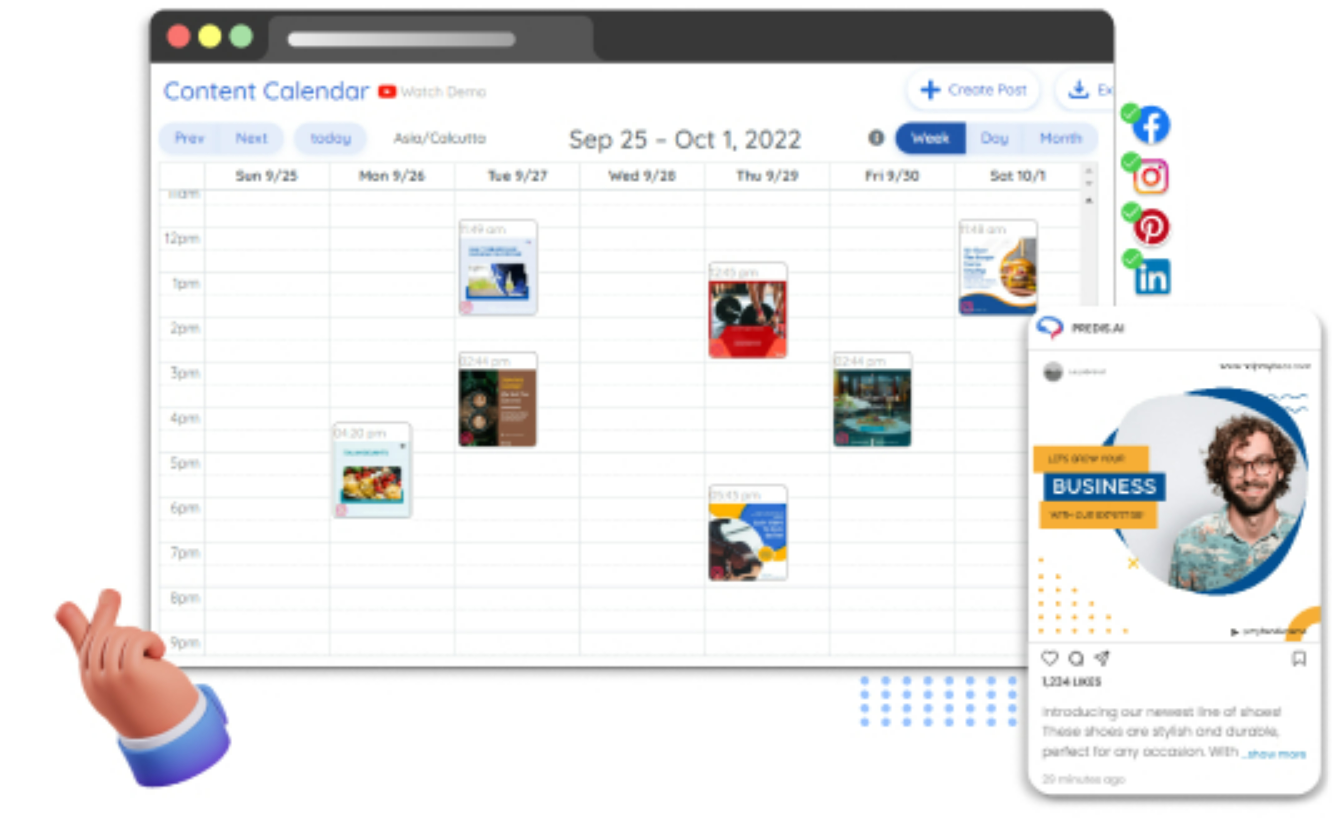
Tools like Predis AI’s content calendar make the scheduling side of this test straightforward — you can map out the full 4-week cadence across platforms, schedule posts in advance, and review performance data without manually tracking every post.
The Posting Frequency Decision Matrix
Most guides tell you how often to post without asking whether your team can sustain it. Frequency that exceeds your content production capacity leads to declining quality over time, which in turn leads to declining reach — the opposite of the intended result.
Signs you’re posting more than your quality can support:
- Engagement rate is declining week-over-week
- Follower growth is stalling despite increased frequency
- Your team is cutting corners on visual quality
The minimum viable posting schedule — what to protect when resources get tight:
- One Reel per week on Instagram
- Two posts per week on LinkedIn
- Daily activity (replies, not just posts) on whichever platform your buyers use most.
The Bottom Line
The optimal posting frequency for your business is the highest cadence at which you can consistently produce content worth saving, sharing, or engaging with. That number is different for a solo founder than for a content team. It’s different on TikTok than on LinkedIn. And it changes as your production capacity and audience grow.
Run the 4-week test. Start with the platform-specific benchmarks in this guide. Let your data refine it from there. The brands that post less but better — consistently, at the right times, in the right formats — are the ones whose content shows up when it matters.
FAQs
Start with 3–4 posts per week on your primary platform and 2–3 on a secondary one. Focus on the platforms where your specific customers spend time — not where you feel you “should” be. Sustainable consistency at lower frequency outperforms bursts of high-volume posting.
It can. When posts go out too close together, they compete for the same audience distribution window and dilute each other’s engagement signals. Space posts by at least 6–8 hours. Quality and engagement rate matter more than raw volume.
Content pillar planning and batch creation solve this. Define 3–5 topic pillars, plan one month of posts at a time, and record or write in batches rather than one post at a time. A single topic idea can produce a TikTok, a carousel, a LinkedIn text post, and an X thread — four posts from one idea.