

Explore this content with AI:
The digital landscape has undergone a tectonic shift. We have moved from the Social Graph (where you saw what your friends posted) to the Interest Graph (where AI shows you what you value, regardless of who you follow).
This means your brand is no longer competing with your direct rivals; you are competing with every high-dopamine video, news headline, and AI-generated meme on the internet. To win, you must stop “broadcasting” and start “positioning.” And this is where knowing how to build a brand on social media comes in clutch.
The Core Definitions: Decoding the Buzzwords
Before you can build a brand on social media, you have to understand exactly what you are constructing. Many marketers use these terms, brand, branding, and brand building interchangeably, but they are functionally very different. By knowing what these mean, you know what you have to do clearly.
- What is a Brand? A brand is not a logo. It is the gut feeling someone has when they hear your name. It is the “intangible perception” that lives entirely in your customer’s mind. For example, when you look at Hermes, you instantly think of exclusivity and luxury. Why? Because they have meticulously built that perception in their customers’ minds.
- Why is Branding Important? Branding is the process of establishing this brand feeling by the strategic use of brand elements like logo, colors, and more. These elements are placed in all marketing, sales, and product materials so that they become instantly recognizable.
- Brand vs. Branding vs. Brand Building:
- Brand: The Identity (Who you are at your core).
- Branding: The Blueprint (The visual and verbal cues—logos, fonts, and tone—that tell people who you are).
- Brand Building: The Construction (The daily, ongoing work of social media posts, DM replies, and customer service that turns the blueprint into a reality).
Why Social Media is the Engine of Brand Growth
Social media is no longer an “optional” marketing channel; it is your brand’s operating system. With most of the advertising happening on social media, it is only natural that brand building happens there as well. Apart from that, here are some reasons why using social media is the best choice for brand building:
- Discovery over Search: Statistics show that over 60% of product discovery happens on TikTok, Instagram, and YouTube. If you aren’t there, you aren’t “findable.” By building your brand here as well, you become recognizable instantly.
- Real-Time Feedback: Social media allows for “Social Listening.” You can see exactly how people react to your brand in seconds, allowing you to pivot before a minor issue becomes a PR crisis.
- Direct Audience Engagement: It enables real-time, two-way dialogue that transforms your business from a faceless entity into an accessible and relatable partner for your customers.
- Value-Based Communication: The platforms provide a continuous stage to demonstrate your mission and ethics, helping you attract customers who align with your brand’s core principles.
- Relationship Lifecycle Management: You can provide immediate support and value through DMs and comments, turning a one-time purchaser into a loyal, long-term advocate.
- Strategic Product Distribution: Social media simplifies the buying journey by integrating “one-tap” shopping features that allow users to purchase the moment they discover your product.
- Scalable Market Discovery: Interest-based algorithms actively push your content to new, high-intent users who haven’t discovered your brand yet, significantly increasing organic visibility.
Anatomy of a Strong Social Media Brand Presence
A “strong presence” isn’t about being loud; it’s about being unmistakable. It is the ability to be recognized even without a logo or any other element.
- Visual Cohesion: Your audience should recognize your content before they even see any of your elements. This means using a consistent “visual language”—the same color grading on your videos, the same typographic hierarchy on your carousels, and a consistent “avatar” across all apps.
- Conversational Speed: 73% of consumers say they will switch to a competitor if a brand doesn’t respond on social media. Your “brand” is defined as much by your DM response time as by your high-production-value videos.
- Established Visual Identity: A distinct and uniform aesthetic across all platforms ensures your content is immediately recognizable in a crowded feed before a user even reads the account name.
- Defined Verbal Tone: Developing a specific, consistent way of speaking—whether professional, witty, or authoritative—allows your brand to convey a clear personality that resonates with your target demographic.
- Narrative Engagement: Sharing the ongoing journey, challenges, and successes of your business builds an emotional connection with your audience, moving beyond transactional interactions to genuine brand loyalty.
- Operational Uniformity: Maintaining a regular posting schedule and a steady message across different channels builds professional trust and ensures your brand remains a reliable fixture in your followers’ daily digital experience.
The Four Steps of the Brand Building Process
Building a brand on social media is a structured journey, not a series of random acts. Following this four-step model ensures your foundation is solid. Let us look at how the brand-building process goes step by step:
- Brand Identity (Who are you?): Define your core promise. If you could only be known for one thing, what would it be? This includes your mission, vision, values, and everything in between.
- Establishing brand elements: This is where you develop your identity. It involves choosing colors, fonts, and a logo based on your brand identity. Aligning your brand elements with your identity translates your personality into posts.
- Develop a strategy: Now, it is time to take your elements and build guidelines that anybody can take and convert into a post. This can be everything from a style guide, brand kit, to establishing rules on their usage.
- Implementing the plan: Once the final guidelines are drawn up, it is up to you to ensure that every post created is in accordance with them. Everything from your Zoom background to email newsletters, all of it needs to be made according to the style guide.
10 Strategies on how to build a brand on Social media
1. Educational Authority
Share “How-to” guides that solve your audience’s biggest pain points for free. When you consistently share high-value info—like a quick tutorial or a checklist that solves a real problem—you’re proving you’re the real deal. It’s a smart way to build a ton of trust for free, so when they’re finally ready to spend money, you’re the only person they want to buy from.
2. Radical Transparency
Show the “Behind the Scenes” (BTS). The “messy” human side of your business is your greatest asset in a world where businesses feel so detached.
When you’re honest about the ups and downs, it makes your brand feel human and approachable. It’s about moving away from the “corporate robot” vibe and building a relationship based on honesty. When followers see the actual faces and the hard work behind the scenes, they don’t just see a product—they see people they want to root for and support.
3. Employee Advocacy
Let your team speak. People trust people more than they trust corporate logos.
It’s a win-win because it expands your reach far beyond your main page, and it puts a human face on your brand. When your team talks about their work with genuine passion, it proves that your company values are real and not just something written on a website. It’s one of the fastest ways to build trust because people would much rather buy from a person they “know” than a faceless corporation.
4. UGC (User-Generated Content)
It’s essentially when your fans post their own photos, videos, or reviews of your product, and you share that content on your own channels. In 2026, a “regular” person’s unfiltered iPhone video of them using your product is often way more convincing than a $10,000 professional ad.
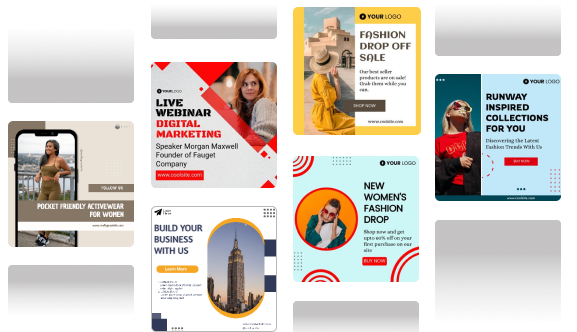
You can urge your real users to make content with your products, or you can get AI avatars to generate such videos. This way, you will always have UGC kind of content to post. And don’t worry, AI avatars are very realistic as well. I mean, look at the quality Predis AI’s UGC post generator gives:

5. Interactive Co-Creation
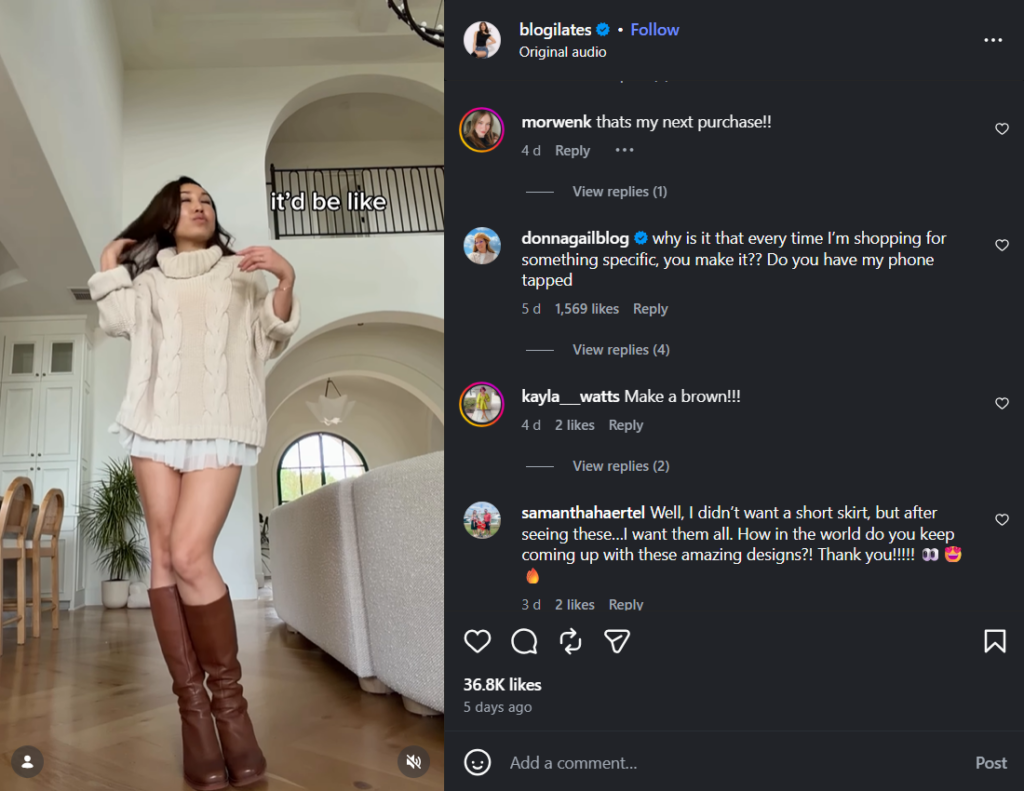
When people feel like they’ve had a hand in building something, they become much more invested in its success. It shifts the relationship from “brand and customer” to “partners.” This is a massive trust-builder because it shows you’re actually listening, which makes your community feel valued and way more likely to support the final result when it launches.
This example can predominantly be seen in Blogilates ‘ social media strategy as they actively take input from customers in their design process:
6. Video-First Storytelling
2026 is the year of “Vertical Video.” If it isn’t video, it’s invisible.
Because video captures your voice, your expressions, and your vibe, it builds a connection much faster than text ever could. It allows you to pack a lot of personality into just a few seconds, making your brand feel modern and relevant. In a world where everyone is moving fast, video is the most efficient way to stop a thumb from scrolling and actually get your story across.
7. Niche Collaborations
Think of Niche Collaborations as teaming up with “experts” rather than just “celebrities.” In 2026, the era of the massive, one-size-fits-all influencer is fading. Now, it’s all about finding someone who has a small but incredibly loyal community in a very specific corner of your industry. If you’re a gardening brand, for example, partnering with a “succulent specialist” who has 5,000 obsessed followers is often way more effective than a general lifestyle influencer with a million fans.
8. Social Listening
Monitor your mentions to catch trends before they peak.
It’s more than just checking your notifications; it’s about paying attention to the broader conversations happening around your industry, your competitors, and your name—even when you aren’t tagged. By monitoring certain keywords or trending topics, you can get a real sense of what people actually think and what they’re frustrated with.
9. Frictionless Commerce
Use in-app shops so users can buy the moment they feel “brand love.”
Frictionless commerce is all about using in-app shops and “one-tap” checkout buttons so the shopping happens right where the discovery did.
When you remove the extra steps, you stop people from having second thoughts or getting distracted by another notification. It’s about meeting your customers exactly where they are—scrolling through their feed.
10. Recurring Content Pillars
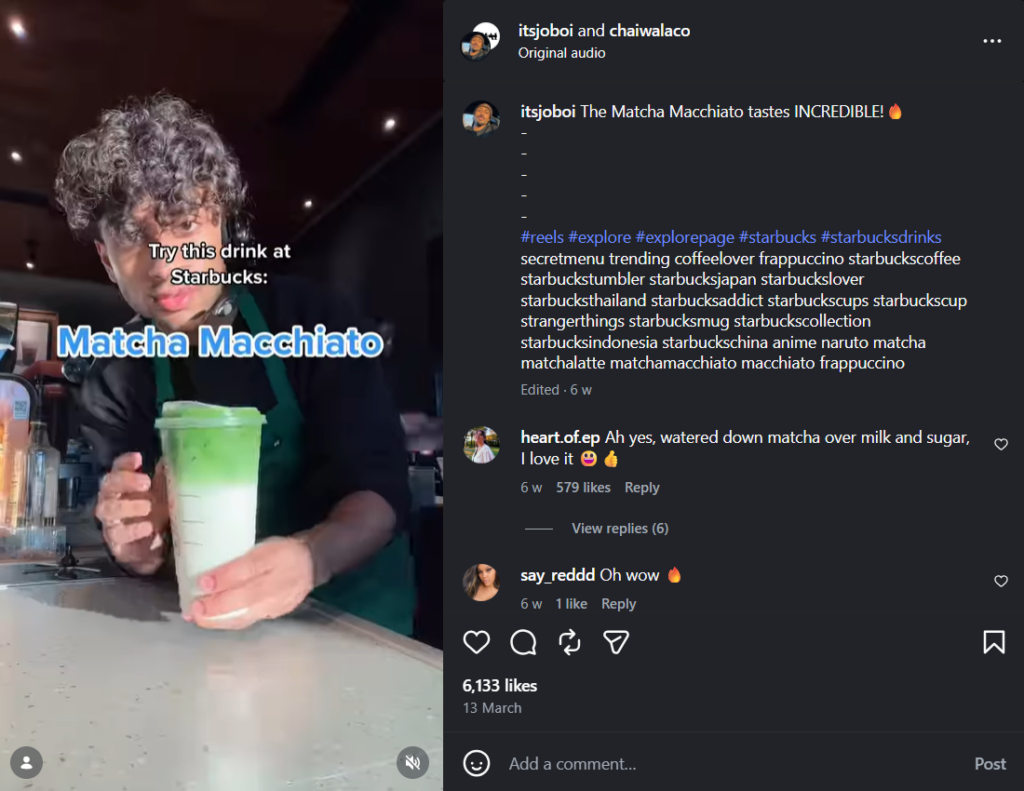
It’s like their favorite weekly podcast; they start looking forward to those specific posts on a particular theme. For you, it makes life way easier because you aren’t reinventing the wheel every morning. You just plug new ideas into your existing “pillars,” which keeps your feed looking organized and your brand feeling incredibly consistent.
For example, look at this creator who consistently posts Starbucks Drink recipes and suggestions. So, if someone wants to get new drink recommendations, it is pretty clear whose page they will return to.
Conclusion: The Long Game
The digital landscape has moved past the era of faceless corporate broadcasting. Today, the brands that win are those that treat social media as a place for connection rather than just a billboard.
By combining a strong visual identity with human strategies like radical transparency and interactive co-creation, you turn a casual scroller into a loyal advocate. Remember, when you build a brand on social media, that it is a marathon, not a sprint. Consistency is your greatest competitive advantage—if you stay stubbornly human and focused on providing real value, your community will naturally grow around you.
Frequently Asked Questions
Quality beats quantity every time. Instead of posting every day just for the sake of it, aim for 3 to 4 high-value posts per week. The goal is to make sure that whenever your brand shows up in a feed, your followers know it’s going to be worth their time.
Not at all. While a professional designer is great eventually, you can start with a clear “brand kit” (your specific colors and fonts) and a smartphone. Most people actually prefer “raw” and authentic content over highly polished, expensive-looking ads.
Brand building is a marathon, not a sprint. While you might get a “viral” hit occasionally, real brand loyalty usually takes about 6 to 12 months of consistent effort to solidify. You’ll know it’s working when people start tagging you without being asked, or when your “direct” traffic increases because people are searching for your name specifically rather than just a general product.