

Explore this content with AI:
In 2026, the question “How much does YouTube pay?” has become more nuanced than ever. With the rise of AI-driven ad targeting and a more integrated “Shorts-to-Longform” pipeline, the platform’s payout structure is a living metric. The numbers you see online are often exaggerated, so let us look at a realistic breakdown of what your YouTube pay-per-view earnings will look like in this guide.
What Does YouTube “Pay Per View” Actually Mean on YouTube?
It is a common misconception that YouTube pays for every click on a video. In reality, YouTube pays for monetized ad impressions.
- Ad Impression vs. View: If a viewer uses an ad-blocker or skips an ad immediately, that “view” generates $0 revenue.
- CPM (Cost Per Mille): This is what advertisers pay to show 1,000 ads, which changes based on the niche you are in. In 2026, premium finance advertisers might pay a $30.00 CPM, while gaming advertisers pay $4.00.
- RPM (Revenue Per Mille): This is your actual “take-home” pay. It calculates how much you earn per 1,000 views after YouTube takes its 45% cut.
- Watch Time Matters: Longer videos (8+ minutes) allow for “mid-roll” ads, which effectively increase your RPM by giving you multiple chances to show an ad to a single viewer.
So, essentially, you get paid only when the viewer watches the ads. And how much do you get paid when they do watch the ad? That exclusively depends on the niche and the amount the advertiser is willing to spend on the niche! It is as simple as that!
How YouTube Monetization Works: The Backend Mechanics
YouTube operates an automated auction system called Google AdSense. Every time a video is played, an “auction” happens in milliseconds to decide which ad is the best fit for that specific viewer.
- The Revenue Split: For long-form videos, you keep 55% of the ad revenue. For Shorts, the split is reversed—you keep 45% of the revenue allocated to the “Creator Pool.”
- YouTube Premium: You also receive a small portion of the subscription fee from YouTube Premium members who watch your content, which is often a more stable income source than fluctuating ad rates.
To make the most money, you need to be:
- Making more long-form content since that is where you have a higher revenue split
- Be in niches like Finance that are attractive to advertisers
- Your audience needs to be from a country where the pay is high. For example, US viewers mean you get more money, but Indian viewers do not generate the same revenue, even though the viewer count is the same.
- Your viewers need to watch your ads; the longer the better.
Eligibility: How to Join the YouTube Partner Program (YPP) in 2026
In 2026, there are two distinct tiers for entering the “club”, the one that gets you paid. And here are those types:
1. The Fan Funding Tier (Early Access)
The requirements for Fan Funding Tier include:
- Requirements: 500 Subscribers + 3 public uploads in 90 days + 3,000 Watch Hours (or 3 million Shorts views).
- What you get: Access to Super Chats, Super Thanks, and Channel Memberships. This does not include ad revenue yet.
2. The Full Monetization Tier (Ad Revenue)
This is the full-fledged monetization level that gets you access to all the tools, including ads:
- Requirements: 1,000 Subscribers + 4,000 Watch Hours in 12 months (OR 10 million Shorts views in 90 days).
- What you get: Full access to AdSense revenue from the Shorts feed and long-form videos.
8 Critical Factors That Impact Your YouTube Pay-Per-View Earnings
Your paycheck might not be the same as the one you see other creators earning. It is dictated by three primary variables:
- Viewer Geography (Tiers): A view from the United States ($32.75 CPM) or Australia ($36.21 CPM) is worth significantly more than a view from a developing market where ad spend is lower.
- Seasonality: Ad rates skyrocket in Q4 (October–December) as brands compete for holiday shoppers. January usually sees a “slump” where rates drop by 20% or more.
- Advertiser Intent: In niches like Personal Finance or B2B SaaS, advertisers are selling high-ticket items (credit cards, software subscriptions). They are willing to pay a premium ($15–$50 CPM) because one successful lead is worth thousands of dollars.
- Ad type and placement: Non-skippable ads have a higher CPM since users are forced to watch them. And also, when you have videos longer than 8 minutes, then you can place mid-roll ads, getting higher chances of your audience watching the ads.
- Long-form vs Short-form content: Short-form content usually pays less because of fewer opportunities for ads, and since you get paid out of the creator pool.
- Watch time and ad clicks: If a viewer actually clicks an ad and visits the advertiser’s site, you earn significantly more than if they just watch the ad. This is why “tutorial” content often has higher RPMs—viewers are looking for solutions and are more likely to click relevant ads.
- Ad Blockers: A lot of tech-savvy audiences use ad blockers. These views are “ghost views”—they count toward your total but generate zero revenue.
- Ad Suitability (The Yellow Icon): If your video is flagged for “edgy” content, profanity, or controversial topics, premium advertisers will pull their bids. This can drop your RPM by 90% overnight.
The “Gold Mine” Niches: Who Makes the Most Money?
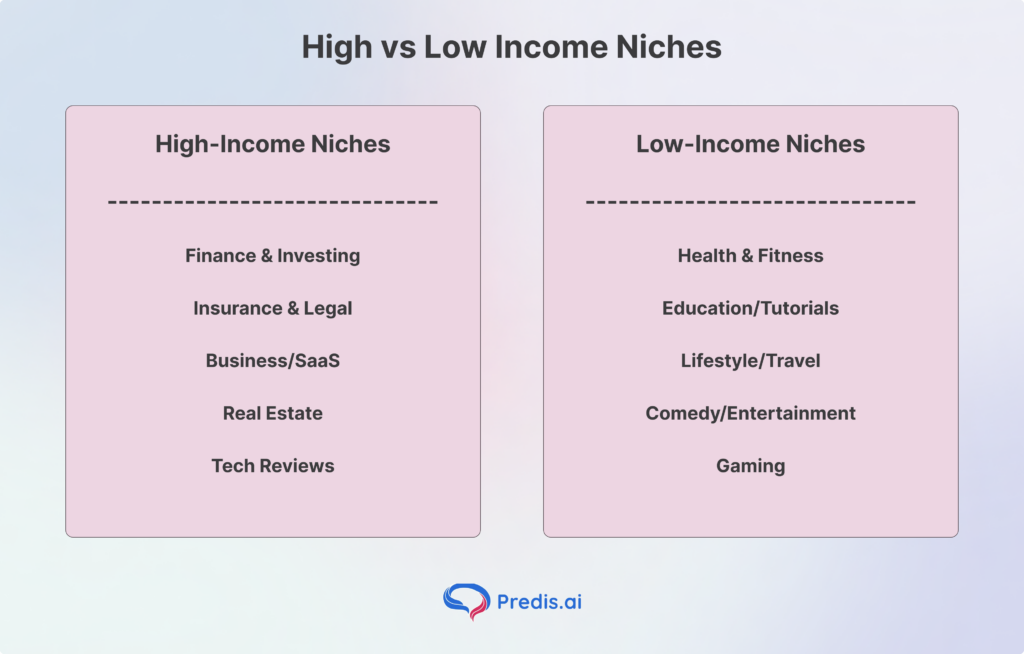
Not all content is created equal in the eyes of an advertiser. Here are the 2026 estimates for the highest-paying categories:
1. High-CPM Niches ($8 – $15 Avg RPM)
- Finance & Investing: The undisputed king. Topics like crypto, insurance, and tax strategy attract banks willing to pay $40+ CPMs.
- B2B / SaaS: Business software and marketing strategies have very high “customer lifetime value,” leading to massive ad bids.
2. Mid-Range Niches ($6 – $10 Avg RPM)
- Tech Reviews: Smartphone and gadget reviews are profitable because the audience is in a “buying mindset.”
- Education: “How-to” tutorials and professional development provide high value and steady ad demand.
3. High-Volume/Low-CPM Niches ($1 – $4 Avg RPM)
- Gaming & Comedy: While these get millions of views, the audience is broad and younger, leading to much lower payouts per thousand views.
The YouTube Shorts Economy: What to Expect in 2026
Shorts pay through a revenue-sharing pool. YouTube collects all ad money from the Shorts feed, pays for music licenses, and then distributes the rest to creators based on their “share of total views.”
- Realistic Payouts: Most creators earn between $0.03 and $0.08 RPM on Shorts.
- The Strategy: In 2026, the most successful creators use Shorts as a “discovery engine” to gain subscribers and then funnel those viewers into high-paying long-form videos.
Step-by-Step Monetization Guide for 2026
So, how do you go about setting it all up and making money? Let us break down the process into 6 simple steps that you can follow:
- Niche Down: Don’t be a generalist. Pick a high-intent topic where you can build authority.
- Hit the Milestone: Focus on either the “Sprint” (Shorts views) or the “Marathon” (Long-form watch hours).
- Apply via Studio: Once eligible, click “Apply Now” in the Earn tab of YouTube Studio.
- Identity Verification: You must complete tax forms and verify your physical address via a PIN sent by Google.
- Enable Ads: Once approved, manually turn on “Mid-roll” ads for all videos over 8 minutes and enable ads for videos that are eligible.
- Monitor earnings: Once you have it set up, track your earnings to see how and where you can improve.
Realistic Expectations: What Can You Actually Earn?
To earn a full-time living from AdSense alone ($4,000/month), the views required vary wildly by niche:
- Finance Channel: Needs ~200,000 views/month.
- Lifestyle Vlog: Needs ~800,000 views/month.
- Gaming Channel: Needs ~2,000,000 views/month.
Based on various other factors, these earnings can vastly vary. So, getting to a livable income off YouTube alone is going to take consistent efforts for at least 12 – 24 months and maybe more.
Systematically track your videos and their RPM to figure out the best monetizing strategy and then stick to it.
Diversifying: Other Ways to Monetize Your Views
In 2026, smart creators treat AdSense as just 20% of their income. The rest? It comes from diversified income sources that center around their YouTube content. As a result, you guarantee yourself some sort of consistent income that does not have to entirely depend on AdSense.
- Affiliate Marketing: Recommending products in the description and making a commission when the viewer clicks on the purchase link.
- Sponsorships: Negotiating direct deals with brands and promoting the product in their videos.
- YouTube Shopping: Tagging products directly in your videos for viewers to buy.
- Premium membership: Encourage your viewers to subscribe to your channel for premium content.
- Selling products and services: If your content can be used to promote your products or services, then you have an additional source of income.
Final Thoughts
As we’ve seen, your earnings are no longer just a byproduct of a view count; they are the result of a complex calculation involving your niche, your audience’s location, and how effectively you keep viewers on the platform. With the introduction of the new two-tier Partner Program, the barrier to entry is lower than ever, allowing creators to start earning from “Fan Funding” long before they hit the major ad revenue milestones.
Ultimately, the most successful creators this year are those who treat their channel as a diversified business. By layering AdSense with affiliate marketing, memberships, and strategic Shorts-to-long-form funnels, you insulate yourself from the natural fluctuations of CPM rates. Don’t just chase the algorithm—focus on building a community that trusts your voice. When you provide genuine value, the revenue naturally follows.
Frequently Asked Questions (FAQ)
No. YouTube only pays for ad impressions and Premium views. However, likes and comments are vital “engagement signals” that tell the algorithm to recommend your video to more people, which indirectly leads to more revenue.
Not through AdSense, but yes, through other means. You typically need 1,000 subscribers for ad revenue. At 100 subscribers, you can still earn via affiliate marketing (commissions on links) or direct sponsorships from niche brands.
$100 is the minimum payout amount. YouTube holds your earnings in your AdSense account until you hit the $100 threshold. Once you reach it, the funds are released during the next monthly billing cycle (usually between the 21st and 26th).