


In the rapidly evolving world of internet slang, few terms have seen as much staying power as “Cap” and “No Cap.” While many words trend for a week and vanish, these phrases have become foundational to how we communicate online in 2026. Let us check out what cap and no cap meaning is with examples so you can use them confidently!
Cap and No Cap meaning
At its most basic level, the translation is simple:
- Cap: A lie, an exaggeration, or something untrue.
- No Cap: The truth, a factual statement, or a way of saying “I am not lying.”
The Core Difference
The difference lies in the intent of the speaker. You use “Cap” as a defensive or confrontational tool to call out someone else’s false statement. Conversely, you use “No Cap” as a tool of emphasis to prove that your own statement—no matter how unbelievable it sounds—is 100% genuine.
Origin of the Term
To understand these terms, we have to look back long before they appeared on social media. They did not originate on the internet; they have a rich history in Black culture.
AAVE Roots
The terms “cap” and “capping” originate from African American Vernacular English (AAVE). In this context, “to cap” has been used for decades to describe someone who is bragging, exaggerating, or outright lying to make themselves look better.
Early Usage and Hip-Hop Influence
In the early 1900s, “capping” was often associated with “the dozens”—a game of spoken combat where participants trade insults. By the late 1980s and early 90s, Southern hip-hop artists began integrating the term into their lyrics. Rappers used “capping” to describe people who talked a big game but couldn’t back it up.
Transition to Internet Slang
The phrase moved into the mainstream digital world around 2017 and 2018, largely fueled by Atlanta’s rap scene (notably Young Thug and Future). Once these artists popularized the phrase “No Cap” to signify they were actually living the luxurious lives they described, the internet adopted it as a universal synonym for “for real.”
Growth Through Social Media
TikTok and Instagram acted as a global megaphone. The 🧢 (Blue Cap) emoji became a visual shorthand. Instead of typing “you are lying,” users could simply comment a single emoji, making the slang efficient and highly “memable.”
Examples of Usage
Understanding the definition is one thing; seeing it in action helps you grasp the nuance. So that when you do use them in a sentence, you are using them in the right context.
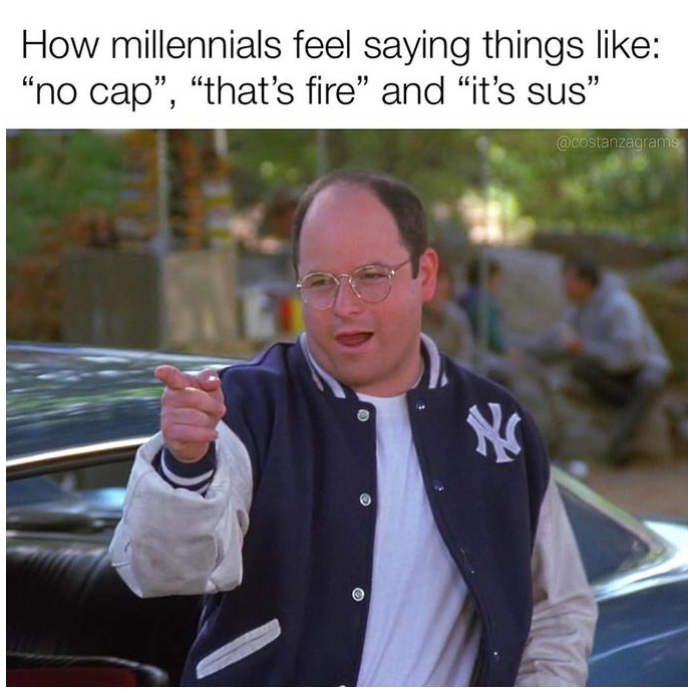
Basic Examples
- “That’s cap.” (Literal translation: You are lying.)
- “No cap, that was the best burger I’ve ever had.” (Literal translation: I am being serious, it was incredible.)
Conversation-Style Examples
Imagine a casual chat between friends:
Person A: “I just ran a mile in four minutes.”
Person B: “Stop it, that’s a major cap.”
Here, Person B is calling out an obvious exaggeration. Alternatively:
Person A: “I actually met the CEO today and got a promotion.”
Person B: “Wait, for real?”
Person A: “No cap, I have the signed letter right here.”
Social Media Captions
In the world of influencers and content creators, “No Cap” is often used to build a “raw” connection with the audience. Here are some examples in use:
- “Feeling exhausted but so grateful for this life, no cap.”
- “This new skincare routine actually works, no cap. Check the results.”
Meaning in Different Contexts
Context is the “secret sauce” that dictates how these words are perceived. So, let us check out this term in various sentences to understand its meaning properly.
Casual Conversations
Among friends, the terms are used as conversational markers. “No cap” often replaces “honestly” or “seriously.” It’s a way to signal that you are stepping out of a joking persona to tell a real truth.
Texting and Chats
In digital communication, brevity is king. “Cap” works as a quick reaction. If a friend sends a text that sounds suspicious, replying with a single 🧢 emoji communicates everything you need to say without a long explanation.
Tone Variations
- Serious: “I’m going to finish this today, no cap.” (Expressing determination).
- Sarcastic: “Oh yeah, you’re the smartest person in the world… cap.” (Using it to mock a statement).
- Playful: Calling out a friend’s small exaggeration about a high score in a video game.
Where to Use It?
While slang is about expression, using it in the wrong place can be jarring. While this is fine for a casual, social media kind of setting, we suggest you avoid using this in the workplace since it will look unprofessional.
Where to Use It
- Informal settings: Group chats, DMs, social media comments, or hanging out with peers.
- Creative content: If you are a brand trying to reach Gen Z or Gen Alpha, using these terms naturally in TikTok captions can help with relatability.
Where to Avoid It
- Professional settings: Avoid saying “No cap” in a performance review or a legal document. It can come across as unprofessional or even confusing to older generations.
- Formal writing: Unless you are writing a linguistics essay, keep it out of formal reports.
Common Mistakes
- Forcing it: If you don’t naturally use slang, don’t start every sentence with “No cap.” It sounds forced and “cringe.”
- Wrong Audience: Using it with someone who doesn’t know the term will lead to a 10-minute explanation that kills the vibe of the conversation.
Try to use the word naturally in your sentences and ease it into frequency. This way, it feels normal and not forced.
Conclusion
“Cap” and “No Cap” are words that withstood the trend market and entered mainstream communication. Not realising what Gen Z words mean, you will miss out on content or an inside joke that would have been funny otherwise. And with many Gen Z slang terms hitting mainstream, not trying to learn these meanings is not an option (at least if you don’t want to look like a boomer!).
So to conclude, “Cap” is the shield we use to protect ourselves from misinformation, while “No Cap” is the bridge we use to prove our sincerity.
Final Takeaway: If you’re being real, it’s no cap; if it’s a fake, it’s cap. Simple as that.
FAQ
“Cap” refers to a lie or false statement. “No cap” is an adverbial phrase used to emphasize that you are telling the absolute truth.
While it originated in AAVE and was popularized by Gen Z, it is now used across various age groups, especially by those active in online communities and hip-hop culture.
If you want to sound slightly more formal or just vary your language, you can use “For real,” “No lie,” “On god,” or “Honestly.”
Generally, no. It is considered highly informal and is best saved for casual social interactions.
In a world of filters and “fake news,” people use “no cap” to cut through the noise and reassure the listener that what they are saying is genuine and unexaggerated.