


Explore this content with AI:
Most businesses don’t fail on social media because they post too little. They fail because they post without a destination in mind. There’s a big difference between being active on social media and actually moving your business forward with it — and that gap almost always comes down to goals.
This guide covers everything you need to set social media goals that actually connect to growth: a proven framework, the KPIs that matter by goal type, real-world examples across nine industries, and the tactics that take you from meeting targets to blowing past them.
Why Social Media Goals Are the Foundation of Every Strategy
Here’s a pattern that plays out constantly: a brand starts posting consistently, gets a decent number of likes, maybe picks up a few hundred followers — and then wonders why none of it is turning into revenue.
Activity is not a strategy.
Posting is not the same as growing.
Your social media goals inform your overall marketing strategy. Without goals:
- You might waste time on marketing initiatives that don’t help your business.
- Your messaging becomes unclear, and your brand suffers.
On the other hand, with a defined goal — say, driving website traffic — every content decision has a filter. Does this post push people toward a link click? Does this caption give them a reason to visit? Suddenly, the work has direction.
The other thing worth getting out of the way early: follower count is not a social media goal. It’s a byproduct of doing the right things. A finance coach with 4,000 highly engaged followers who reply to DMs and buy courses has a better social presence than a brand account with 40,000 passive followers who never click anything.
Real goals tie directly to business outcomes: awareness, engagement, lead generation, or sales.
How to Set Social Media Goals (Step-by-Step)
1. Start With the Business Objective
Every social media goal should trace back to a business objective. Ask: What does the business actually need right now? Brand awareness for a new product launch? More inbound inquiries for a service? Repositioning as a premium option in a crowded market?
Common business objectives that map to social media:
- Brand awareness
- Lead generation
- Online sales
- Premium positioning
- Authority building in a niche
Choose one and boom, you have a direction to work towards.
2. Pick One Primary Goal and Related Metrics
The biggest strategic mistake brands make is trying to do everything at once. When every post serves a different goal, none of them serve any goal well. Pick one primary goal — the thing the business most needs right now — and the metrics that help you know if you are on the right track.
A corporate law firm might set “authority building on LinkedIn” as its primary goal, which could mean tracking profile visits, follower counts, and other engagement metrics like saves. Every piece of content and metric is filtered through that lens.
3. Use the SMART Framework
Your goals need to be SMART — specific, measurable, achievable, relevant, and time-bound. Instead of saying “We want more followers,” a SMART goal would be “Increase our Instagram followers by 15% over the next quarter.”
Applied to a lead generation objective, this might look like: “Generate 40 qualified DM inquiries per month on Instagram through educational content and story CTAs over the next 90 days.”
The specificity forces you to think about how you’ll achieve it, not just what you want.
4. Match the Goal to the Right Platform
Not every platform serves every goal equally:
| Platform | Best For |
|---|---|
| Instagram / TikTok | Discovery, engagement, product awareness |
| B2B authority, professional leads | |
| YouTube | Long-term traffic, education, brand depth |
| Evergreen product visibility, referral traffic | |
| Community building, local ads, retargeting |
A handmade furniture brand chasing online sales has no business anchoring its strategy to LinkedIn. A B2B SaaS tool targeting HR directors has no reason to prioritize TikTok trends. Platform choice isn’t about where you personally prefer to spend time — it’s about where your buyer actually is.
5. Build a Content Strategy Around Your Goals
Once your goals are defined and your platforms are chosen, the next step most brands skip is building an actual content strategy — not just a posting schedule, but a deliberate plan for what types of content serve each goal at each stage of the ladder.
Start by mapping your content to the four outcome categories.
- Awareness goals need discovery-friendly formats: short-form video, trending audio, shareable carousels.
- Trust goals need depth: tutorials, behind-the-scenes content, testimonials, and save-driven posts.
- Action goals need clear conversion content: strong CTAs, lead magnets, and posts that give people a specific next step.
- Revenue goals need proof: results, ROI content, and time-sensitive offers.
From there, build a realistic publishing rhythm you can actually sustain. Consistency matters more than frequency.
- Three well-crafted posts a week that serve a clear goal will outperform seven rushed posts with no direction.
- Document your content pillars — the recurring themes your account will be known for — and let your SMART goals determine which pillars get the most real estate in your calendar each month.
6. Optimize Continuously Based on Results
Setting a goal is the beginning of the process, not the end. The brands that consistently exceed their targets aren’t guessing right — they’re reviewing performance regularly and adjusting based on what the data is actually telling them.
Run a weekly check on your 2–3 primary KPIs. Not to panic over individual posts, but to catch directional trends early.
- If your saves are climbing but link clicks are flat, your content is building trust without converting — which usually means it’s time to tighten your CTAs or create a stronger bridge between your content and your offer.
- If engagement is dropping, it might signal audience fatigue with a particular format or topic, and a shift in content mix is needed.
Every 30 days, do a slightly deeper review:
- Which posts outperformed?
- What format, topic, or CTA drove the result?
- What underperformed and why?
Use those answers to update your content strategy for the next month. Social media goals aren’t static — they should evolve as your audience grows, your business priorities shift, and platform algorithms change. Build in quarterly goal reviews where you either raise the bar on a target you’ve consistently hit, or redirect effort to a different part of the funnel where the opportunity is bigger.
11 Social Media Goals Examples
Not all social media goals look the same. Depending on your business model, industry, and growth stage, the goal you prioritize will shape everything from the platforms you use to the content you create. Here are the most common social media goal types — and what pursuing each one actually looks like in practice.
1. Increase Brand Awareness
Brand awareness is the goal of getting more people to know your business exists. It sits at the base of the Social Media Goals Ladder and is almost always the starting point for new brands, new product lines, or businesses entering a new market.
The focus here isn’t conversions — it’s reach. You’re trying to get your name, visual identity, and core message in front of as many of the right people as possible.
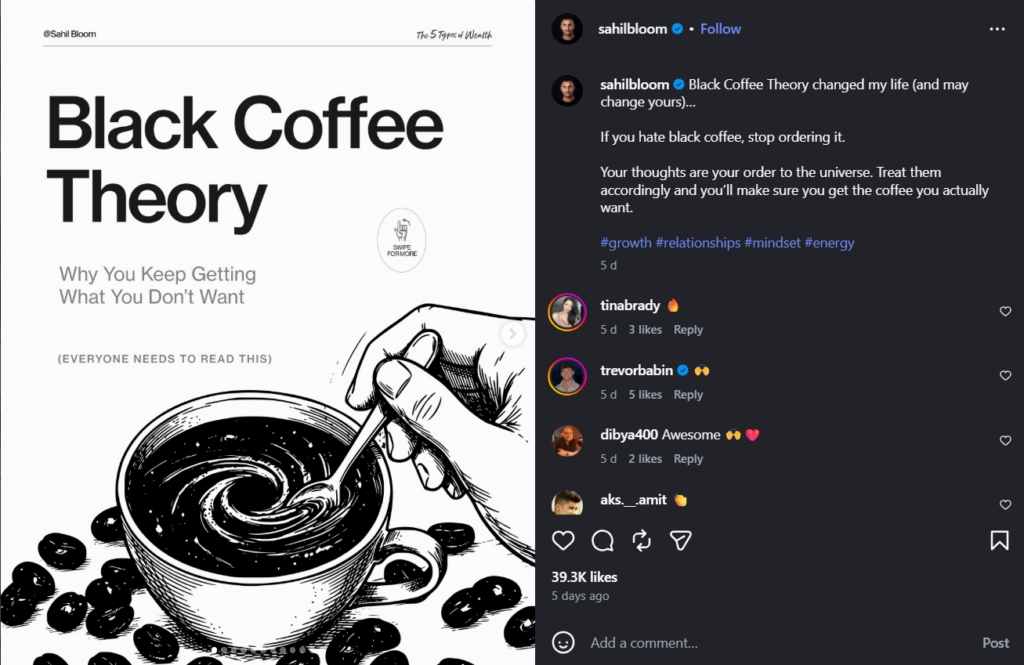
Check out this post by a creator on Black coffee theory! This is a classic example of brand awareness kind of content, because it is Explore page worthy! It has a good hook that gets people to click and interesting illustrations that increase dwell time and improve shareability.
- Content formats that work best for awareness include short-form video, trending audio, and shareable educational posts.
- KPIs to track: impressions, reach, follower growth rate, and share of voice.
2. Build Brand Reputation
Brand reputation is a layer deeper than awareness. It’s not just about who knows you — it’s about what they think when they hear your name. This goal matters most for brands in competitive, trust-dependent categories: professional services, healthcare, finance, legal, and premium consumer products.
The strategy here centers on consistency: showing up with credible, accurate, and valuable content over time.
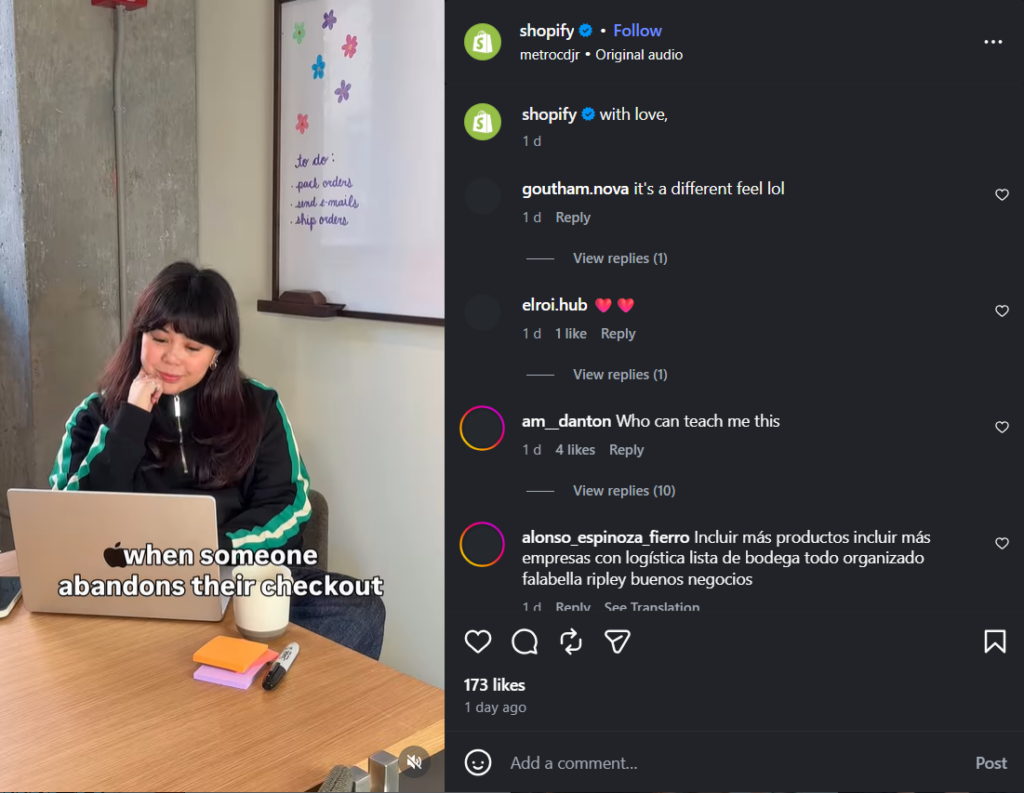
Shopify’s Instagram page is loaded with UGC content, which is a clear indication that their users are in love with the platform, which is a huge boost to their reputation.
- Some content that works best includes Thought leadership posts, industry commentary, certifications, awards, and user-generated content.
- KPIs to track: sentiment analysis, saves, shares, and qualitative signals like the tone of comments and DMs.
3. Increase Traffic
If your primary business goal is driving people from social media to your website, blog, product pages, or landing pages, traffic is your social media goal. This is especially relevant for e-commerce brands, content creators, SaaS businesses, and service providers who convert best through their website.
Every piece of content needs a clear destination and a compelling reason to click. Strong CTAs, link-in-bio tools, and swipe-up stories are the mechanics.
And here is an example, where a company has a product demo with a clear CTA to their website ever-present, which makes this story perfect for traffic generation.

- You can use lead magnet kind of content to lead your audience to your site.
- KPIs to track: link clicks, referral traffic from social in Google Analytics, CTR, and landing page conversion rate.
4. Improve Community Engagement
Some brands don’t need more reach — they need deeper relationships with the audience they already have. Community engagement as a goal means prioritizing two-way interaction over broadcast content. The metric isn’t how many people see your posts; it’s how many people respond, reply, share, and feel like they’re part of something.
This goal works well for membership businesses, coaches, course creators, local brands, and any brand that benefits from word-of-mouth.
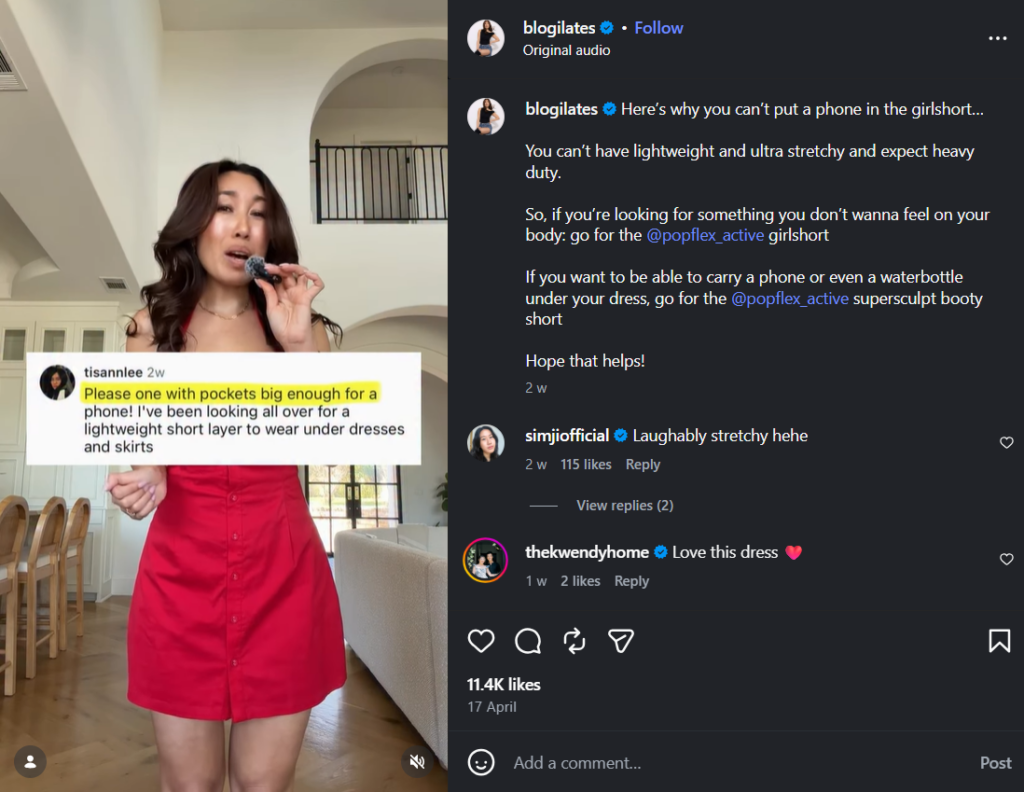
Take a page out of this creator’s playbook, where instead of replying to a comment, they made a whole video to visually clarify the doubt. The result? Extra engagement, content ideas, and the confidence that the brand cares about its customers.
- Tactics include weekly Q&As, polls, story prompts, and responding to every comment personally in the early stages.
- KPIs to track: comments, story replies, saves, DMs, and engagement rate.
5. Boost Conversions
Conversion as a social media goal means using your platforms to directly drive a measurable action: a purchase, a booking, a sign-up, a download. This is higher up the ladder and works best when the rungs below — awareness, trust, engagement — are already in place.
Look at this example where Walmart uses its Instagram story to promote a sale and boost conversions:

- Conversion-focused content is more direct: product showcases, limited-time offers, retargeting ads, and testimonials paired with a clear CTA.
- KPIs to track: conversion rate from social traffic, revenue attributed to social, ROAS on paid campaigns, and add-to-cart events.
6. Generate Leads
Lead generation is the goal of collecting contact information or qualifying interest from potential buyers — before they’re ready to purchase. This is particularly important for B2B brands, high-ticket service providers, and any business with a longer sales cycle.
Social media accelerates lead gen when paired with a strong offer: a free consultation, a downloadable resource, a webinar, or a quiz. Platforms like LinkedIn and Instagram are both strong for this goal when the content earns trust first.
- This is another goal that can use lead magnet content like e-book download, webinar registration, and so on.
- KPIs to track: form fills, DM inquiries, email sign-ups, and cost per lead from paid campaigns.
7. Promote Events
Events — whether in-person, virtual, or hybrid — have a natural social media lifecycle: pre-event buzz, live coverage, and post-event amplification. Social media is one of the most cost-effective channels for filling seats, driving registrations, and building anticipation.
The goal here is awareness and action happening in tandem, with urgency built in by the event date.
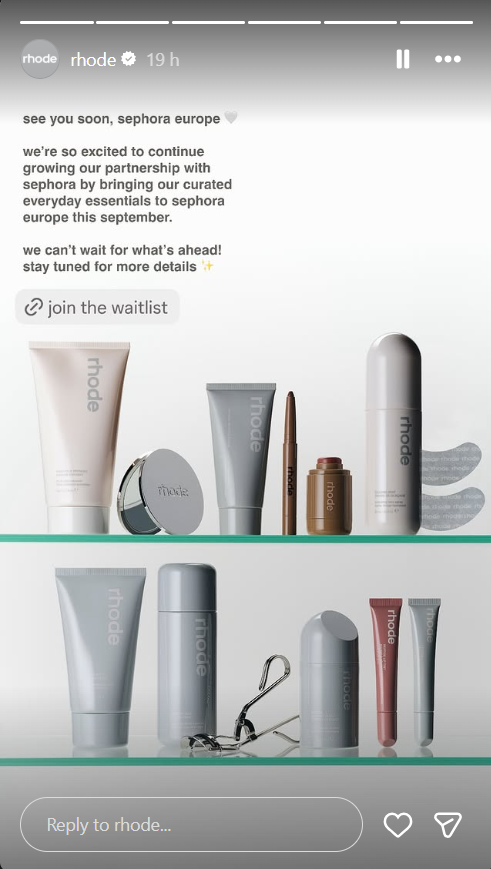
Rhode is going to Europe, and their Instagram stories are strategically used to create hype around it:
- Countdown content, speaker spotlights, behind-the-scenes setup footage, and attendee testimonials from past events all drive registrations.
- KPIs to track: event page clicks, registration conversions, hashtag reach, and ticket sales attributed to social.
8. Improve Customer Service
Social media has become a frontline customer service channel, whether brands plan for it or not. Customers ask questions, post complaints, and expect responses in public — and fast. Making customer service a deliberate social media goal means building systems around it: dedicated response protocols, response time targets, and a clear escalation path for complex issues.
Done well, public problem-solving becomes a brand trust signal — other potential customers see that you show up when things go wrong.
- You can make any sort of content for this, from a FAQ carousel to Reels as a reply to comments.
- KPIs to track: average response time, resolution rate, sentiment in customer mentions, and CSAT scores from social interactions.
9. Attract Candidates
Employer branding is one of the most underutilized social media goals. For businesses that hire regularly — or that compete for specialized talent — using social media to show what it’s actually like to work at the company is a legitimate growth strategy.
LinkedIn is the obvious platform, but Instagram and TikTok have become equally powerful for culture-first employer branding, especially for younger candidates.
- Behind-the-scenes team content, employee spotlights, day-in-the-life posts, and values-driven content all contribute.
- KPIs to track: career page traffic from social, application volume, and follower growth on LinkedIn company pages.
10. Social Listening
Social listening as a goal means using your social media presence — and the wider conversation around your brand, industry, and competitors — as an intelligence channel. It’s not about posting; it’s about monitoring.
- What are customers saying about you when you’re not in the room?
- What objections keep coming up?
- What does your competitor’s comment section look like?
KPIs to track: brand mention volume, sentiment trends, share of voice vs. competitors, and keyword conversation trends.
11. Increase Mentions in the Press
Social media and PR are increasingly intertwined. Journalists, editors, and podcast hosts use social platforms — especially Twitter/X and LinkedIn — to find sources, track industry trends, and identify brands worth covering.
A consistent social media presence that positions founders or brand spokespeople as credible, quotable voices in their space increases the likelihood of organic press coverage. The goal here is building the kind of authority that makes media outreach easier — or makes reporters come to you.
- Tactics include sharing data-backed insights, taking clear positions on industry trends, and being cited in your niche’s conversations.
- KPIs to track: press mentions, inbound media inquiries, backlinks attributed to social visibility, and brand name search volume over time.
KPIs That Matter (by Goal Type)
Marketing leaders plan to measure social media success with overall engagement, audience growth, social interactions, web visitors, and share of voice. But at the campaign level, you need tighter definitions.
- Awareness KPIs: Reach, impressions, follower growth rate, profile visits, share of voice
- Engagement KPIs: Saves, shares, comments, story replies, watch time, engagement rate (not just likes)
- Lead KPIs: Link clicks, sign-up conversions, DM inquiries, CTR on bio links and posts
- Sales KPIs: Purchases attributed to social, ROAS on paid campaigns, booking conversions, revenue from social traffic
One rule: pick 2–3 KPIs per goal and track them weekly. Tracking too many metrics is the same as tracking none — everything looks like signal, nothing stands out as meaningful.
How to Exceed Your Social Media Goals
Setting the goal is the starting point. Here’s what separates brands that hit targets from brands that consistently exceed them.
1. The 70/20/10 Content Rule
Structure your content calendar deliberately: 70% value and education (posts that help your audience solve a problem), 20% credibility and proof (case studies, testimonials, results), 10% direct promotion. Most brands flip this ratio and wonder why their audience tunes out.
2. Repurpose Aggressively
A long LinkedIn article becomes five carousel slides. A YouTube tutorial becomes three short-form clips. A client case study becomes a story highlight. Brands that repurpose content well get 3–4x the output from the same production effort.
3. Use Lead Magnets
Free resources — a checklist, a template, a calculator — are one of the fastest ways to accelerate both list growth and social engagement simultaneously. Businesses that set measurable goals are 377% more likely to report success in their marketing campaigns. Lead magnets give you something concrete to measure against: downloads, sign-ups, clicks.
4. Improve Your CTAs
Most brand CTAs are weak: “Link in bio!” or “Check out our website!” Test more specific CTAs: “DM me ‘QUOTE’ for a breakdown of what this would cost for your business.” Specific CTAs get specific responses. Vague CTAs get ignored.
5. Track, Then Optimize
Review performance every week. Not to stress over individual post results, but to identify directional trends. What format is consistently getting saves? What topic drives the most DM inquiries? Double down on what works. Cut what doesn’t. Social media growth comes from compounding small improvements, not viral moments.
6. Plan and Schedule content
Planning and batch making content well ahead of time can have many benefits, and the margin of error is much lower as well. When you are no longer hurrying to get the next reel out, you can get better content ideas, post consistently, brand properly, and have a lot more time as well.
By using tools like Predis AI’s content scheduler and calendar, you can stay on top of your content at all times.
Conclusion
The brands winning on social media aren’t the ones posting the most. They’re the ones who know exactly what they’re building toward, track whether it’s working, and adjust faster than their competitors.
Pick one clear goal, assign it two supporting KPIs, build a 90-day content plan around it, and review your results weekly. That single habit — goal-setting tied to consistent measurement — will do more for your social growth than any content hack or platform trend.
The ladder is there. Start climbing.
FAQs
It depends on the stage of the business and current objectives. New brands typically prioritize awareness and trust goals. Established brands focus on lead generation and conversion. The most important goal is whichever one connects most directly to a business outcome you can measure.
Use the SMART framework: Specific, Measurable, Achievable, Relevant, Time-bound. “Increase Instagram website clicks by 25% in 60 days” is a SMART goal. “Get more traffic” is not.
For engagement: saves, shares, story replies, and watch time. For leads: link clicks, DM inquiries, sign-up conversions, and CTR on bio links. Avoid using likes as a primary KPI — they’re the least predictive metric for business outcomes.