


Explore this content with AI:
By the time a B2B buyer reaches out to your sales team, they have already completed nearly 75% of their research in total silence. They aren’t reading your whitepapers or sitting through cold calls; they are auditing your brand through the conversations you lead on social media.
In an era where AI-generated noise is the default, social media has transformed from a distribution channel into the ultimate ‘Trust Layer.’ Here are the levers to turn your B2B social media marketing presence into a high-velocity pipeline engine.
How B2B Social Media Marketing is Evolving
- The Trust Gap: 70% of the B2B buyer’s journey is now completed anonymously. Buyers are actively avoiding sales reps until they have already formed an opinion based on your social presence. Social presence is only half of it. That same anonymous research almost always ends on your website, so it’s worth understanding website expectations before they’ll agree to a call.
- AI as Infrastructure, Not Content: AI is used to optimize distribution and analyze intent signals, but the content itself must be unmistakably human to stand out.
- The “Dark Social” Reality: Most B2B decisions happen in “untrackable” places—Slack channels, YouTube, DMs, and private peer groups. Your social strategy must be “share-worthy” enough to penetrate these private circles.
B2B vs. B2C: The High-Stakes Distinction
While B2C social media often triggers impulse and emotion, B2B is the architecture of risk mitigation. * While B2C focuses on the individual and immediate gratification.
| Feature | B2B Social Media (Business-to-Business) | B2C Social Media (Business-to-Consumer) |
| Primary Goal | Risk Mitigation & Authority: Proving that your solution is the safest, most logical choice. | Emotional Connection & Desire: Triggering an immediate “I want that” feeling or lifestyle shift. |
| The Buyer | The Committee: Content must satisfy multiple stakeholders (Finance, IT, End-User, Legal). | The Individual: Decisions are typically made by one person or a single household. |
| Buying Cycle | The Marathon: Can span from 3 months to 2 years with multiple touchpoints. | The Sprint: Often impulsive or driven by short-term needs (hours to days). |
| Content Tone | Educational & Consultative: Industry insights, “How-to” guides, and strategic perspectives. | Entertaining & Aesthetic: High-energy trends, lifestyle aspiration, and humor. |
| Decision Driver | ROI & Efficiency: “Will this save us money or time?” | Status & Satisfaction: “Will this make me look/feel better?” |
| Key Platforms | LinkedIn, YouTube, Twitter (X), and specialized Slack/Discord communities. | Instagram, TikTok, Facebook, and Pinterest. |
| Conversion Path | Nurture-First: Follow → Whitepaper → Webinar → Demo → Sales Call. | Direct-to-Cart: See Ad → Click Link → Purchase. |
| Influencer Style | Subject Matter Experts (SMEs): Practitioners and industry analysts with deep credibility. | Lifestyle Creators: Celebrities and personalities with high relatability and “vibe” appeal. |
Finding the right B2B platform for your social media marketing
Gone are the days of “posting the same link everywhere.” Since customers don’t look at one platform before making a purchase, there is no point in marketers confining themselves to only one as well. To bypass that, we will use a Tiered Channel Model:
- LinkedIn (The Trust Hub): The headquarters for executive thought leadership and employee advocacy.
- YouTube (The Search & Scale Engine): Critical for SEO and long-form technical proof.
- Reddit & Niche Communities: The primary source for “Social Listening” and high-intent problem solving.
- Short-Form Video (TikTok/Reels): Used specifically for “Brand Humanization”—showing the faces behind the software to build a 1-to-1 connection.
Based on your goal, choose the right platform. Then focus on 2 – 3 platforms at a time, ace your strategy, and gather leads.
10 Strategies for B2B Social Media Marketing
1. Turning Executive Experience into Content
Corporate accounts often feel like background noise. To stand out, your leadership team must move away from just sharing company news and start sharing original perspectives. This strategy, known as POV Anchoring, means your executives take a clear stand on industry trends.
By sharing bold, honest opinions, your leaders stop being just “bosses” and start being trusted experts. This human-led approach builds much more trust than a logo ever could.
How to Start Building Authority:
- Capture “Unfiltered” Ideas: Instead of asking an executive to write a long article, record a quick 10-minute chat about a common industry myth they hate.
- Focus on the “Why”: Don’t just share a link; have the leader explain why it matters or why they disagree with the popular opinion.
- Use Personal Accounts: Post directly from the executive’s profile. In 2026, the algorithm gives much more reach to people than it does to company pages.
- Keep it Human: Share real stories of past mistakes or “lessons learned.” This creates a level of credibility that AI cannot mimic.
2. Employee Advocacy
When every employee shares the same pre-written corporate caption, it triggers a “spam” filter in the minds of their professional network. To truly scale your reach, you must move toward Narrative Guardrails.
This means providing your team with the core facts and goals, but giving them total freedom to explain the “how” and “why” in their own unique style. People trust people, and an authentic post from a team member carries far more weight than a polished corporate ad.
How to Scale Employee Voices Safely:
- Provide “Content Prompts,” Not Scripts: Instead of a finished post, give employees a few bullet points about a new launch and ask them to share how it affects their specific daily work.
- Define the “Safe Zones”: Clear up any confusion by providing simple guidelines on what is off-limits (like private data), so employees feel confident and safe while posting.
- Encourage “Work-in-Progress” Posts: Some of the best engagement comes from raw, behind-the-scenes looks at a project. Encourage your team to share the “messy middle,” not just the final win.
- Reward Effort over Metrics: Focus on encouraging the habit of posting. When employees feel supported rather than pressured to hit a specific “like” count, their content stays natural and engaging.
3. Sharing Insights Only You Possess
Your company likely sits on a mountain of internal information—like how long it takes customers to solve a specific problem or which features are trending this quarter. By turning this anonymized data into “State of the Industry” snippets, you provide value that no competitor or AI tool can replicate. For example, companies in fintech app development can turn product insights and industry data into useful social content. This shifts your brand from being just a vendor to being a primary source of truth for your entire market.
How to Turn Your Data into Social Content:
- Find the “Surprise” Stat: Look for one data point that goes against what people usually think. A “counter-intuitive” stat gets shared much more often than one that confirms the obvious.
- Keep the Visuals Simple: Don’t post a complex spreadsheet. Use one clean chart or a single “Big Number” graphic that a person can understand in three seconds while scrolling.
- Add the “So What?” Factor: Data alone is just a number. Always include a sentence explaining what that number means for your audience’s business strategy today.
- Ensure Total Privacy: Always use “Aggregated and Anonymized” data. Make it clear that you are looking at broad patterns, not individual customer secrets, to maintain trust.
4. Micro-KOL Partnerships
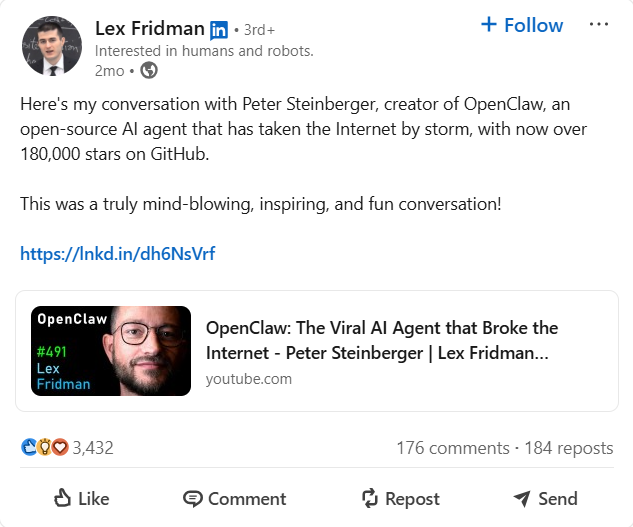
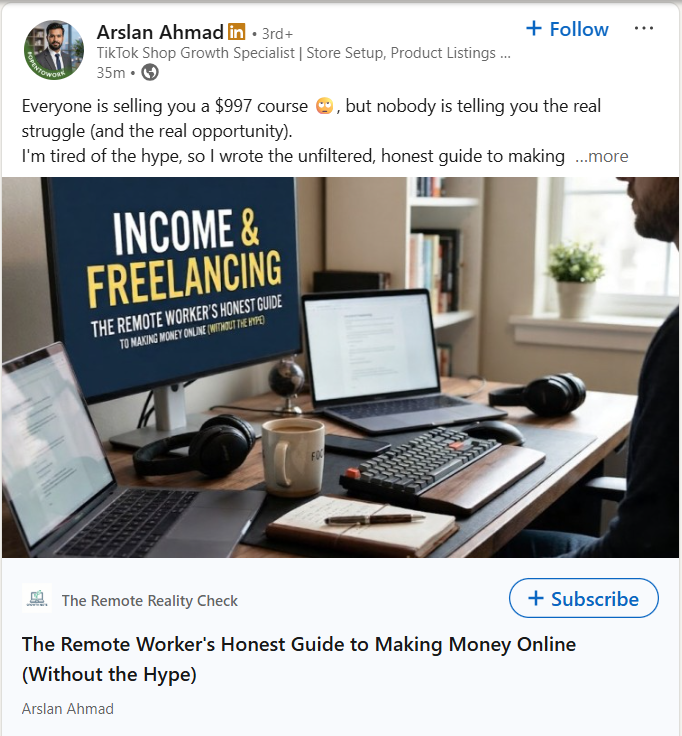
Look at this example where a creator collaborates with another to make content that is useful for the audience.
Broad celebrity endorsements rarely move the needle in B2B social media marketing. Instead, the real power lies with Micro-Key Opinion Leaders (Micro-KOLs). These are practitioners—like a respected software architect or a senior HR director—who have small but highly devoted followings. Because their audience is built on specific technical trust rather than general fame, a single recommendation from them can generate more high-quality leads than a massive, generic ad campaign.
How to Partner with Niche Experts:
- Prioritize “Hands-on” Credibility: Look for influencers who actually use tools like yours in their daily jobs. Their followers respect them because they are “in the trenches,” not just talking about it.
- Co-Create, Don’t Just Sponsor: Instead of a paid shoutout, invite the KOL to co-host a technical webinar or help design a “Best Practices” checklist. This makes the partnership feel like a peer-to-peer collaboration.
- Focus on Relevant Reach: A KOL with only 5,000 followers might be perfect if those 5,000 people are all senior decision-makers in your exact target industry.
- Give Them Creative Freedom: Don’t force a script on them. Let them explain your product in their own words and even mention its limitations—this honesty is what makes their audience trust them.
5. Customer Champion Spotlights
In 2026, the most effective B2B brands have stopped treating customers like “logos” and started treating them like heroes. Most case studies focus entirely on how a software improved a metric, but Customer Champion Spotlights focus on the individual user’s career growth.
When you publicly celebrate a client for getting a promotion, winning an award, or leading a major project, you build a deep, human bond that goes beyond a service contract. This turns your customers into vocal advocates who are proud to be associated with your brand.
- Keep the Crisis Stories “Raw”: Avoid over-editing crisis case studies. Use a “behind-the-scenes” interview style where the customer explains the stakes, the “messy middle” of the problem, and the final relief.
- Give Them the Spotlight: Use high-quality photography or video of the actual person. Tag them in the post so their professional network sees the recognition—this helps their career and your brand reach simultaneously.
- The “Human ROI” Metric: Share stories of how your tool saved a customer’s weekend or helped them leave the office on time. In 2026, “time saved for family” is just as powerful as “revenue increased.”
6. Ungating Content to Build Trust Faster
The Ungated Value-Add strategy flips the traditional funnel: you give away the “good stuff”—like a cheat sheet, checklist, or template—directly in the social post.
By providing immediate value before asking for anything in return, you prove your expertise instantly. This “goodwill” makes users significantly more likely to click your eventual call-to-action because you’ve already proven you aren’t wasting their time.
- The “Scroll-Stopping” Asset: Share a high-resolution image of a checklist or a snippet of a template directly in the post. If they can use it without leaving the app, they’ll remember who gave it to them.
- Sync Social Interactions to Your CRM: Use social listening tools to automatically tag users in your CRM (like HubSpot or Salesforce) who engage with these high-value posts. This helps sales reps see which topics a prospect actually cares about before they ever hop on a call.
- Automate the “Hand-Off”: If a prospect comments a specific keyword (e.g., “SendMeThis”), use an automated DM tool to deliver the full file and simultaneously create a “Lead” record in your CRM. This ensures no high-intent interaction is forgotten.
- Track “Engagement Intent”: Instead of just looking at clicks, track which companies (IP addresses) are repeatedly viewing your ungated resources. Push this data to your Sales team so they can reach out to “warm” accounts that haven’t filled out a form yet.
7. Turning DMs into a Real-Time Sales Floor
The “Contact Us” form is being replaced by instant, AI-assisted dialogue. Conversational Guided Selling uses intelligent chat directly within social platforms to meet buyers exactly where they are.
Instead of making a prospect wait 24 hours for an email, WhatsApp AI assistants can handle technical questions, share relevant case studies, and qualify leads the moment they show interest. This reduces friction and ensures that by the time a human sales rep steps in, the prospect is already informed and ready for a serious discussion.
- Deploy “Smart” DM Assistants: Set up AI triggers to recognize technical keywords. If a prospect asks about “API integration,” the AI can instantly provide a link to documentation or a 30-second explainer video.
- The “Human-in-the-Loop” Hand-off: Ensure a seamless transition from AI to a human. When the AI detects high-intent signals, it should instantly alert a sales rep to jump into the DM for a personal touch.
- Engage in the “Comments” First: Never send a “cold” DM. Build a relationship by authentically replying to the prospect’s own posts for a week or two. By the time you reach out privately, your name is already familiar and trusted.
- The “Non-Sales” Check-in: Reach out to existing prospects with a resource that helps them, even if it doesn’t lead to an immediate sale. Sending a link with the note, “Saw this and thought of our conversation last week,” builds long-term professional equity.
8. Align Content with Sales objectives
To make your social media strategy effective, your content must match where the buyer is in their journey. This is known as the Marketing Funnel. Because B2B social media marketing takes longer and involves more people, you need a content mix that builds awareness, demonstrates your value, and ultimately helps the customer make a purchase.
| Funnel Stage | Goal | Content Type | Success Metric |
| TOFU (Top of Funnel) | Awareness: Get noticed by people who don’t know you yet. | Executive POV posts, industry trends, and short, helpful videos. | Reach, Shares, and New Followers. |
| MOFU (Middle of Funnel) | Consideration: Show that you have the best solution to their problem. | “Value-First” templates, checklists, and deep-dive webinars. | Downloads, Email Sign-ups, and CRM Tags. |
| BOFU (Bottom of Funnel) | Decision: Give them the final push to buy or book a demo. | Crisis-response case studies, ROI calculators, and product comparisons. | Demo Requests and Sales Meetings. |
9. Understanding and Mastering “Dark Social.”
While your marketing tools can track clicks from a LinkedIn ad or a Google search, a massive portion of the B2B buying journey happens in the shadows. This is Dark Social. It refers to the “untrackable” places where your prospects share links, ask for recommendations, and make decisions—places like private Slack channels, Discord servers, WhatsApp groups, and even word of mouth.
In the modern B2B world, the most important conversations about your brand are likely happening where you can’t see them. If you only focus on what shows up in your analytics dashboard, you are missing more than half of the story.
- Focus on “Shareability” Over Clicks: Create content that is so helpful or thought-provoking that a prospect feels compelled to copy the link and paste it into their team’s private Slack channel. High-value “Cheat Sheets” are perfect for this.
- Add a “How Did You Hear About Us?” Field: Since your tracking software can’t see a recommendation made in a private group, ask your customers directly on your demo forms. You’ll often find that “Social Media” or “A Friend” is the real driver behind your “Direct” traffic.
- Join the Communities: Have your team (especially those using the Executive POV strategy) participate in industry Slack groups or Reddit threads. Being a helpful human in these private spaces is the best way to influence Dark Social.
- Create Content for Listeners, Not Just Readers: People often mention brands they heard on a podcast or saw in a video during private chats. By creating multi-media content, you stay “top of mind” when those private recommendations happen.
10. Experiment with Everything
Even the best strategy will fail if it’s delivered when your audience isn’t looking. While there are general “best practices” for posting, the truth is that every niche has its own rhythm. To win, you must treat your social media like a laboratory.
By experimenting with when you post and how your content looks, you can find the exact combination that triggers the algorithm and catches the eye of busy decision-makers.
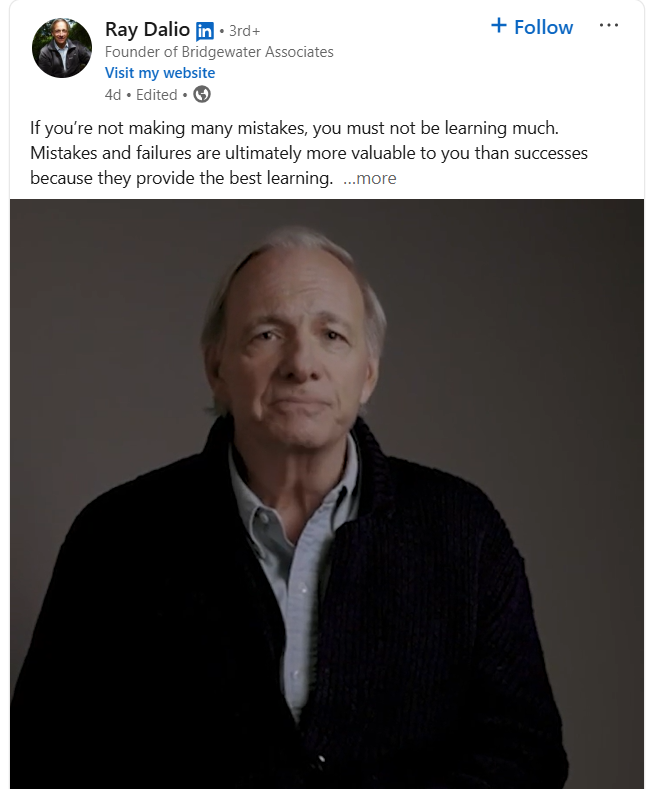
For example, look at Ray Dalio’s profile; he experiments with all formats of content from image to video:
- Test the “Anti-Prime Time”: Sometimes, posting when every other brand is silent can actually help you stand out because there is less competition for the “feed” space.
- The “Format-First” Rule: Don’t just post text. Experiment with “Carousels” (slides) for educational tips, short-form vertical video for human stories, and single-image “Big Stats” for quick impact. Each format reaches a different part of the algorithm.
- Run “Split Tests” on Headlines: Try posting the same piece of value twice—once with a provocative headline and once with a helpful, direct headline for A/B testing. See which one gets more “Save” actions; this tells you exactly how your audience likes to be spoken to.
- Prioritize “Dwell Time”: Algorithms favor content that keeps people on the app. Long-form posts or multi-slide carousels encourage users to stay longer, which signals to the platform that your content is high-quality and worth showing to more people.
Measuring ROI of B2B Social Media Marketing
To get executive support, you must show that social media helps close deals. Don’t just talk about “likes”—talk about pipeline and revenue.
- Focus on Intent: Track “high-value” actions, like when a prospect saves a post, clicks a demo link, or downloads a template. These actions show they are actually interested in buying.
- Use Social Listening: Use tools to see who is talking about your brand. If people start asking about you in industry groups after a campaign, you can prove your content is working—even without a direct link.
- Compare to Benchmarks: Look at industry averages. If your engagement is higher than the average for your field, you have proof that your strategy is outperforming competitors.
- Report the “Pipeline Impact”: When talking to bosses, focus on Target Accounts. Show them exactly how many big companies are engaging with your posts and how much money those deals are worth.
- Show the “Human” Proof: Collect screenshots of customers saying, “I saw your post and decided to reach out.” This “real-world” feedback is often more convincing to leaders than a spreadsheet.
Conclusion
Social media is no longer just a place to post; it is a place to build a reputation through B2B social media marketing. Moving away from generic “corporate” content and toward a funnel-based, human-led strategy is how you win. When you lead with value and support your sales team with real data and honest stories, you stop chasing the algorithm and start building a pipeline.
The Bottom Line: Focus on helping your audience rather than just selling to them. By the time a prospect reaches out, they shouldn’t just know your company name—they should already trust your expertise.
FAQ
In technical or traditional fields like manufacturing, logistics, or compliance, brands often fall into the trap of being “too professional,” which ends up sounding robotic. When you use human-led storytelling to show you understand the “messy” parts of the job, you build a connection that a dry corporate brochure never could.
The old advice to “post every day to feed the algorithm” is outdated. Today, three “Authority” posts that actually spark a conversation or get shared into a private Slack group are much more valuable than ten “Filler” posts that get ignored.