



Explore this content with AI:
A rebranding strategy is the process of changing how a brand is perceived by its audience. It is a fundamental shift that redefines a company’s identity, positioning, and communication style to better align with evolving business goals, shifting market conditions, or new customer expectations.
But how do you know when your brand needs a rebrand, and how do you go about it from end to end? Here is everything you need to know about a rebrand and how to maximize your chances of success after rebranding.
The “House Renovation” Analogy
Think of rebranding like renovating an old house. You might start with a fresh coat of paint and new floors to improve the “curb appeal”—this is the visual identity.
However, a true renovation often goes deeper: knocking down walls to create an open floor plan (restructuring internal culture) or updating the plumbing and wiring (improving the customer experience).
Similarly, a rebrand isn’t just about changing the sign on the door; it’s about the entire experience a person has when they interact with your product or service.
What Rebranding Affects
Rebranding is a holistic transformation. It can impact:
- The Name: Changing the literal identity (e.g., Tokyo Tsushin Kogyo becoming Sony).
- Visual Identity: Logos, color palettes, and typography.
- Tone of Voice: How the brand speaks to its audience—moving from formal to conversational, for example.
- Messaging: The core stories and value propositions shared with the world.
- Internal Culture: The values and behaviors expected from employees.
The Bottom Line: Rebranding is not a design exercise; it is a business strategy designed to protect or grow market share.
Rebranding vs. Brand Refresh — What’s the Difference?
Understanding the scale of change you need is the first step toward a successful transformation. Most companies don’t need to tear everything down; they just need a “face-lift.”
The Brand Refresh
A brand refresh updates your look and feel without erasing your history. It involves modifying selected elements—like simplifying a logo, tweaking a color palette, or updating fonts—while keeping your mission, values, and market positioning the same.
The Full Rebrand
A full rebrand is a complete overhaul. It is a comprehensive transformation of every aspect of brand identity and expression, both internally and externally. This is necessary when the current brand no longer represents what the company has become.
When to Choose: Refresh vs. Rebranding Strategy
| Feature | Brand Refresh | Full Rebrand |
| Business Strategy | Stays the same | Changes significantly |
| Target Audience | Stays the same | Often shifts or expands |
| Logo | Minor tweaks/simplification | Usually a total redesign or name change |
| Risk Level | Low | High |
| Primary Goal | Stay modern and relevant | Pivot or save the business |
The Deciding Question: Does your current foundation still support your business goals? If the answer is yes, opt for a refresh. If your foundation is cracked or misaligned with your future, you need a rebrand.
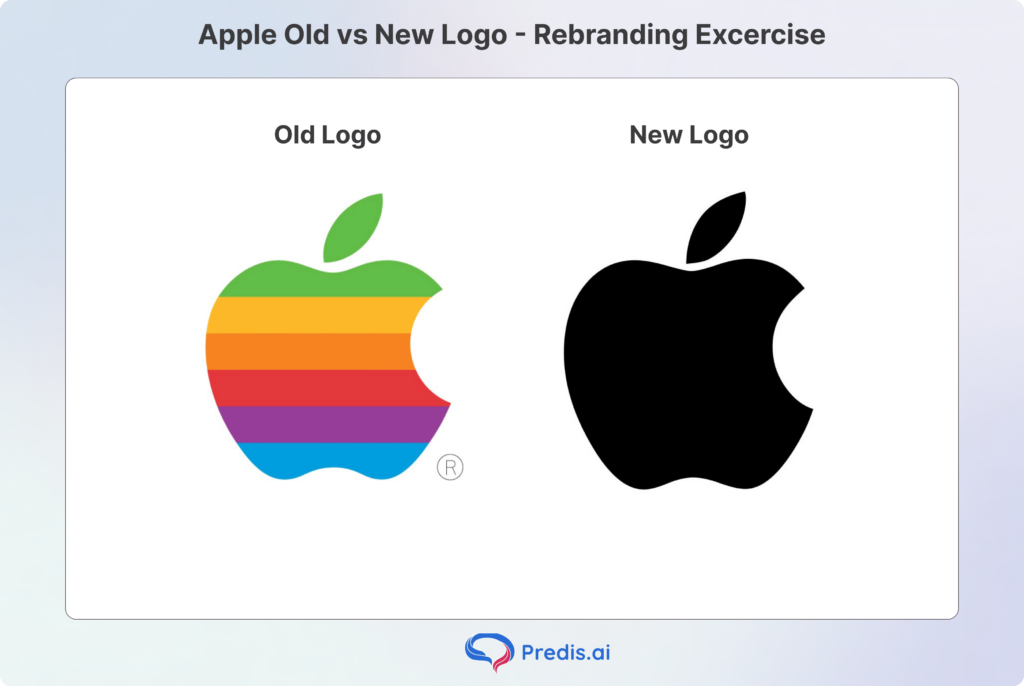
Real Example: Consider Apple. Over the decades, they evolved their rainbow logo into a sleek, monochrome version. However, they never abandoned the iconic apple shape or their “Think Different” ethos. This was a masterclass in the Brand Refresh.
Why Do Companies Rebrand? Common Reasons
Strategy drives change. Marketers identify “updating brand identity” as the top motivator for a rebrand. Other significant drivers include repositioning, reaching a new audience, and repairing a negative reputation.
1. Mergers and Acquisitions
When two companies become one, the “visual hierarchy” changes. The acquiring company often initiates a rebrand to create a cohesive image across all entities, ensuring customers aren’t confused by a patchwork of different styles and values.
2. Entering New Markets
Expanding globally often requires an identity that transcends language barriers. A classic example is Tokyo Tsushin Kogyo. As they expanded worldwide, they realized their name was a mouthful for international consumers. They rebranded to Sony—a short, punchy name derived from “sonus” (sound) and “sonny” (little son)—making them instantly recognizable across the globe.
3. Staying Relevant
The market moves fast. Research shows that 74% of S&P 100 companies rebranded within their first seven years. This proves that even the most successful businesses use strategic updates to keep pace with cultural shifts and technological advancements.
4. Business Pivot
A business pivot happens when a company fundamentally changes what it sells or how it operates. If a brand that started as a DVD-by-mail service decides to become a global streaming giant, the old look and name usually won’t fit the new mission. Rebranding here acts as a “reset button” to tell the world that the company’s core purpose has evolved.
5. Negative Equity
Negative equity is a fancy way of saying a brand has a bad reputation. If a company is linked to a major scandal, poor customer service, or a faulty product, the “brand name” becomes a liability that drives customers away. In this case, a rebrand is a survival tactic used to distance the business from past mistakes and start fresh with a clean slate.
6. Competitive Pressure
If a new, sleek competitor enters the market and makes your brand look like a “dinosaur,” you are facing competitive pressure. To stay in the game, a company might rebrand to appear more modern, faster, or more innovative than the newcomer. It’s about proving to customers that you are still the best choice in an increasingly crowded market.
Types of Rebranding Strategy: Which One Do You Need?
Depending on your goals, your rebrand will likely fall into one of these four categories:
- Partial Rebrand: You keep your core identity but update specific “tired” elements like your tagline or color palette. This is ideal for established brands that just need to look more modern on mobile apps or social media.
- Full Rebrand: A ground-up transformation. You are changing the name, the visuals, the voice, and the entire business strategy.
- Merger/Acquisition Rebrand: The strategy here depends on “brand equity.” When Salesforce acquired Slack, they kept the Slack identity intact because it was already a beloved, powerhouse brand.
- Audience Repositioning: This is common when a brand’s core demographic ages out, and they need to appeal to Gen Z or Alpha to survive.
How to Rebrand: A Step-by-Step Process
Step 1: Audit Your Current Brand
Before looking forward, look at where you are. Research your customers, analyze market trends, and identify the “perception gap”—the distance between how you think you are seen and how you are actually seen.
Step 2: Define Your Goals
What does success look like? Are you trying to increase awareness, change your price point, or enter a new country? Formulate a strategy with specific milestones and a clear timeline.
Step 3: Know Your Audience
Develop updated audience personas. If you are chasing a younger demographic, your voice and visuals must evolve to meet their specific tastes and values.
Step 4: Develop the New Identity
This is the creative phase. Align your new logo, typography, and messaging with the strategy you built in Step 2.
Step 5: Test Before You Launch
Don’t guess; ask. Incorporate customer feedback through focus groups or surveys. Testing the market before “going all in” can save you millions in potential PR disasters.
Step 6: Build Your Brand Guidelines
Consistency is the soul of a brand. Create a comprehensive Brand Style Guide that dictates how the logo is used, what the brand voice sounds like, and which templates employees should use.
Step 7: Roll It Out Strategically
Don’t just change your profile picture. Tell a story. Explain why you changed and what it means for your customers. Use a coordinated content plan across email, social media, and your website.
How to Measure the Success of a Rebrand
A rebrand is an investment, and you need to track the return. Focus on these three areas:
- Brand Sentiment: Use social listening tools to see if the public’s “mood” toward your brand has shifted from negative or neutral to positive.
- Market Share and Sales: Did the rebrand lead to an uptick in new customer acquisition? Are people willing to pay more for the “new” version of you?
- Employee Engagement: A successful rebrand starts inside. If your employees understand and feel energized by the new mission, it will reflect in their work and customer service.
Real-World Rebranding Examples
The Successes
- Old Spice: Once seen as “the scent your grandfather wears,” a massive rebrand focused on humor and younger “Man Your Man Could Smell Like” ads transformed them into a dominant player for Gen Z and Millennials.
- Aerie: By focusing on body positivity and “No Retouching,” AEO’s sub-brand Aerie aligned perfectly with modern values, leading to over $1B in business.
- Pepsi: In 2023, Pepsi updated its logo to lean into its 125-year heritage while looking sharper on digital screens. It maintained “brand recognition” while feeling fresh.
The Cautionary Tale
- GAP: In 2010, GAP replaced its iconic blue box logo with a generic font and a small gradient square. The backlash was so intense that they reversed the rebrand within eight days. The lesson? They ignored their existing audience and changed for the “sake of change” without a clear reason.
Rebranding Mistakes to Avoid
- Chasing Trends: A “minimalist” look might be cool today, but look dated in eighteen months. Aim for timelessness.
- Ignoring Your Core Fans: Don’t alienate the people who kept you in business just to chase a new group.
- Rushing the Process: If you skip the research or testing phases, you are essentially gambling with your company’s future.
- Treating it as “Just a Logo”: If your service still sucks, a new logo won’t save you.
How to Know If Your Brand Needs a Rebrand
- Your brand no longer reflects your actual services or values.
- You are targeting a completely different audience.
- Your visuals look “dated” and perform poorly on mobile/social platforms.
- Pro Tip: Conduct a brand audit every six months to stay ahead of the curve.
Conclusion
Rebranding is a powerful business decision, but it isn’t something to take lightly. The most successful shifts are rooted in deep strategy and a clear vision of the future. Whether you need a light refresh or a total ground-up transformation, the goal is the same: to ensure that who you are on the outside matches who you have become on the inside.
Frequently Asked Questions
A refresh can take 3–6 months, while a full global rebrand can take 12–18 months.
Yes. If it’s done without research (like GAP), it can alienate loyal customers and cause a drop in sales.
Absolutely, especially if they have outgrown their original “side-hustle” look and want to attract higher-paying clients.