Tiny faces and small type
Small faces, spelling and very fine detail can come out wrong.
Make the words you care about bigger, and zoom in before you post.
Google's top image model writes clear text, translates a label without touching the rest of the photo, and builds one scene from up to 14 reference images.
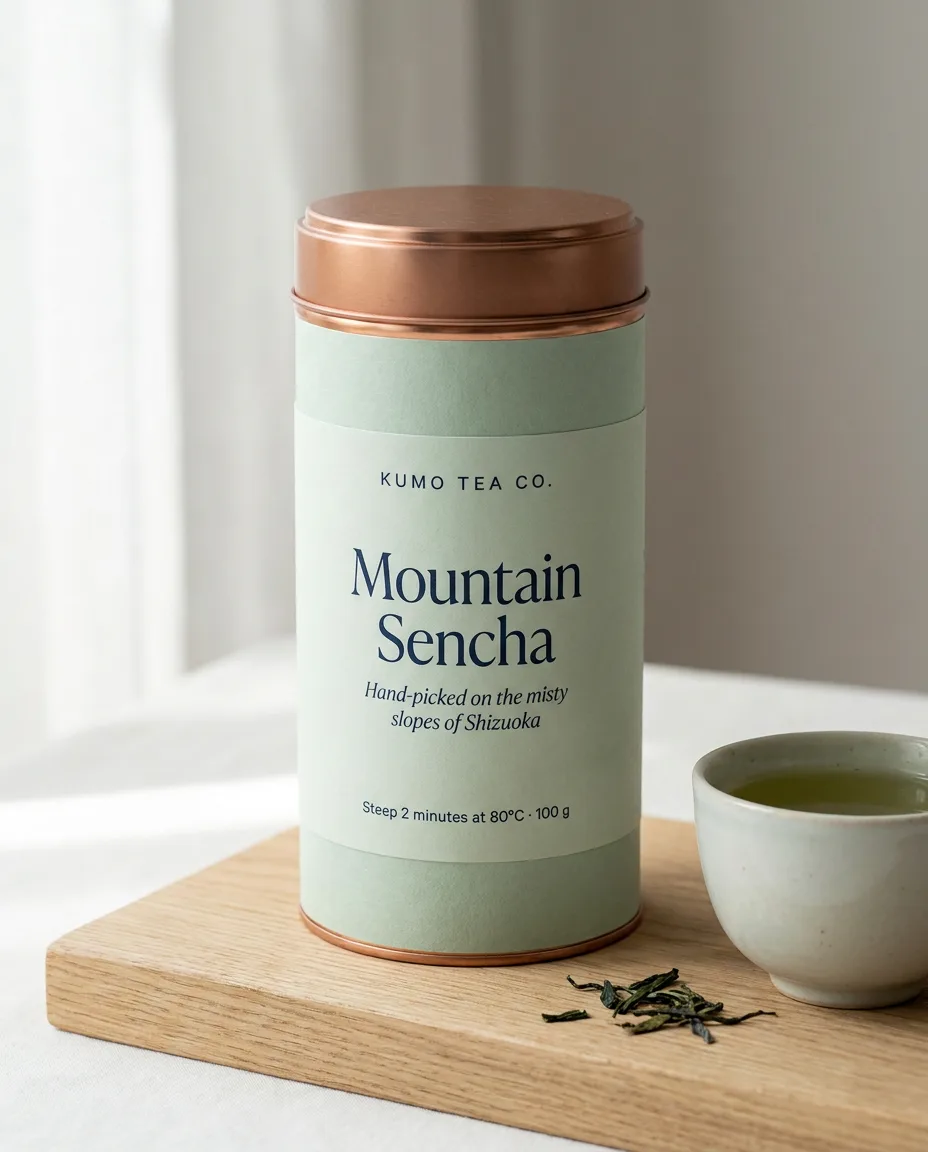
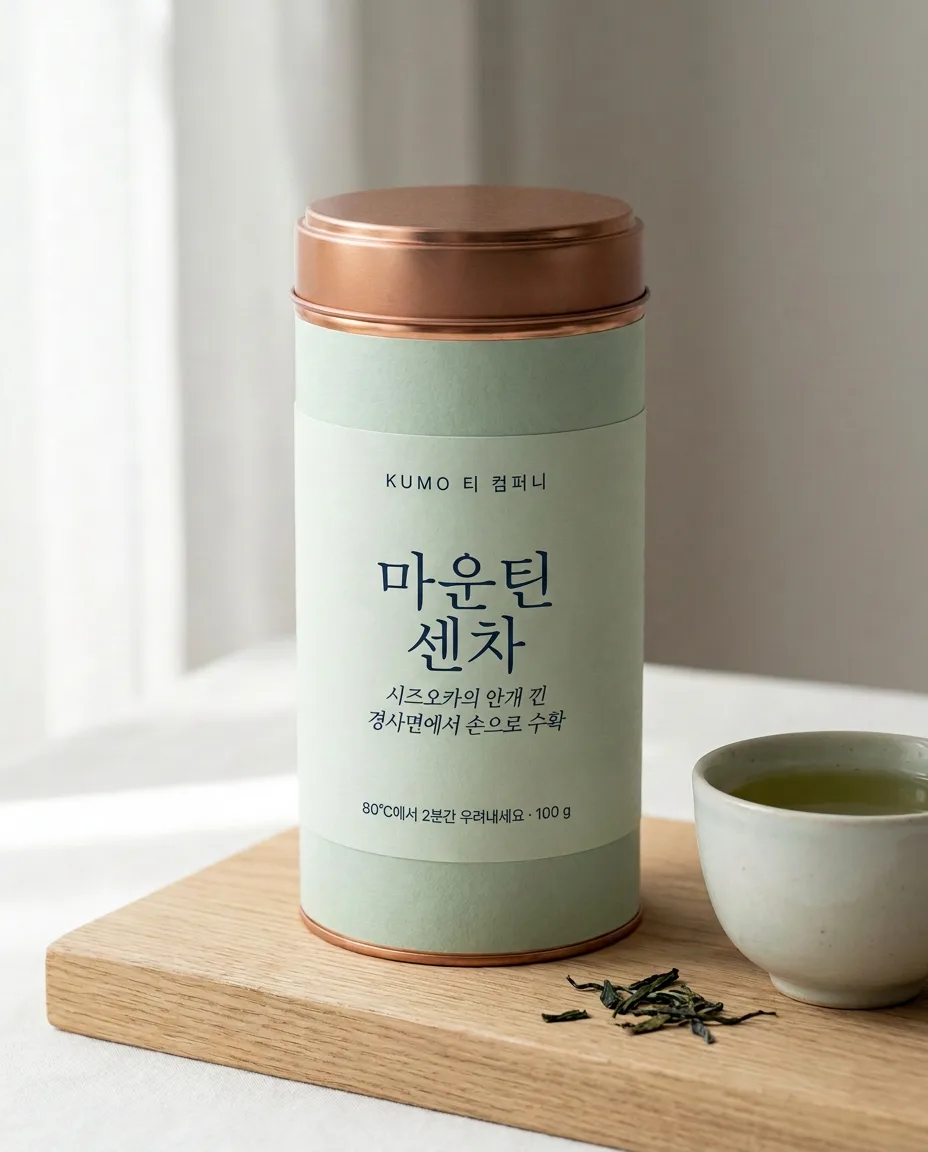
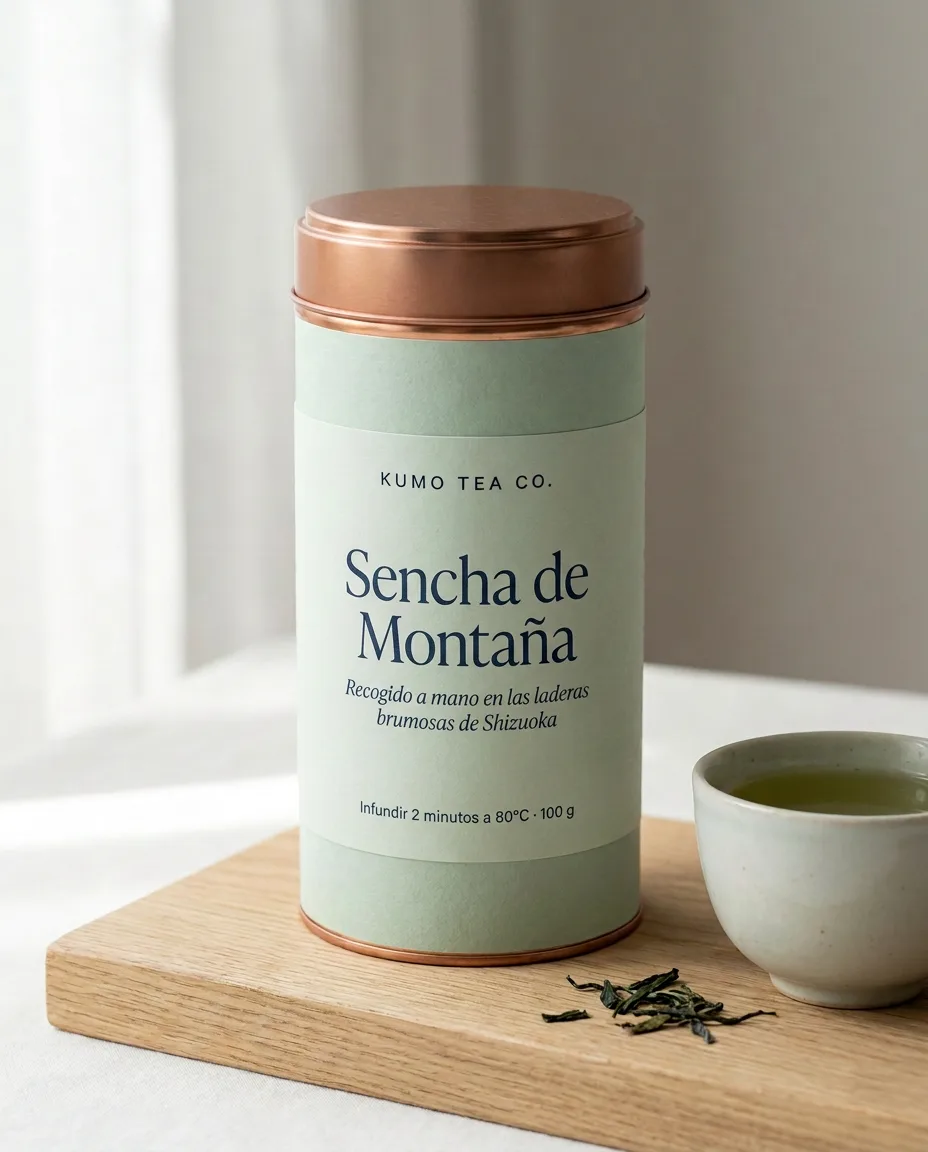
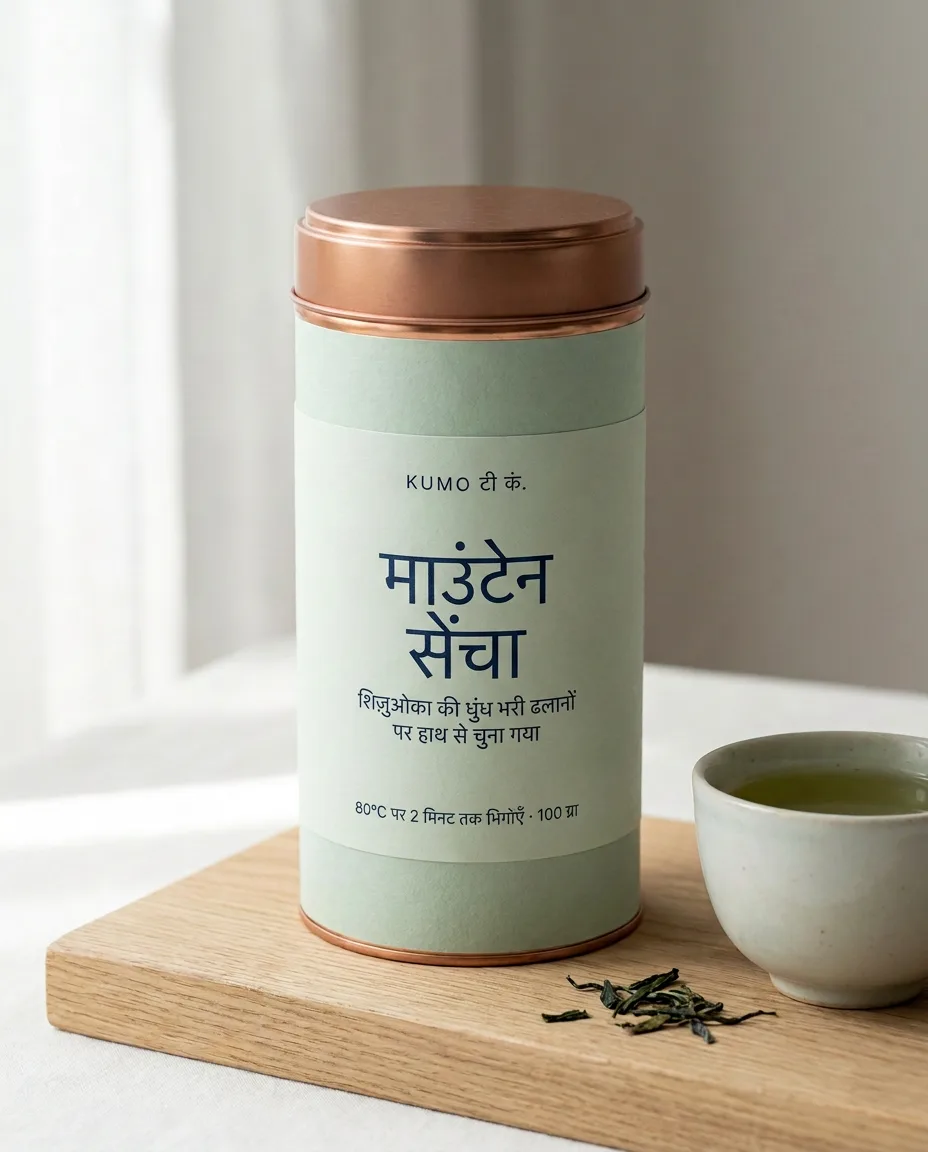
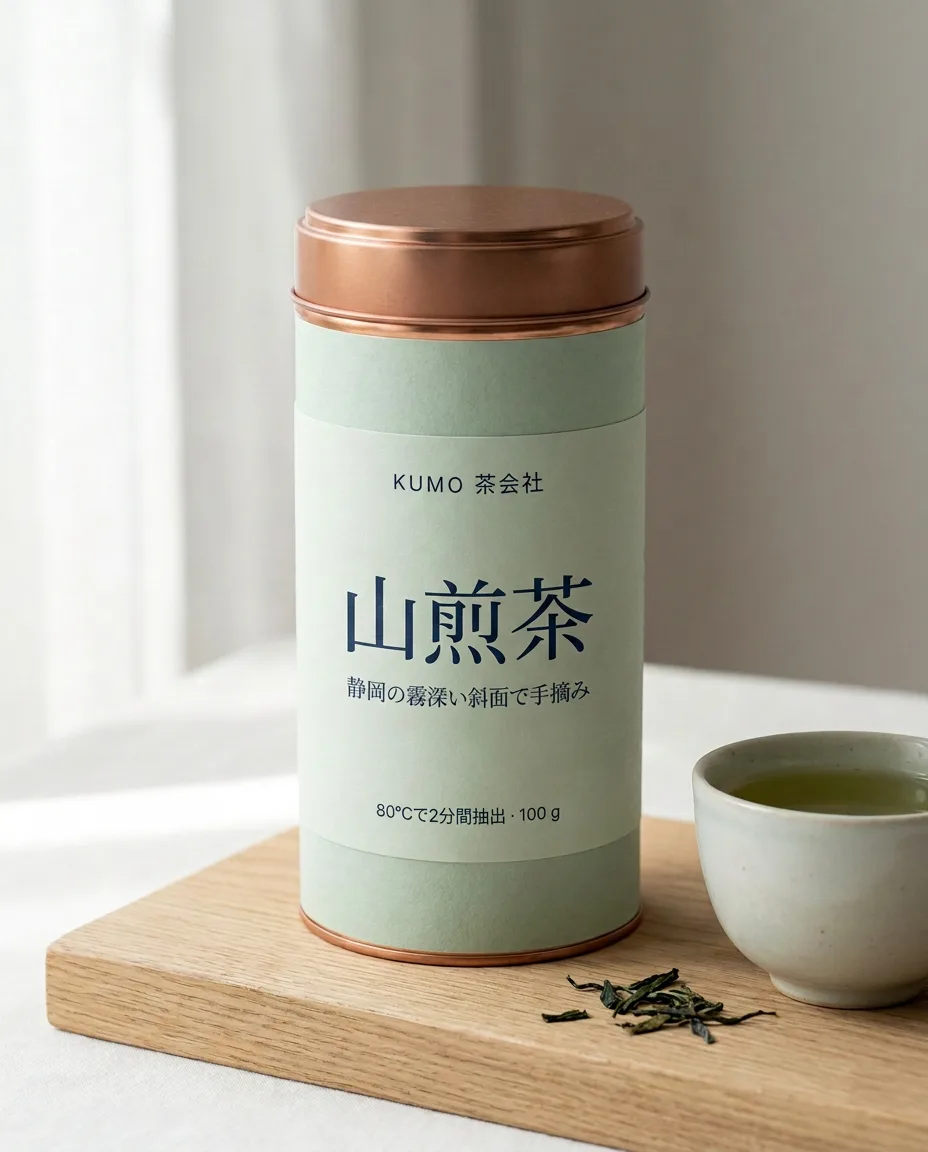
Pick a language. Only the words change.
Studio product photograph of a premium loose-leaf tea tin, square 4:5 frame. A tall matte washi-paper-wrapped cylindrical tin in pale celadon green with a brushed copper lid stands on a slab of light oak beside a small handleless ceramic cup of green tea and a few scattered dry tea leaves. The wrap-around label is printed in deep ink-blue and reads, top to bottom and clearly legible: "KUMO TEA CO." in small spaced capitals, "Mountain Sencha" in a large elegant serif, the line "Hand-picked on the misty slopes of Shizuoka" in a smaller italic, and at the bottom in small type "Steep 2 minutes at 80°C · 100 g". Soft diffused window light from the left, gentle shadow, calm Japanese-minimal styling, crisp label detail.
Made with Nano Banana Pro on Predis.ai on October 26, 2026, 1K, 4:5. Each translation used the English photo as its only reference.
A product, a logo, a person, a street and a light reference went in, along with one sentence on how they fit together. Point at a picture to see where it landed.
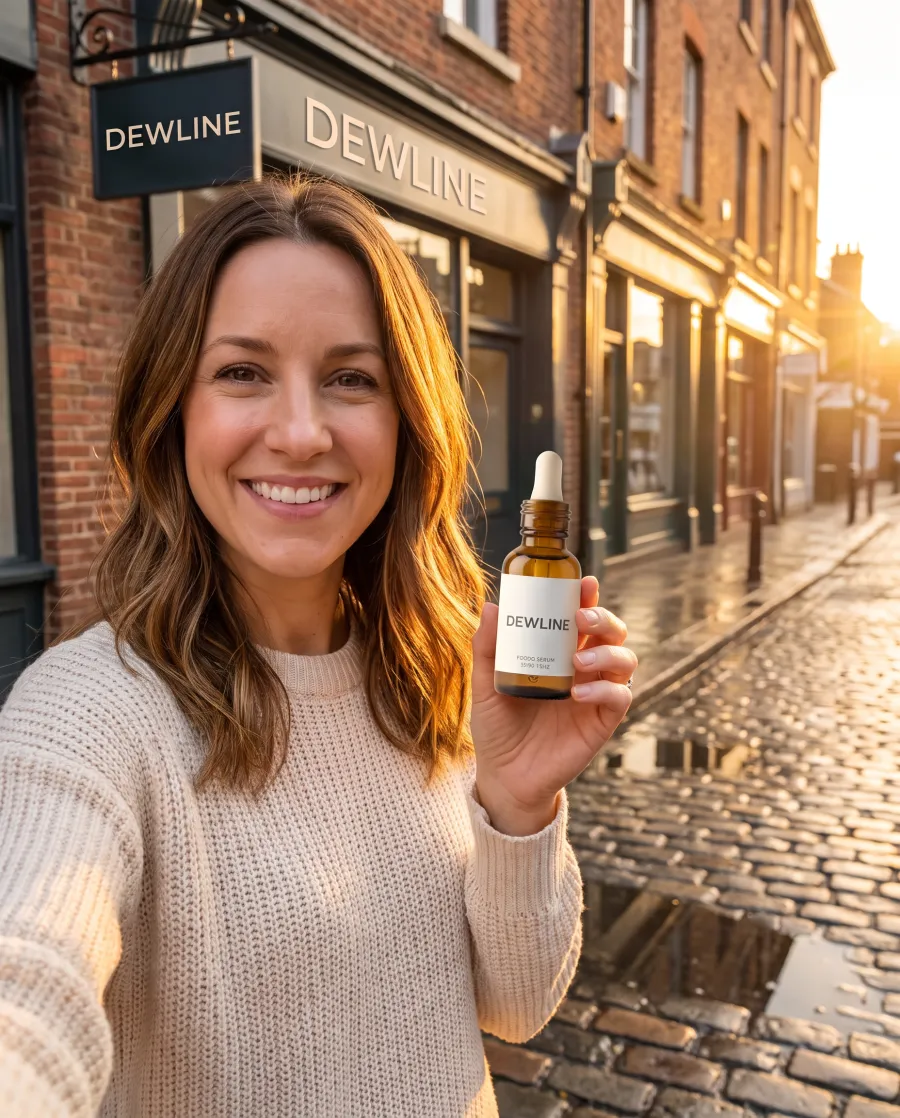
Image 1 is the product: the Dewline serum bottle. Image 2 shows the brand's Dewline wordmark. Image 3 is the model: the woman in the cream knit sweater. Image 4 is the location: the wet cobbled street with shopfronts. Image 5 is the light reference: warm golden-hour sunlight. Put the bottle from image 1…
Made with Nano Banana Pro on Predis.ai on October 26, 2026, 4:5, from 5 of a possible 14 references.
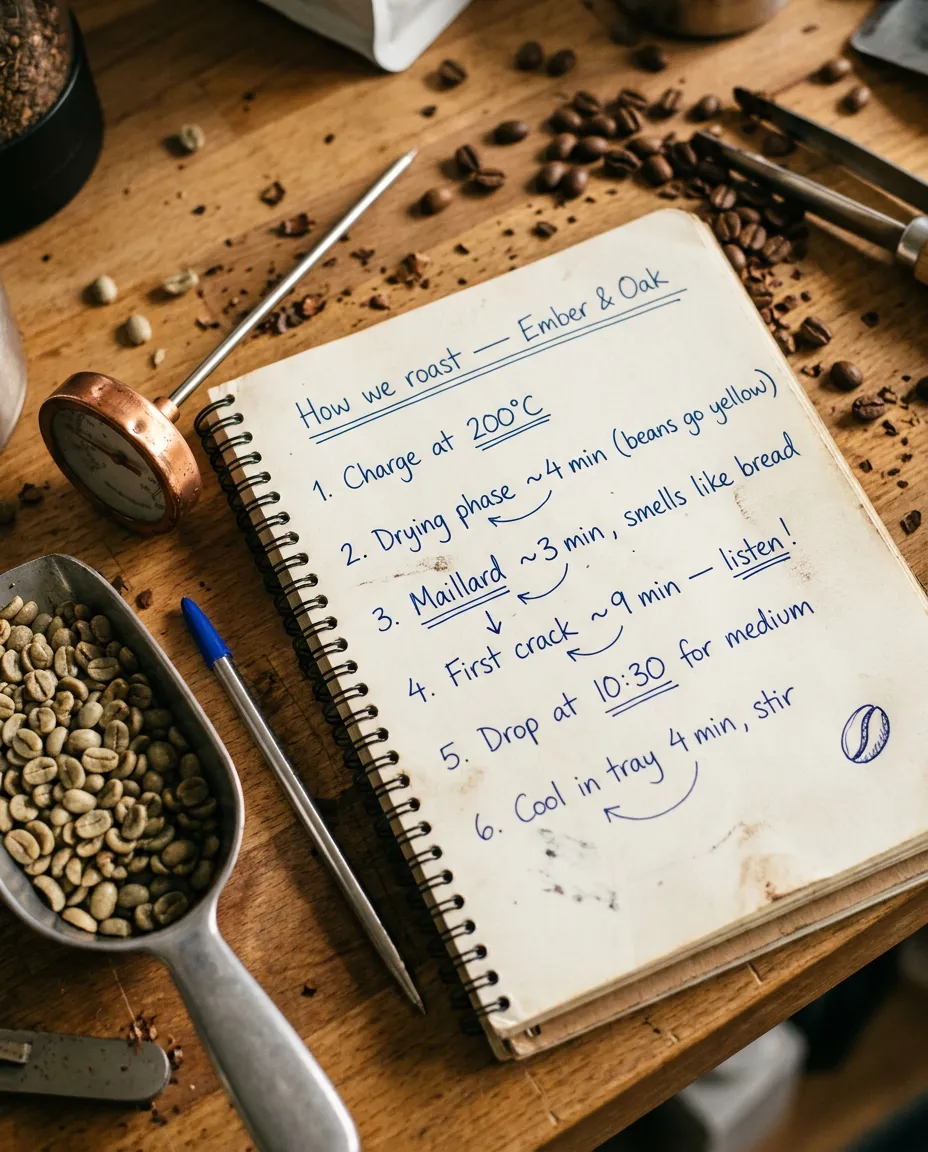
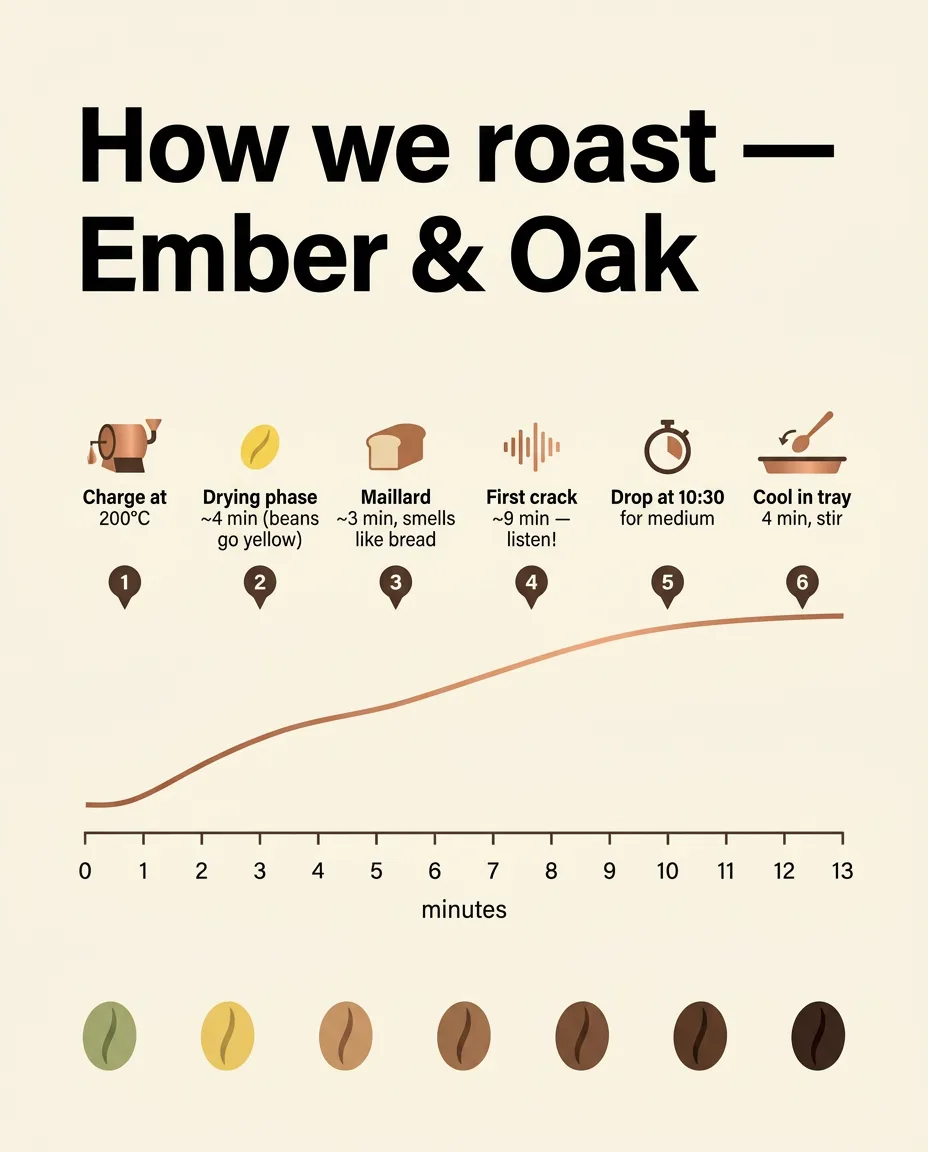
The roaster's handwritten notes went in as the only reference. Every step, time and temperature came out on a clean timeline, spelled the way it was written.
The notes: Overhead photograph of an open spiral notebook on a coffee-roastery workbench, beside a scoop of green coffee beans and a dented copper roasting thermometer. The right-hand page is covered in quick handwritten notes in blue ballpoint, slightly messy but readable, with a few arrows and underlines. The title at the top reads "How we roast — Ember & Oak". Below it the six steps, from "1. Charge at 200°C" to "6. Cool in tray 4 min, stir". A small doodle of a coffee bean sits in the margin. The poster: Using the handwritten roasting notes in this photo as the content, design a brand-new flat infographic poster, 4:5. Do not show the notebook, the desk or any photo, only the finished graphic on a plain warm cream background. Title at the top in a bold modern sans-serif: "How we roast — Ember & Oak". Below it, a horizontal timeline from 0 to 13 minutes with a copper temperature curve rising above it and six numbered markers, each with a small flat icon and its label, written exactly as in the notes. Along the bottom, a row of seven small illustrated coffee beans shading from green to yellow to dark brown. Palette of cream, espresso brown and copper, generous white space, every word spelled exactly as given.
Made with Nano Banana Pro on Predis.ai on October 26, 2026. Google warns infographics can carry wrong facts, so check every number before you post.
 NotesPoster
Ask for one change and say what has to stay. The room, the angle and the product hold still while the light or the reveal happens.
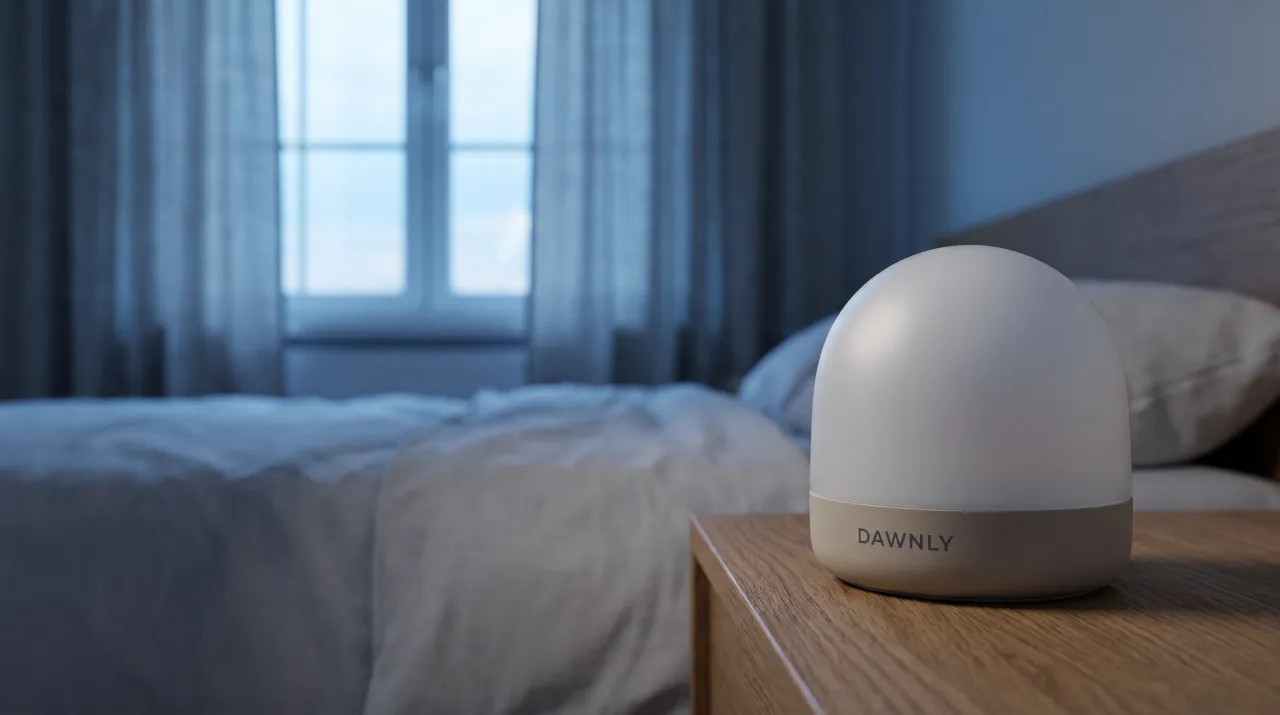
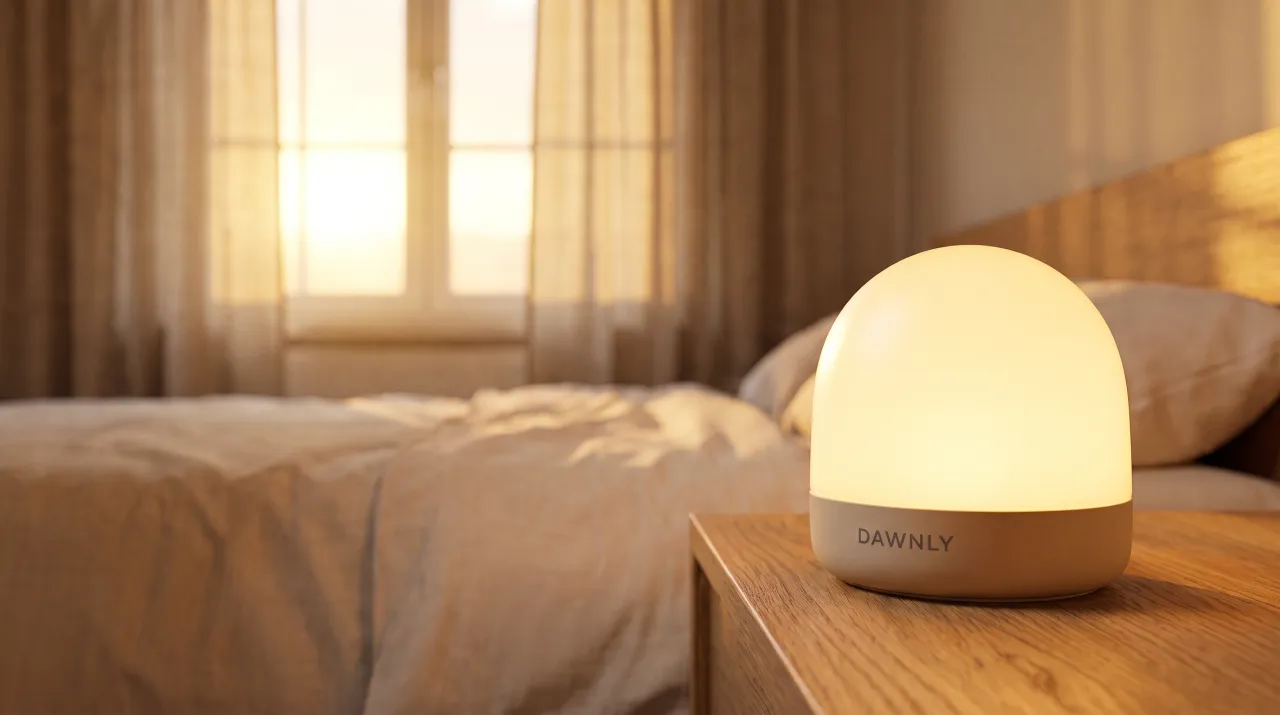 BeforeAfter
Edit this photo. Keep the exact same camera angle, framing, room, bed, curtains, window, bedside table and clock shape and position. Change only the light: the sunrise clock's frosted glass dome now glows a bright, warm golden amber from inside, and its warm light fills the room, spreading across th…
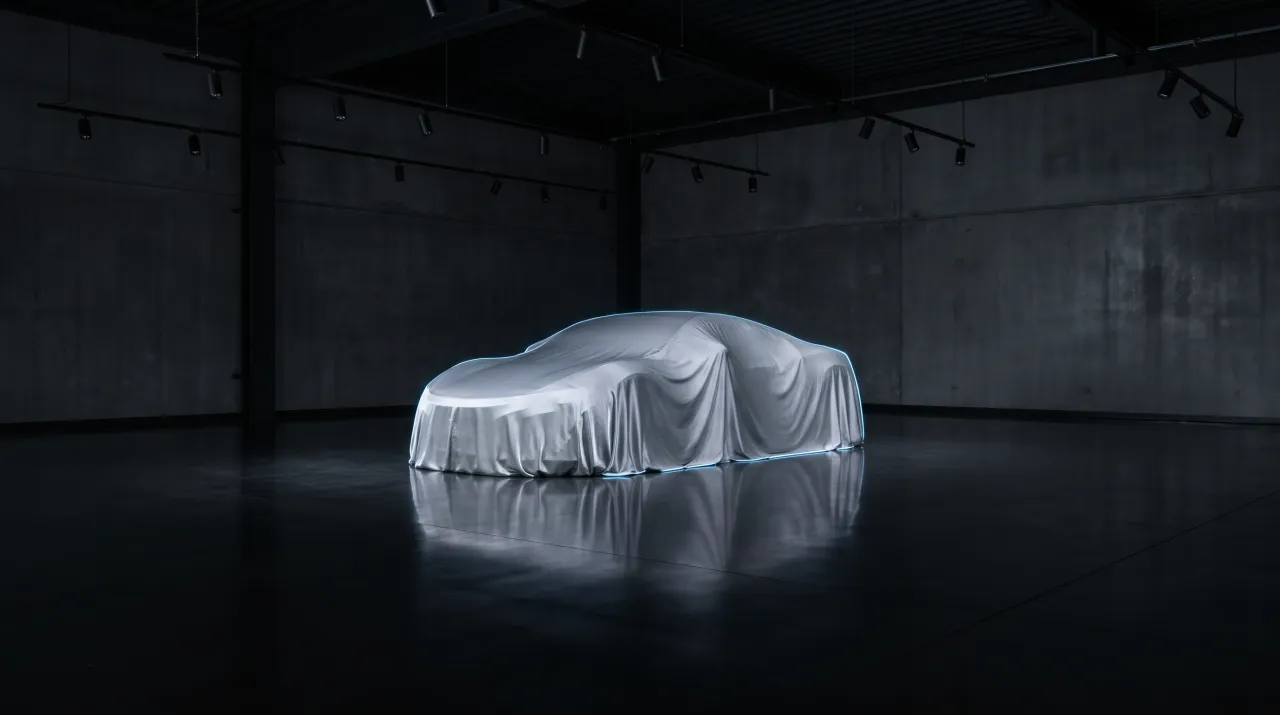
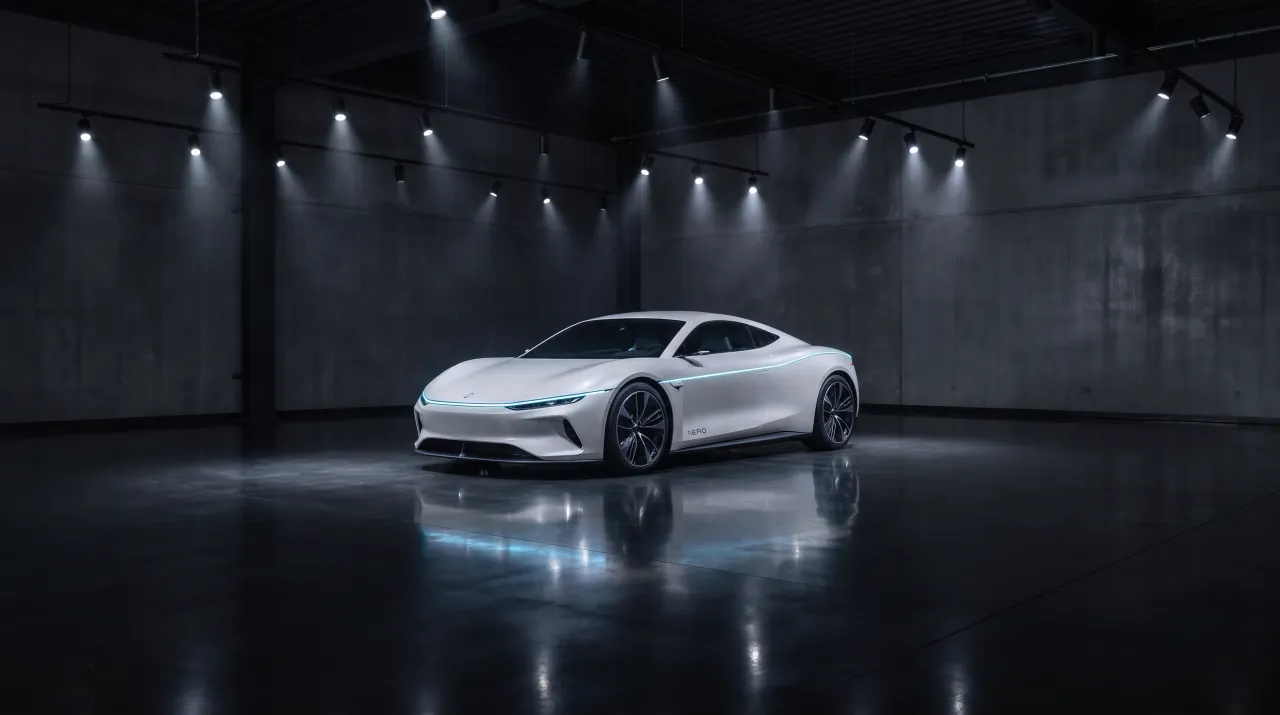 BeforeAfter
Edit this photo. Keep the exact same camera angle, framing, room, walls, floor and ceiling spotlight track. Remove the silk sheet completely to reveal the car underneath: a low, sleek invented concept sports car with a pearl-white body, a thin ice-blue light line running along its side from nose to tail, and the word "AERO" in small, clean silver lettering on the side just behind the front wheel. The overhead spotlights are now switched on, pooling bright light on the car and the polished black floor, crisp highlights, deep blacks. No sheet, no people, no other text, no real car brand logos.
Both made with Nano Banana Pro on Predis.ai on October 26, 2026.
One prompt, four images in a single run. The word ORBITAL sits just a few millimeters tall on each dial and stays readable in every take.
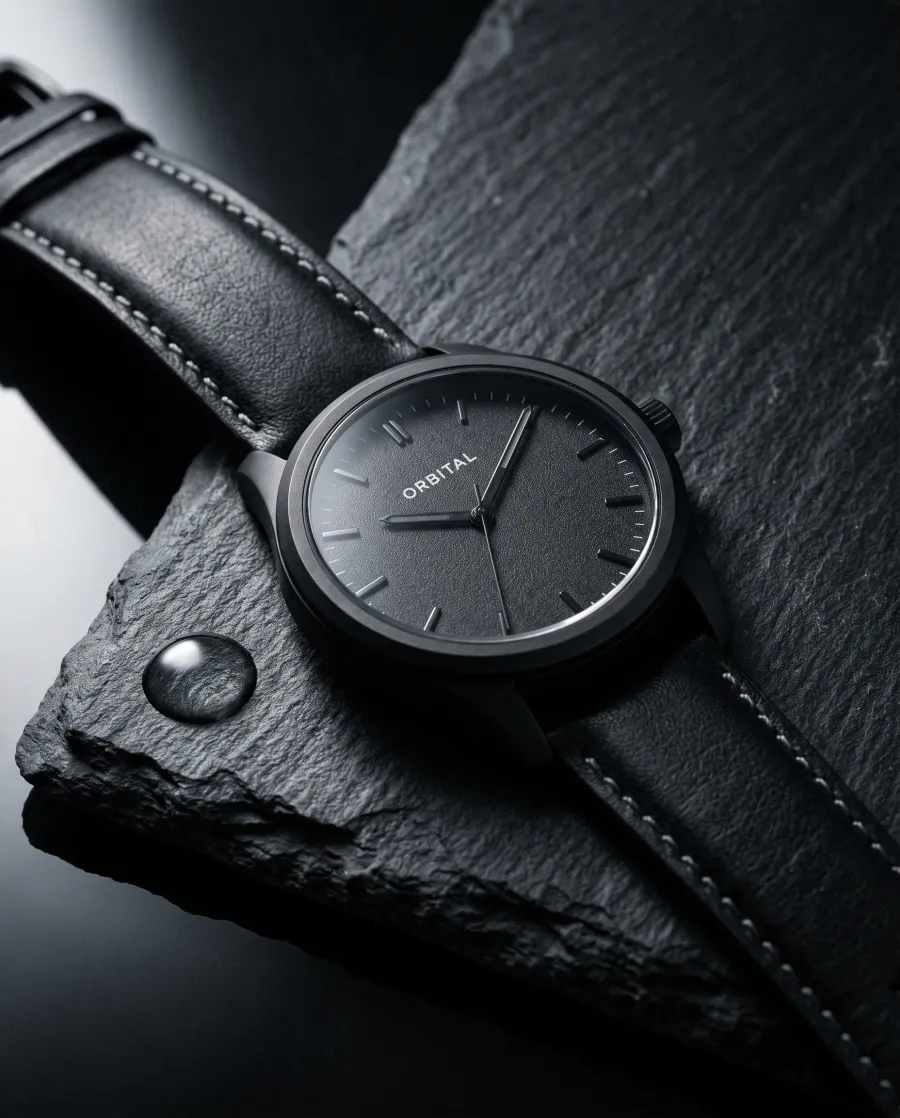
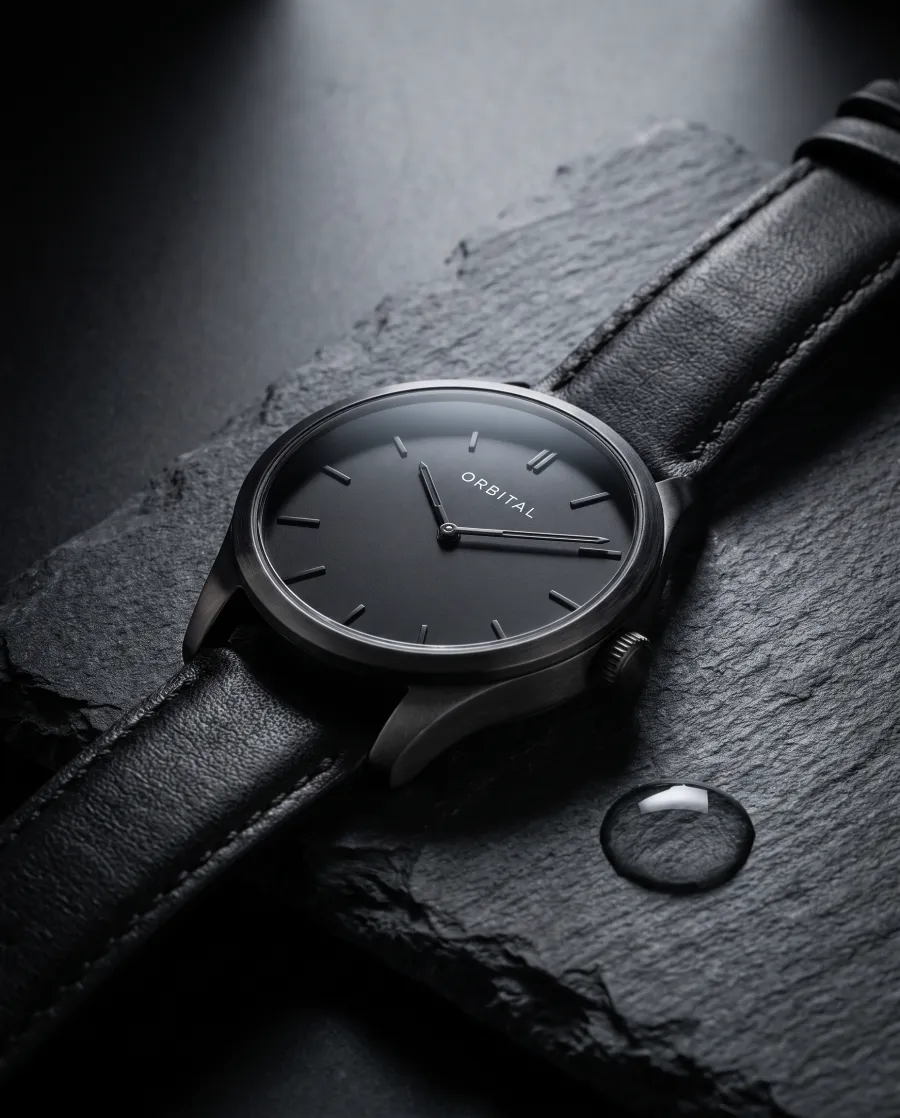
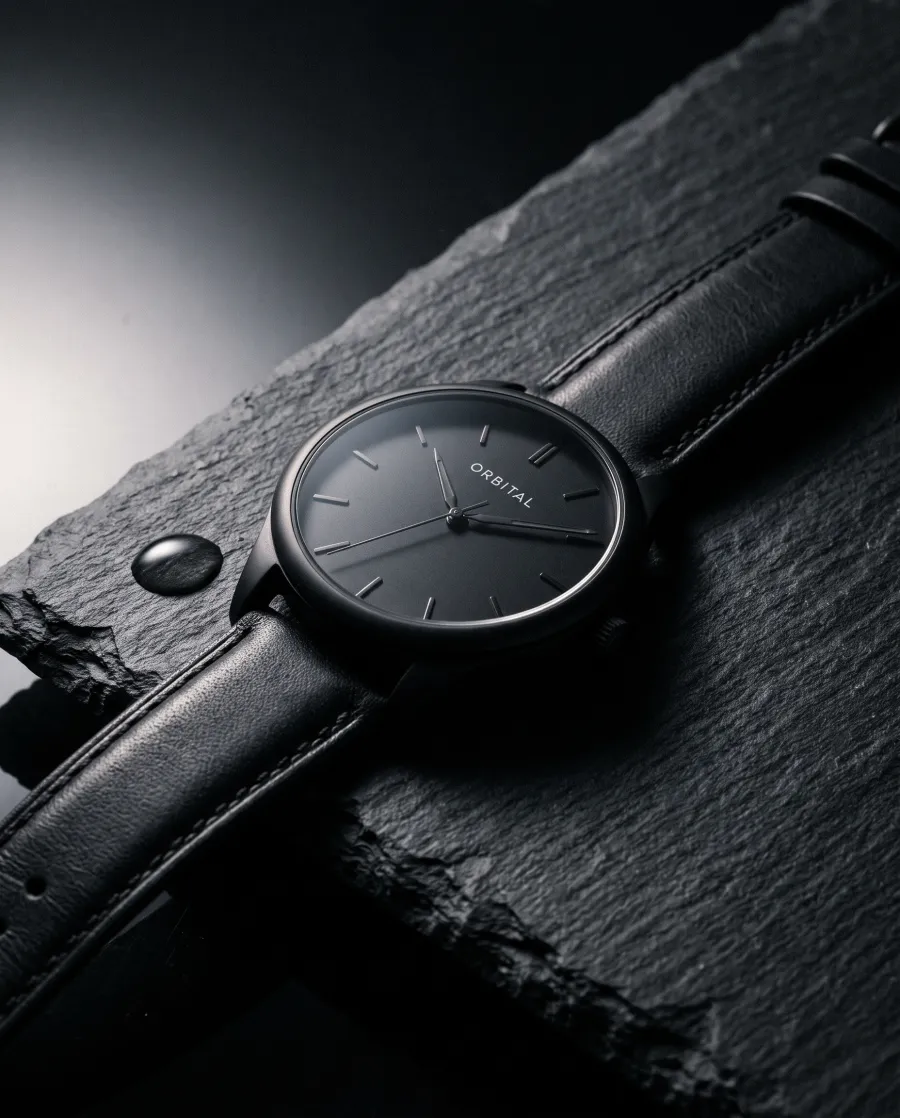
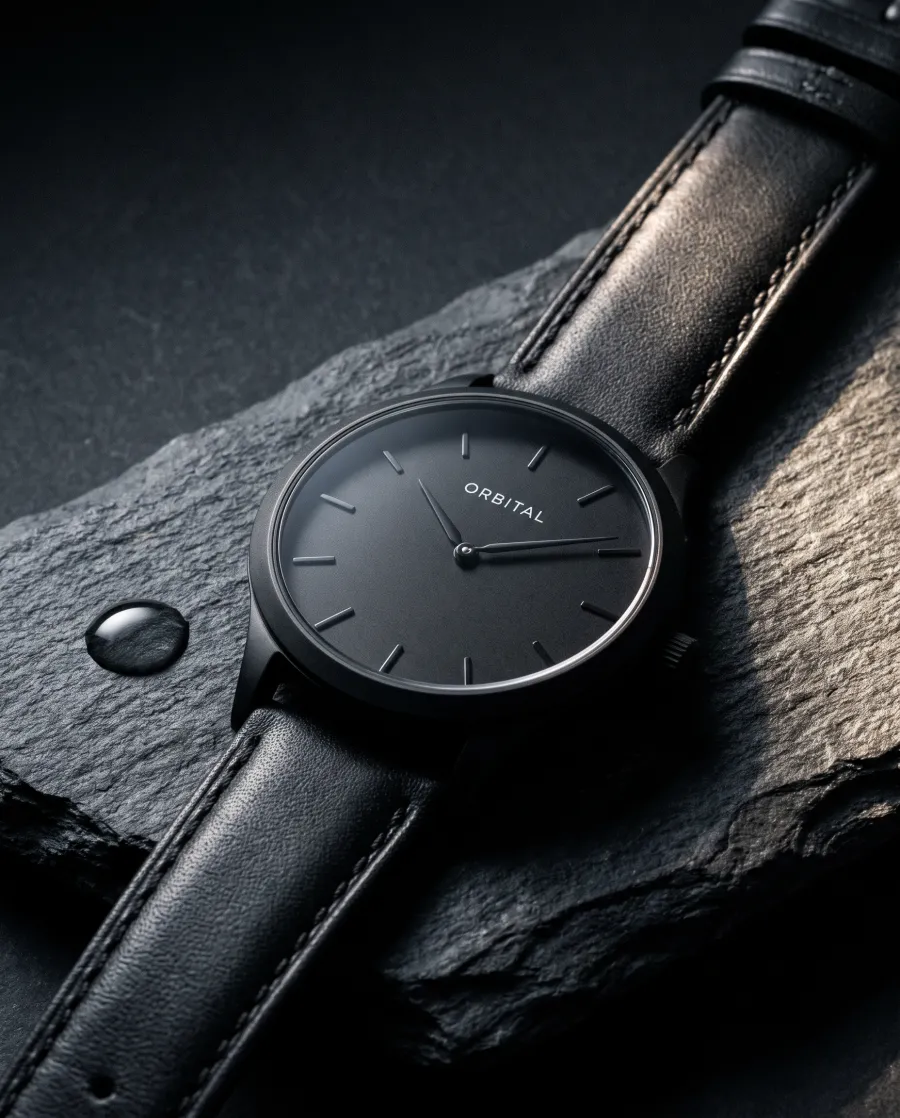
Premium product ad photo of a matte black wristwatch with the word "ORBITAL" printed small and crisp on its dial, resting on a slab of dark slate beside a single drop of water, dramatic side light, fine detail on the strap stitching.
Made with Nano Banana Pro on Predis.ai on October 26, 2026, 4 images in one run.
All made with Nano Banana Pro on Predis.ai on October 26, 2026.
Small faces, spelling and very fine detail can come out wrong.
Make the words you care about bigger, and zoom in before you post.
An infographic can look finished and still get a fact wrong.
Give it the facts in your prompt, as the roasting notes did.
Grammar and idioms in a translated label can be off.
Have a native speaker check anything you'll print.
Large lighting changes and many-image blends can show artifacts.
Change one thing per edit and check the edges.
What is Nano Banana Pro?
It's Google DeepMind's top image model, also called Gemini 3 Pro Image, released on November 20, 2025. It makes images from text or from your own photos, and Google built it for work where the details matter: readable text, translated labels and brand consistency.
Can Nano Banana Pro translate the text in an image?
Yes. Give it the image and ask for a language, and it rewrites the words while keeping the layout, type style and everything else in the photo. The tea tin at the top of this page went from English to Korean, Spanish, Hindi and Japanese that way. Google notes that grammar and idioms can still slip, so have a native speaker read anything you'll print.
How many reference images can it use?
Up to 14 on Predis.ai. Google says it can keep up to 5 people looking the same across one image. The Dewline ad on this page used 5: a product, a logo, a person, a street and a lighting reference.
What sizes and shapes does it make on Predis.ai?
1K, 2K or 4K, in square (1:1), portrait (4:5), landscape (16:9) or vertical (9:16). You can make up to 4 images from one prompt.
How is Nano Banana Pro different from Nano Banana 2 and 2.1?
Pro is Google's premium model for finished, detailed work. Nano Banana 2 and 2.1 are the faster Flash models. 2.1 also offers more shapes, including very wide banners, so it suits quick drafts and odd formats. All three are in the Predis.ai Model Studio.
Do Nano Banana Pro images carry a watermark?
Google adds SynthID, an invisible digital watermark, to every image it makes. You won't see it in the picture.
Upload a product photo and ask for the language you sell in.
Nano Banana is a trademark of Google. Predis.ai is not affiliated with or endorsed by Google.