


Explore this content with AI:
In 2026, the average person is exposed to roughly 10,000 advertisements a day. From the second you check your phone in the morning to the billboard you pass on your way home, the “Attention Economy” is at an all-time high. Most of these ads are ignored—filtered out by a brain that has become expert at spotting a sales pitch from a mile away.
So, how do the world’s most successful brands break through? They use Creative Marketing Friction.
Creative friction is the art of making someone stop and say, “Wait, what was that?” It’s the difference between an impression (seeing an ad) and engagement (interacting with it). In this guide, we’re diving into 27 of the most brilliant, weird, and effective advertising examples of all time to see how they turned a budget into a cultural moment.
The Master List: 27 Creative Marketing Examples
A. Print Ads that Make You Look Twice
Print ads aren’t dead; it’s just more exclusive. These brands used the physical page to create an experience.
1. IKEA – Pregnancy Test Ad
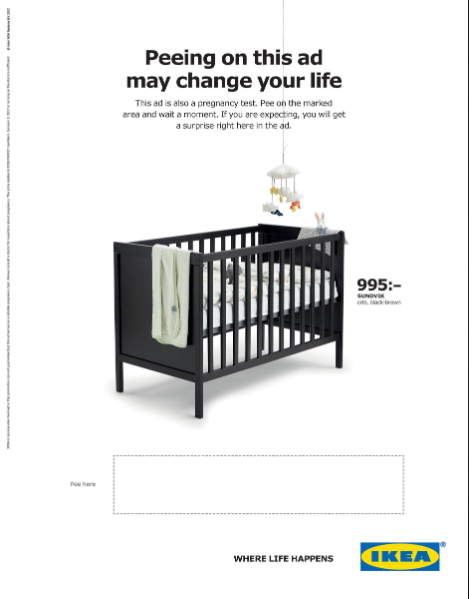
By combining utility with marketing, IKEA created a print ad that actually responds to the user’s life-changing news with a special, hidden discount on a crib.
Why it works: It is the ultimate example of “Right Person, Right Time” marketing. By providing a functional tool that only a specific target customer would use, IKEA ensures that its discount reaches the exact person who needs it most, all while generating massive buzz through the sheer boldness of the concept.
2. KFC – FCK Campaign
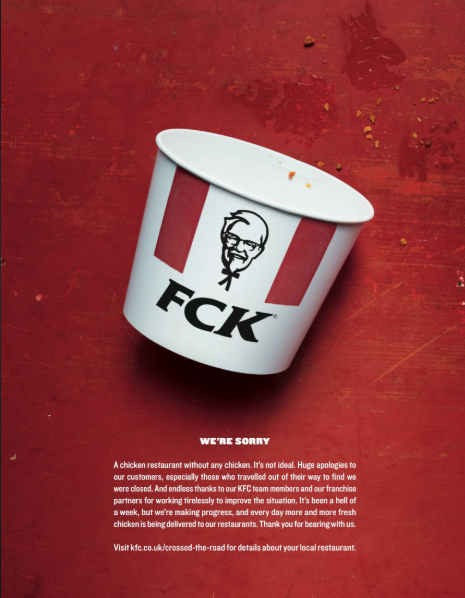
In this famous “FCK” creative marketing ad, KFC responded to a massive chicken shortage by scrambling their letters on the iconic bucket and offering a sincere, plain-text apology to their frustrated customers.
Why it works: It turns a potential brand disaster into a moment of extreme relatability. By being “human” enough to swear and own the mess-up, KFC bypassed corporate defensiveness and won the public’s forgiveness through sheer authenticity and clever design.
3. Marmite – Love it/ Hate it
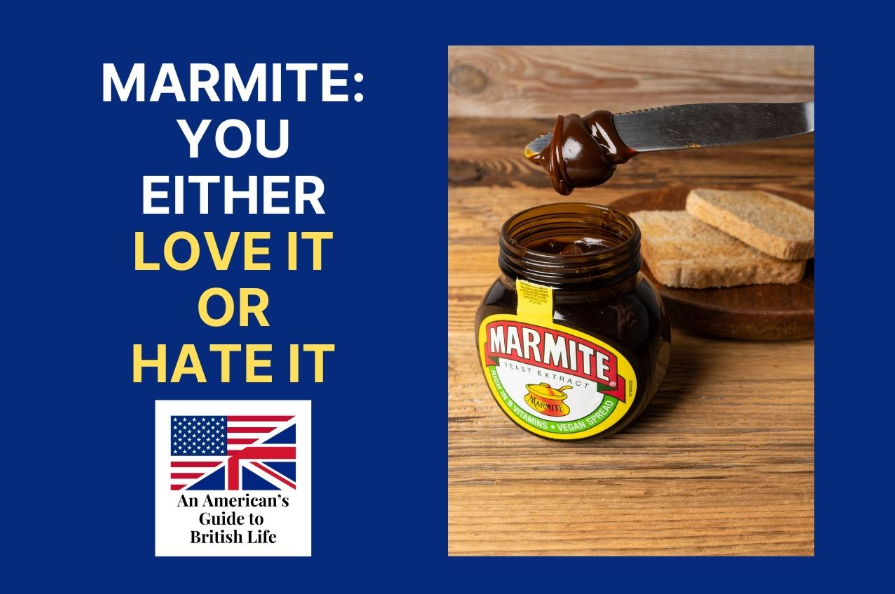
Lean into the most polarizing aspect of your product and make it the center of your brand identity. Marmite’s “You Either Love It Or Hate It” campaign stops trying to please everyone. It instead celebrates the strong emotional reaction people have to their specific taste.
Why it works: It creates a “tribal” connection with the audience. By acknowledging that many people actually dislike the product, the brand feels more honest and confident. This ironically makes the “lovers” even more loyal and the “haters” curious enough to try it just to join the conversation.
4. Volkswagen – Think Small
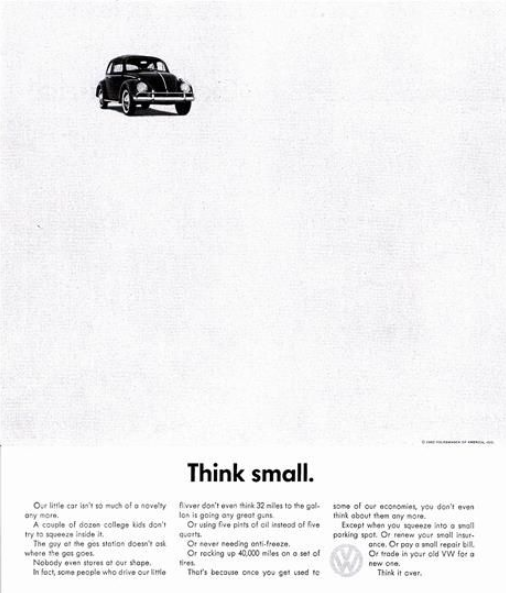
Embrace minimalism by highlighting a perceived weakness and turning it into your greatest strength. Volkswagen’s “Think Small” campaign famously used a vast amount of white space to draw the eye toward its compact car. This challenges the American obsession with massive, gas-guzzling vehicles.
Why it works: It forces the audience to stop and process the “why” behind the simplicity. By using a quiet, honest tone in a world of loud, flashy advertisements, Volkswagen positioned itself as the practical, intelligent choice. This was aimed at a new generation of consumers who valued efficiency over ego.
5. McDonald’s – Golden Arches
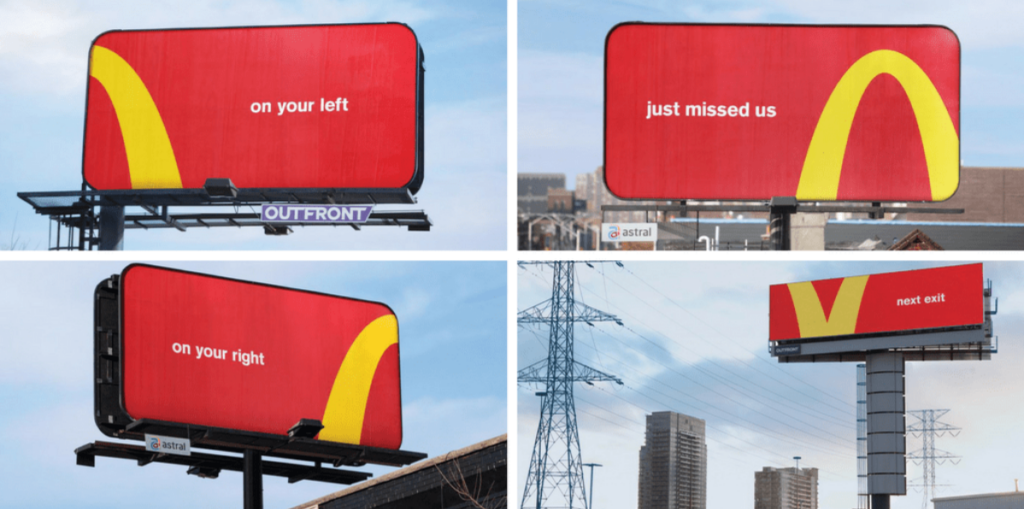
McDonald’s “Follow the Arches” creative marketing used cropped sections of their famous logo as directional arrows. By following it, they lead drivers straight to the nearest restaurant.
Why it works: It proves that your brand is so recognizable that you don’t even need to show the full logo or product. By stripping away everything but the brand colors and a sliver of the arch, the ads become high-utility tools. This provides immediate value to a hungry driver while reinforcing brand dominance.
6. Nivea – Night cream ad
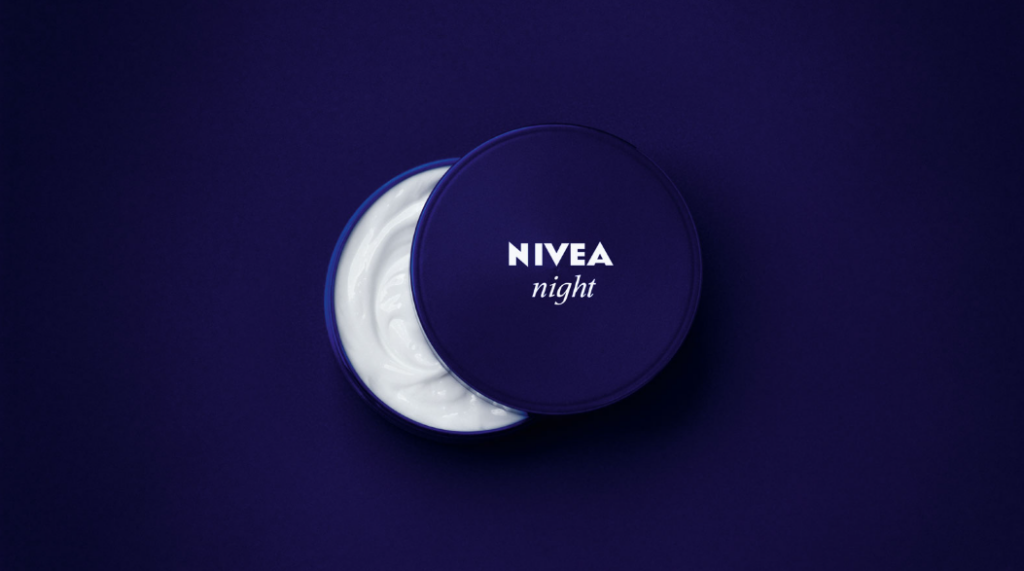
Nivea’s “Night” ad uses a partially opened lid and the white cream inside to perfectly mimic a crescent moon against a dark blue sky. This instantly communicates that this product is meant for your evening routine.
Why it works: It is a masterclass in visual metaphor. By transforming a mundane object into a recognizable symbol of sleep and nighttime, Nivea creates a “click” in the viewer’s brain that makes the ad memorable, elegant, and incredibly easy to digest at a glance.
7. Avis: “We Try Harder.”
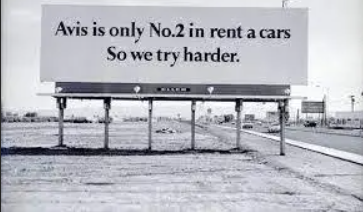
By admitting that “Avis is only No.2 in rent a cars,” the brand turned its lack of market dominance into a promise. This showed their commitment; they cannot afford to be complacent, unlike the industry leader.
Why it works: It creates an immediate underdog narrative that people naturally want to support. By framing being “number two” as a reason for better effort and cleaner cars, Avis transformed a competitive disadvantage into a powerful USP. This signaled humility and a relentless work ethic.
B. Digital & Social Media Campaigns
In the digital age, you don’t just want views—you want shares. And these creative marketing ads have their focus on that.
8. Spotify – Wrapped
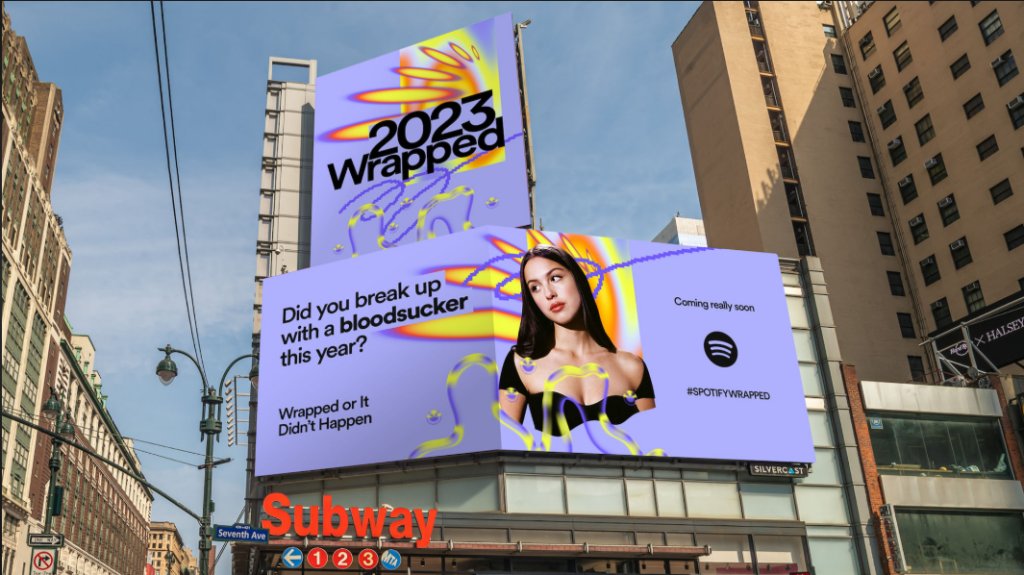
Spotify’s “Wrapped” campaign uses individual listening habits to create colorful, shareable infographics. By turning a year’s worth of streaming into a status symbol and a conversation starter across social media.
Why it works: It leverages the power of “Me-Centric” marketing. By making the user the hero of the story—showing them their own unique tastes and “audio auras”—Spotify turns their customers into a massive, unpaid street team that fills every social feed with free advertising every December.
9. Airbnb – “Night At” series
Airbnb’s “Night At” series took lucky winners to stay in places like the Louvre Museum or a shark aquarium, generating worldwide press by turning “impossible” locations into temporary listings.
Why it works: it builds incredible brand aspiration and “halo” effect. Even though 99.9% of users will never stay in a museum, the campaign positions Airbnb as a platform where truly anything is possible, making a standard apartment rental feel much more exciting by association.
10. Old Spice – “The Man Your Man Could Smell Like.”
Old Spice’s “The Man Your Man Could Smell Like” campaign featured a series of seamless, one-take style transitions, moving from a shower to a boat to a horse, all while maintaining eye contact and delivering deadpan lines.
Why it works: It mastered the art of the “scroll-stopper” before the term even existed. By targeting the women who often purchase body wash for their partners—and doing so with a self-aware, “over-the-top” masculine persona—the brand became instantly meme-able and bridged the gap between different generations of consumers.
11. Dove – “Real Beauty Sketches.”
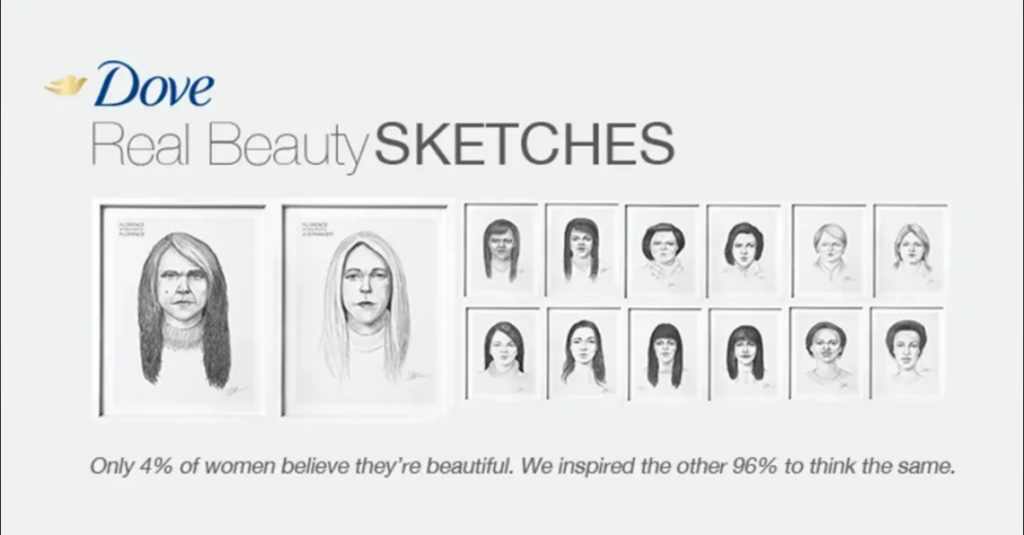
In Dove’s “Real Beauty Sketches,” a creative marketing campaign, a forensic artist drew women based on their own self-descriptions and then again based on descriptions from strangers, highlighting a stark, emotional difference in perception.
Why it works: It taps into a deep, universal insecurity and provides a powerful “aha!” moment that feels more like a movement than a sales pitch. By prioritizing emotional storytelling over product features, Dove built a massive amount of brand love and transformed itself into a champion for self-esteem.
12. Ryanair – Filter of a human face on a plane
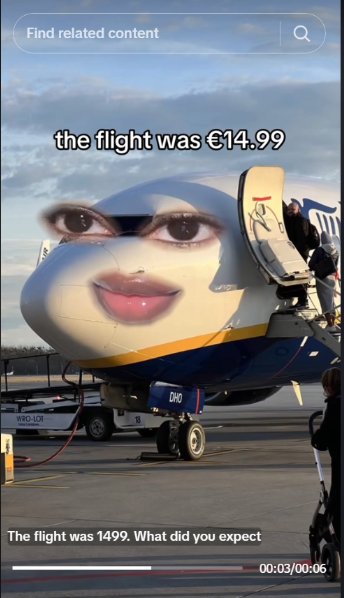
In this viral TikTok style, Ryanair uses a “face filter” on their own airplanes to sarcastically address passenger complaints about their low-cost service, essentially saying, “You paid €14.99—what did you expect?”
Why it works: It breaks the “corporate wall.” By being the first to poke fun at their own reputation, Ryanair takes the power away from critics and becomes incredibly relatable to younger audiences who value authenticity and “chaos marketing” over polished, fake-feeling advertisements.
13. Duolingo – “Duo the Owl” persona
By leaning into the “Duo the Owl will find you” meme, Duolingo transformed their mascot into a chaotic, omnipresent character that humorously “threatens” users who skip their daily language lessons.
Why it works: It turns a negative user experience (guilt over skipping a lesson) into a shared community joke. This aggressive, unhinged brand voice creates high “shareability” and keeps the app top-of-mind. This makes people engage with the brand out of entertainment rather than just obligation.
14. Wendy’s – “Queen of Twitter Roasts.”
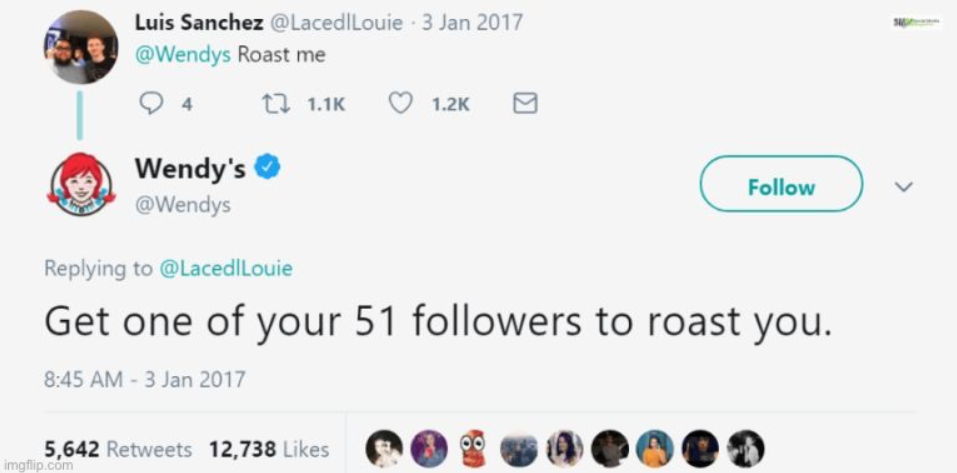
Wendy’s revolutionized social media marketing by “roasting” both customers and competitors on Twitter (X), moving away from generic customer service and toward a snarky, bold, and highly entertaining persona.
Why it works: It turns every interaction into a potential viral moment. By providing “free entertainment” to the masses, Wendy’s built a cult following of people who check the account just to see what they’ll say next, effectively humanizing the brand and making it the “cool friend” of the fast-food world.
15. Barbie Movie – AI Selfie Generator
The Barbie “Selfie Generator” creative marketing campaign allowed anyone to upload a photo and instantly become a character in the Barbie world. This is complete with the iconic logo and a customizable “This Barbie is a…” tagline, making it perfect for marketing.
Why it works: It hacks the desire for self-expression and social validation. By giving users a high-quality, fun tool to create their own personalized assets, the brand didn’t have to pay for billboards. Thousands of people willingly turned their own social media profiles into advertisements for the movie, which was a great promotion. This is a perfect example of how UGC works.
16. Tesla – “shatterproof” demo
During the Tesla Cybertruck unveiling, the “shatterproof” armor glass famously cracked when hit with a steel ball. But instead of hiding the footage, the brand let it become a meme that dominated the news cycle for weeks.
Why it works: It creates “Accidental Authenticity.” Whether the break was a genuine mistake or a calculated move, it generated billions of dollars in free media coverage. The organic discussion that a perfect demo never could have achieved was made possible. It proved that in the age of social media, being “flawed” is often more interesting. It is more shareable than being “flawless.”
17. Burger King – Moldy Whopper
Burger King’s “Moldy Whopper” creative marketing campaign used high-definition time-lapse photography to show their flagship burger rotting over 30 days. This explicitly highlights the absence of artificial preservatives.
Why it works: It uses “The Power of the Gross-Out.” In an industry filled with airbrushed, plastic-looking food photography, showing a decaying burger was so visually jarring. It commanded immediate attention. It successfully reframed “freshness” by proving that real food is supposed to rot. This turns a repulsive visual into a badge of nutritional honor.
C. Guerrilla & Out-of-Home (OOH)
Guerrilla marketing and OOH live in the real world. It interrupts your day in a way you can’t skip.
18. Red Bull: Felix Baumgartner’s Stratos Jump
Red Bull’s “Stratos” project featured Felix Baumgartner free-falling from the edge of space ($39,000$ meters), breaking the sound barrier and several world records live on YouTube.
Why it works: It is the pinnacle of “Experience Marketing.” By shifting from selling a drink to producing a global media event, Red Bull proved their “Gives You Wings” slogan in the most literal, death-defying way possible. The brand became synonymous with extreme achievement, earning billions of impressions without ever mentioning the product’s taste or price.
19. Dracula (BBC) – Face of Dracula.
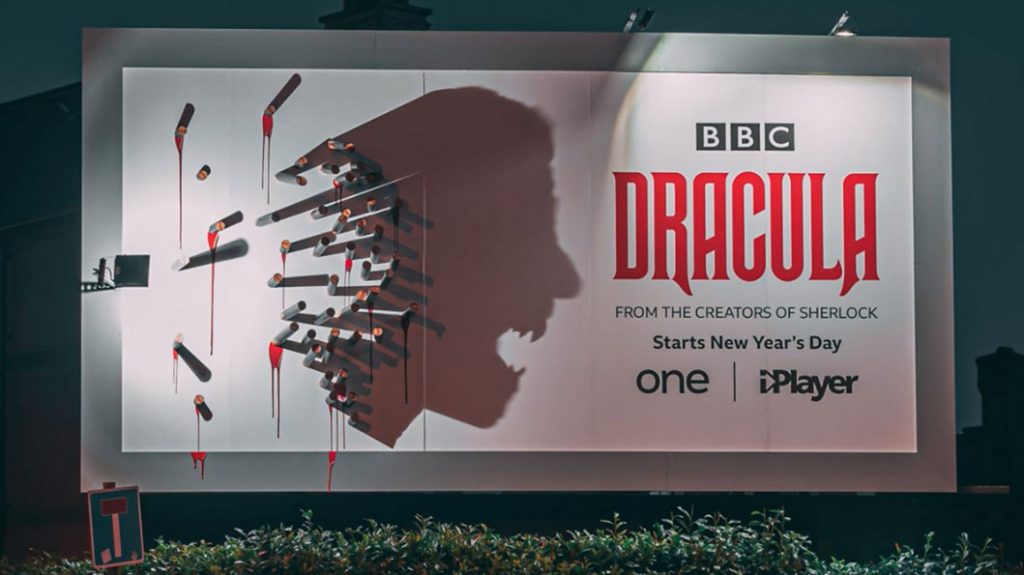
The BBC’s billboard for Dracula featured a collection of wooden stakes that appeared random during the day, but as the sun set, a side-light cast a shadow that formed the terrifying silhouette of the Count himself.
Why it works: It turns static out-of-home advertising into an “event.” By making the ad’s true form only visible at night—the natural habitat of a vampire—the campaign creates a clever, immersive experience for commuters that rewards curiosity and perfectly mirrors the subject matter of the show.
20. Frontline – floor sticker of a dog
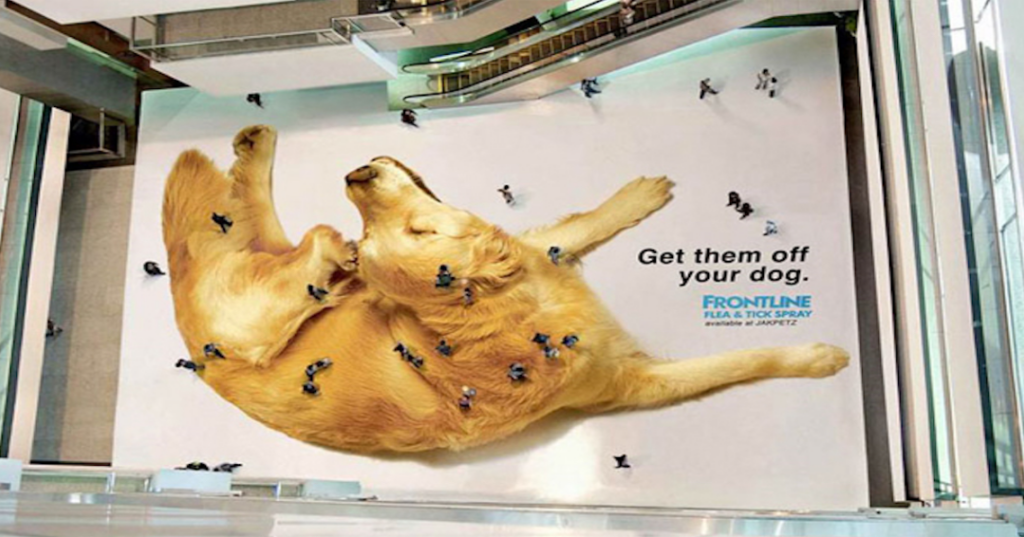
Frontline’s “Mall” creative marketing ad used a massive floor decal of a scratching dog so that, when viewed from the upper levels, the unsuspecting people walking across it looked exactly like tiny, swarming fleas.
Why it works: It is an ingenious use of perspective. By turning the audience themselves into the “villain” of the ad, it creates an immediate, visceral reaction that makes the abstract problem of pests feel tangible and urgent. It transforms a passive space into an interactive experience that people can’t help but photograph and share.
21. Coca-Cola: The “Happiness Machine.”
Coca-Cola’s “Happiness Machine” campaign involved placing a rigged vending machine on a college campus that dispensed far more than just a soda—delivering bouquets of flowers, giant pizzas, and even a massive submarine sandwich to unsuspecting students.
Why it works: It captures raw, unscripted human emotion. By shifting the focus from the product itself to the feeling of sharing and surprise, Coca-Cola moved away from being a beverage company and toward becoming a “happiness” brand. The video of the stunt became a viral sensation because it felt authentic, heartwarming, and genuinely generous.
22. KitKat – “Have a break.”
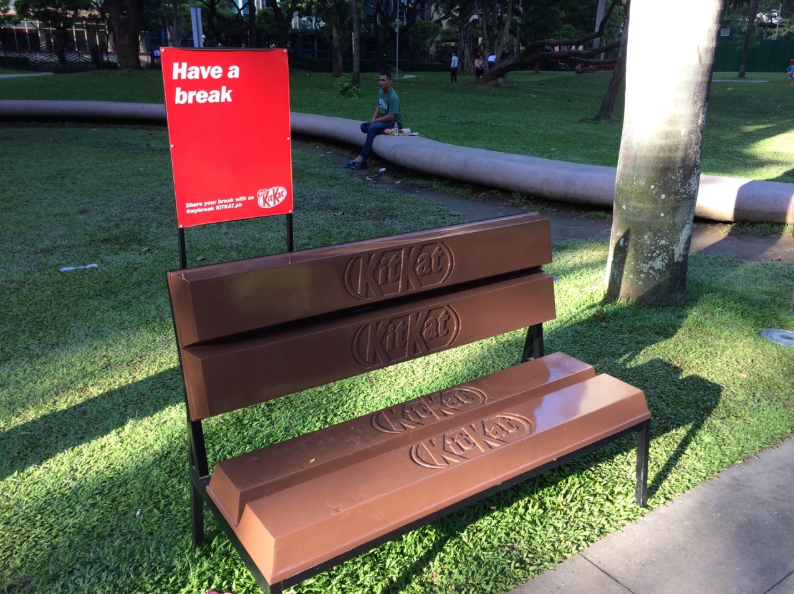
KitKat’s “Bench” campaign turned ordinary park benches into giant, unwrapped chocolate bars, perfectly aligning their “Have a Break” slogan with the literal act of sitting down to rest.
Why it works: It is the ultimate “pattern interrupt.” By replacing a mundane object with a hyper-realistic, oversized version of their product, KitKat makes their brand synonymous with relaxation. It’s a tactile, 3D advertisement that invites people to interact with the brand during their most peaceful moments, making the message feel helpful rather than intrusive.
23. Adidas – “Liquid Billboard.”
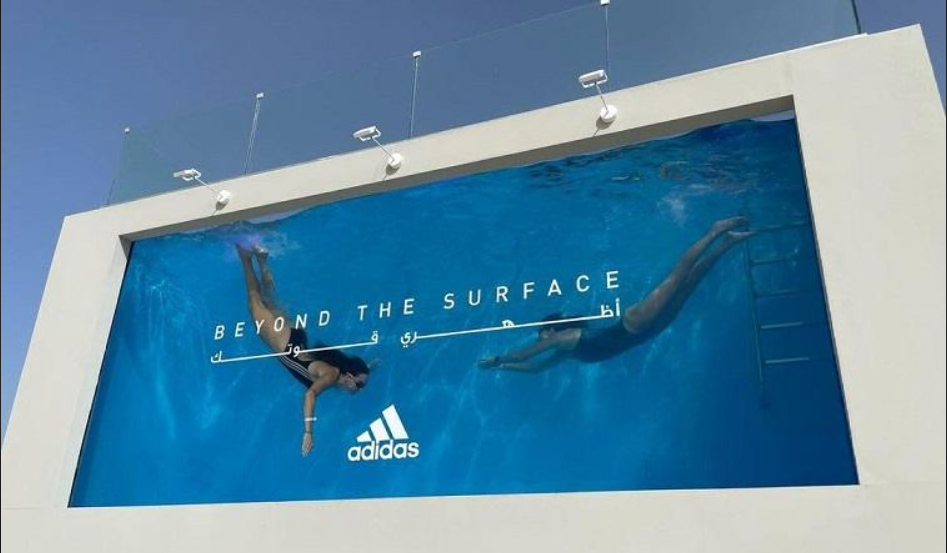
To promote its inclusive swimwear collection, Adidas built the world’s first “Liquid Billboard” creative marketing campaign in Dubai. A massive, transparent swimming pool that allowed women to dive in and literally become the face of the “Beyond the Surface” campaign.
Why it works: It turns a static message into a courageous act of representation. By providing a stage for real people to express their confidence in a public space, Adidas moved beyond just selling products to facilitating a cultural conversation about empowerment. The striking visuals of people swimming inside a “billboard” were tailor-made for social media, creating a global ripple effect from a single physical location.
24. Netflix – Black Mirror
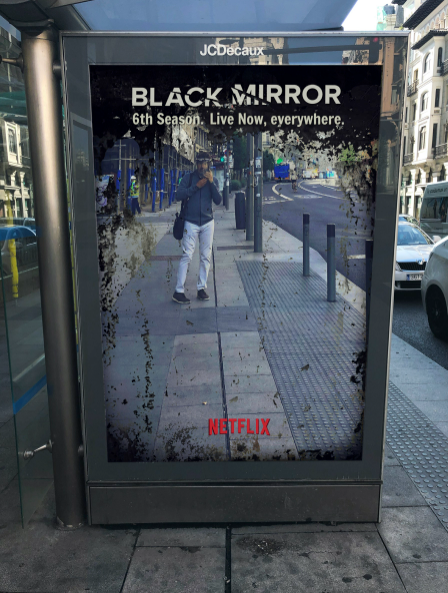
To promote the 6th season of Black Mirror, Netflix used mirrored bus shelter posters with the tagline “Live Now, everywhere,” effectively casting passersby as characters in their own dystopian episode.
Why it works: It’s a masterclass in “Meta-Marketing.” By utilizing a literal mirror—the very object the show is named after—the ad forces people to confront their own reflection within the context of the show’s dark themes. It’s unsettling, clever, and perfectly captures the show’s essence without needing a single frame of footage, making the audience the center of the narrative.
25. Nike – “Nothing Beats a Londoner.”
Nike’s “Nothing Beats a Londoner” creative marketing campaign featured over 250 real young Londoners—alongside cameos from local stars like Skepta and Mo Farah. The ad features the, battling the relatable, gritty challenges of playing sports in the city, from grueling commutes to unpredictable weather.
Why it works: It trades global polish for authentic “street cred.” Instead of a generic “Just Do It” message, Nike spoke directly to the soul of a specific city using local slang, landmarks, and humor. By making the audience feel truly seen and heard, the brand transformed from a massive American corporation into an integral part of London’s youth culture.
26. British Airways – child who pointed up
British Airways’ “Magic of Flying” billboards featured a child who would get up and point at actual planes flying overhead, while the screen updated in real time to show the flight number and destination (e.g., “Look, it’s flight BA475 from Barcelona”).
Why it works: It bridges the gap between digital data and physical wonder. By timing the ad to match the exact moment a plane passed over, BA tapped into the universal human instinct to “look up” at a passing aircraft. It transformed a complex logistical operation—tracking flight data and cloud height—into a simple, emotional moment that reminded adults of the childhood magic of travel.
27. Lego – Shadows
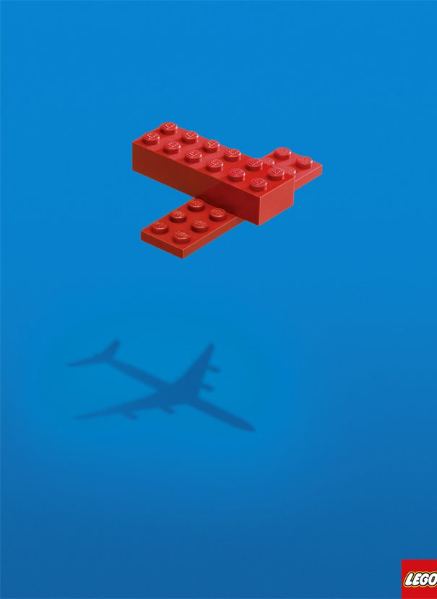
LEGO’s “Imagine” campaign features simple arrangements of classic bricks that cast detailed, complex shadows—like two red bricks appearing as a jet plane—visually demonstrating that the product is just a starting point for a child’s creativity.
Why it works: It sells the benefit, not the features. By focusing on what a child sees rather than just what is in the box, LEGO positions itself as a tool for cognitive development and wonder. The high-contrast, clean imagery respects the intelligence of the audience and allows the viewer to complete the story in their own mind.
What Makes These Ads Work? (The “Secret Sauce”)
If you look at all these examples, three patterns emerge. To drive engagement in 2026, your ads need. But creativity alone isn’t enough, modern campaigns rely heavily on data, targeting, and automation. Learn how adtechnology is important in advertisement with Ciente.
- The Surprise Factor: Humans are wired to ignore the expected. Whether it’s a moldy burger or a child pointing to a plane, these ads subverted expectations.
- Emotional Resonance: We buy with our hearts and justify with our heads. If you can make someone laugh, cry, or feel empowered, you’ve won.
- Radical Simplicity: The most creative ads often have the fewest words. If you can explain your value proposition with a shadow or a sticker, you don’t need a 30-page deck.
Conclusion: Finding Your Own Creative Edge
Creativity isn’t a lightning bolt that hits a few “chosen” marketers; it’s a muscle you build. These examples above prove that you don’t always need a Super Bowl budget to make a Super Bowl impact. You just need to solve a human problem with a human solution.
And with an AI ad creator free, you can bring those ideas to life faster by testing multiple creative angles without spending weeks on production.
Don’t just make an ad that sells. Make an ad that people want to talk about at dinner.
FAQ
Not always, but it increases brand recall. A creative ad ensures that when a customer is ready to buy, yours is the first name they think of.
Focus on “Guerrilla” tactics. Look at your environment (street, social media, community) and think of how you can use what’s already there weirdly or funnily.
Run a “Smoke Test.” Show the concept to 10 people in your target audience. If they “get it” within 5 seconds, you’re safe. If you have to explain the joke, start over.