



Explore this content with AI:
In the modern digital landscape, the “Generalist’s Trap” is a real and present danger. Every year, thousands of businesses launch with the intention of being “the best for everyone.” They use broad messaging, target massive audiences on social media, and wonder why their ad costs are sky-high while their conversion rates remain in the basement.
The truth is, in 2026, Niche Marketing isn’t just a smart move—it’s the only way to survive. As the internet becomes more saturated, consumers have developed a “filter” for generic advertising. They aren’t looking for a “good tool”; they are looking for the exact tool built for their specific situation.
In this comprehensive guide, we will break down why narrowing your focus is the secret to scaling your growth, how to find a profitable segment, and the step-by-step strategy to dominate your chosen corner of the market.
What is Niche Marketing?
Think of niche marketing as the difference between shouting in a crowded stadium and having a one-on-one conversation in a quiet room. Instead of trying to be “everything to everyone” and competing with giant brands on price alone, niche marketing is about finding a specific, underserved group of people and becoming their absolute hero.
You aren’t just selling a product; you’re selling a solution that fits a very particular lifestyle or business problem so perfectly that the customer feels like you built it just for them.
When you stop trying to appeal to the masses, your marketing costs usually go down, and your conversion rates go up because you’ve stopped being a “noise” and started being a “signal.”

How does Niche Marketing look in real life?
To see this in action, imagine you’re a shoe manufacturer. A mass marketing approach would be selling “comfortable sneakers for everyone”—you’re now competing with Nike and Adidas, which is a losing battle for most.
A niche marketing approach would be selling “high-traction, waterproof sneakers specifically designed for professional dog walkers.” By focusing on that one group, you can tailor your features—like easy-clean material and extra arch support for 10-mile days—and your ads will hit differently because every dog walker who sees them will think, “Finally, someone gets my job!”
Why Niche Marketing is Not “Small Business Marketing”
A common misconception is that “niche” means “small.” On the contrary, some of the world’s largest companies (like Stripe or Shopify) started in tight niches. Niche marketing is about clarity of purpose, not the size of the market. You can build a multi-billion-dollar company by being the undisputed leader of a global niche.
Why Niche Marketing Works: The Core Benefits
Why should you turn away 90% of the market to focus on the remaining 10%? Because the math favors the specialist.
1. Higher Relevance = Higher Conversions
When a prospect lands on your page and sees their specific job title or industry mentioned in the headline, their trust level spikes. Messaging that feels personal and targeted reduces the “skepticism barrier.” Customers naturally believe that a specialist understands their pain better than a generalist.
2. Lower Competition and Easier Growth
It is much easier to rank #1 on Google for “Best payroll software for dental practices” than for “Best payroll software.” By narrowing your focus, you bypass the “red ocean” of giant competitors. Your SEO becomes more intent-driven, and your paid ads perform better because your click-through rate (CTR) is higher.
3. Better Loyalty and Retention
If your product fits a customer’s workflow perfectly, they have very little reason to leave. Generic tools often have high “churn” because they only partially solve the user’s problem. A niche tool that solves 100% creates “sticky” customers who become your most vocal brand advocates.
4. The Premium Pricing Advantage
Generalists compete on price; specialists compete on value. Because your solution is tailor-made for a specific outcome, you can charge more. People don’t compare the price of a specialist surgeon to a general practitioner—the same logic applies to SaaS and services.
A Step-by-Step Strategy to Find Your Profitable Niche
Finding a niche is basically a mix of detective work and self-reflection. You’re looking for that “sweet spot” where your skills, a group of hungry customers, and a gap in the market all crash together.
1. Audit Your “Unfair Advantages.”
Before looking at what everyone else is doing, look at your own toolkit. This is about your internal capabilities. Ask yourself: What do I know better than 90% of people? What can I build or do that feels like play to me but looks like work to others? If you pick a niche that aligns with your genuine interests, you’ll have the stamina to outlast the competition.
2. Slice the Market into “Micro-Slices.”
Don’t just look at a big industry like “Real Estate” or “Pet Care”—that’s too crowded. You need to perform a deep-dive segmentation. Think of a big pie and keep cutting it until you have a piece small enough to own. Instead of “Pet Care,” maybe it’s “Subscription-based nutrition for aging Great Danes.” The more specific you get, the more your marketing will feel like a personalized invitation rather than a generic ad.
3. Spot the “Neglected Gaps” in the Competition
Once you have your slice, look at what the big players are doing—and more importantly, what they’re not doing. This is mapping out the white space. Big companies often ignore small, specific needs because they aren’t “scalable” enough for them. That’s your opening. If every software company is building for “Sales Teams,” but no one is building for “Boutique Art Gallery Sales Teams,” you’ve found a gap worth filling.
4. Create an “Inside-Head” Positioning Strategy
Now, you need to define your audience so clearly that you can practically read their minds. This isn’t just about age or job title; it’s about their “3:00 AM problems.” Your goal is to position yourself as the only specialist. When your target customer lands on your page, they should feel an instant “click” because you’re using their specific lingo and solving their specific headache.
5. Run the “Math vs. Reality” Check
A niche needs to be more than just cool; it needs to be economically viable. Do a quick gut check: Do these people have the budget to pay for a solution? Is the problem “expensive” enough that they’ll pay a premium? You also want to make sure the competition isn’t so fierce that you’ll spend all your profit just trying to get noticed.
6. The “Smoke Test” Validation
Don’t spend six months building a product based on a hunch. Test your idea in the real world as cheaply as possible. Set up a basic landing page or run a small “pre-sale” campaign on social media. If people are willing to give you their email or their credit card info before you’ve even fully launched, you’ve officially validated that the demand is real.
7. Think Two Steps Ahead
A great niche should be a “bridge,” not a dead end. Look at your future growth path. Can this specific audience lead you into a bigger, related market later? For example, if you start by owning the niche for “Social Media for Local Bakeries,” you can eventually expand into “All Digital Marketing for the Food & Beverage Industry.” Start small to win, but have a plan to grow.
Developing a Framework for Your Marketing Strategy
Building a niche marketing framework is like building a custom suit. It’s not about buying off the rack; it’s about taking precise measurements so that everything fits perfectly. To win, you need to stop guessing what people want and start building a system that proves you’re the only expert in the room.
1. Dig Deep into the “Who” and “Why.”
Before you write a single line of copy, you have to know exactly who you’re talking to and what makes them tick. You’re looking for the specific triggers that make your audience say, “Yes, that’s me.”
- Identify your target market: Narrow your focus until you can describe your ideal customer’s daily routine, not just their job title.
- Conducting surveys and interviews: Talk to real human beings. Ask them what keeps them up at night and what their “dream solution” looks like.
- Leveraging social media insights: Peek into the comments of your competitors or industry groups. What questions are people asking over and over?
2. Map the Market and Stake Your Claim
You can’t win a race if you don’t know who else is on the track. This stage is about finding the gap where your competitors are falling short and making that your home base.
- Conduct market research: Look for trends in your niche. Is the industry growing, or is it shifting toward a new technology?
- Analyze your competition: Don’t just look at what they do right; look at where their customers are complaining. Those complaints are your opportunities.
- Develop a unique value proposition: Create a “North Star” statement that explains exactly how you solve the problem better, faster, or more simply than the big guys.
3. Craft Content That Actually Hits
In a niche, your content shouldn’t be “broadly interesting”—it should be “deeply useful.” You want to create resources that your target audience feels compelled to bookmark and share with their colleagues.
- Developing content that resonates: Use the specific “insider” language and jargon of your niche so you sound like a peer, not a salesperson.
- Choosing the right content mediums: Figure out where your audience hangs out. Do they want 2,000-word deep-dive whitepapers, or do they prefer 60-second technical tips on LinkedIn?
- Tailor your marketing efforts: Every email, ad, and post should feel like a private conversation with your ideal customer.
4. Get the Word Out with Precision
There is no point in being a “hidden gem.” You need to get your message in front of the right eyes without wasting money on people who will never buy from you.
- Content promotion strategies: Don’t just post and pray. Use “niche hubs”—such as specific subreddits or industry newsletters—to share your expertise. To build long-term trust, your content needs to be backed by a strong backlink profile. Many successful brands leverage high-authority niche edits to gain immediate traction within established industry conversations
- Targeted advertising techniques: Use laser-focused ad targeting. In 2026, you can target people based on very specific professional behaviors or “lookalike” interests.
- Partnerships and collaborations: Find “non-competing” brands that serve the same niche. If you sell software for bakeries, partner with an oven manufacturer for a joint webinar.
5. Listen, Learn, and Pivot
Your first strategy shouldn’t be your last. The best niche marketers are the ones who are constantly “tuning the radio” to get a clearer signal from their audience.
- Monitor and adjust: Use your analytics to see what’s actually working. If your “how-to” guides are getting 10x more saves than your product demos, pivot your strategy.
- Feedback loops: Keep the conversation going with your customers. Their feedback is the best “R&D” department you could ever ask for.
- Stay agile: Niche markets can move fast. Be ready to tweak your messaging as new problems emerge in your community.
Real-World Success Stories
1. Toast (The Restaurant Operating System)

Toast didn’t try to be a generic POS for retail. They focused solely on restaurants. By understanding specific needs—like split checks, kitchen display systems, and inventory for perishables—they became the dominant player in the space.
2. Ramp (Spend Management)
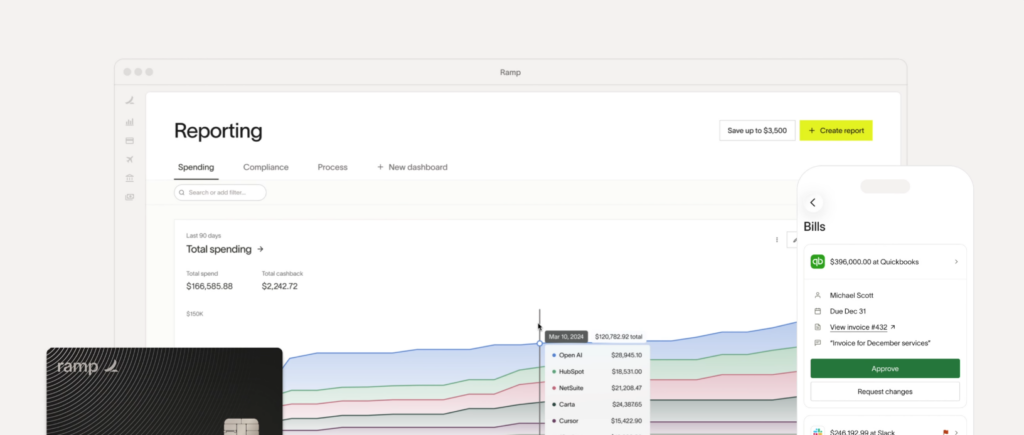
Ramp targeted Finance Teams in fast-growing companies. Their USP wasn’t just “a card,” but “a card that helps you spend less.” By focusing on a specific outcome (cost reduction), they disrupted the entire corporate card industry.
3. Stripe (Payments for Developers)

Stripe won by picking a buyer persona, not just an industry. They marketed to Developers. Their documentation was better, their APIs were simpler, and they built a cult-like following by solving the technical pain of online payments.
Measuring Success
Don’t track “Vanity Metrics” like likes and shares. Focus on these:
- Conversion Rate: Are the visitors from your niche actually signing up?
- CAC (Customer Acquisition Cost): Niche marketing should lower this over time, since you focus on a specific customer segment.
- LTV (Lifetime Value): Specialist tools should have higher retention, as it is very hard for users to find other tools that focus on that specific pain point.
- Lead-to-Demo Rate: In B2B, this is the ultimate indicator of “messaging-market fit.”
Pros and Cons of Being in a Niche Market
The best niches have “high pain.” If people are losing sleep or money over a problem, they don’t care how small your company is—they just want the specialist who can fix it.
| Feature | The Good News (Pros) | The Reality Check (Cons) |
| The Competition | You aren’t fighting giants. You’re the big fish in a small pond. | If you get too successful, the big fish might jump in your pond. |
| Ad Spending | Every dollar hits a real lead. No wasted cash on “randoms.” | You run out of new people to show ads to much faster. |
| Pricing Power | You’re a specialist. Specialists get to charge “expert” prices. | You might get stuck. It’s hard to sell “everything” later on. |
| Customer Love | People feel like you “get” them. They stay loyal and tell friends. | If that tiny niche has a bad year, your whole business feels it. |
| Getting Found | Ranking #1 on Google is way easier for specific topics. | Fewer people are searching for you in the first place. |
Conclusion: Focus is Your Greatest Competitive Advantage
Niche marketing isn’t about limiting your brand; it’s about sharpening it. By choosing to be the absolute best for a specific group of people, you reduce your competition, increase your profit margins, and build a brand that people truly care about.
Remember: Start focused, then expand. Once you own your first niche, you can use that capital and credibility to conquer the next one.
FAQ:
Only if the “Outcome” isn’t valuable enough. A niche of 1,000 customers who will pay $10,000 a year is a $10M business.
Look for the intersection of your expertise, market demand (search volume), and high pain levels.
Trying to be “niche-ish.” If you try to keep one foot in the mass market “just in case,” your messaging will become diluted, and you will lose the trust of your niche audience.