


Explore this content with AI:
Simply posting content on social media isn’t enough. To maximize the impact of your efforts, you need to track key social media marketing metrics that provide valuable insights into your performance. By analyzing metrics like engagement rates, reach, and conversion rates, businesses can identify what’s working and what needs improvement.
In this guide, we’ll explore 15 essential social media marketing metrics businesses should track to optimize performance, improve ROI, and create more impactful campaigns. Let’s dive in!
Why is it Important to track Social Media Metrics?
Social media marketing metrics tell you the reality on how your content is received by your audience. By tracking social media metrics you can:
- Evaluate your content performance
- Align your strategy to your viewer preferences
- Optimize your content strategy to focus on what works
- Get business goals achieved by using social media channels
- Find problems easily and nip them in the bud
What are the Metrics that matter to you?
It is not important to keep track of every single metric in this list. That can be confusing to a new extent. But if you know what your end goal is, then you can narrow down the metrics based on that.
For example, if your goal is to get more brand awareness, then you can focus on just some metrics like reach, impressions and share of voice to see if you are progressing towards it.
When you set goals, always make sure to set attainable, numeric goals so you can track the actual progress. For example, instead of saying, “I am going to increase reach”, say “I am going to boost reach by 50%”.
1. Engagement Metrics
Engagement is one of the most crucial social media marketing metrics because it measures how your audience interacts with your content. High engagement indicates that your content resonates with your audience, leading to stronger relationships and better brand visibility. Here are four key social media engagement metrics:

1.1 Likes & Reactions
Likes and reactions (such as ❤️, 👍, 😂, and 🔥) provide a quick indicator of audience sentiment and content appeal. A high number of likes signals that your post is well-received, while different reaction types on platforms like Facebook and LinkedIn can offer insights into how people feel about your content.
If your engagement rate is low, experimenting with different content formats like videos, infographics, or interactive posts can help improve performance.
1.2 Comments
Comments show a deeper level of engagement, as they require more effort than simply liking a post. They indicate that your content sparks conversation, whether it’s a discussion, a question, or user-generated feedback.
Companies that implement social media listening and monitoring tools can track these conversations in real time, analyze sentiment, and respond promptly to audience concerns or questions.
Monitoring comment trends can help you understand what topics resonate most with your audience. Encouraging discussions with open-ended questions or controversial industry topics can boost this social media metric.
1.3 Shares & Retweets
When users share your content, it extends your reach beyond your immediate audience. This metric is particularly important for social media marketing metrics because it demonstrates that your content is valuable enough for others to distribute.
High share numbers indicate content virality, which can lead to organic brand awareness. To increase shares, focus on creating highly informative, entertaining, or emotionally compelling content with the right content generator.
1.4 Click-Through Rate (CTR)
CTR measures how often users click on a link in your post, leading them to your website, landing page, or other external content. A high CTR indicates that your content and call-to-action (CTA) are compelling enough to drive user action. If your CTR is low, consider optimizing your post captions, visuals, and CTA placement to encourage more clicks.
Tracking these social media metrics ensures that your content is not just seen but also interacted with, helping you refine your social media strategy for better engagement and business growth.
2. Reach & Awareness Metrics
To build a strong social media presence, it’s essential to measure how many people see your content. Social media marketing metrics related to reach and awareness help businesses understand their visibility and potential audience growth. By leveraging all SMO tools, businesses can accurately track these social media metrics and gain deeper insights into how well their content spreads and attracts new followers.

2.1 Impressions
Impressions measure the total number of times a post is displayed, regardless of whether users engage with it. This metric helps you assess content exposure higher impressions suggest that your content is frequently appearing in feeds.
However, high impressions without engagement might indicate that your content isn’t compelling enough to encourage interaction. To improve and test different formats, headlines, and posting times to maximize visibility and user interest.
2.2 Reach
Reach represents the unique number of users who have seen your content. Unlike impressions, which count multiple views from the same user, reach focuses on how many individuals your post has touched.
Tracking this social media metric is important for measuring brand awareness and audience expansion. If your reach is low, consider leveraging hashtags, collaborations, and platform-specific features like Instagram Reels or LinkedIn articles to boost visibility.
2.3 Follower Growth Rate
The follower growth rate measures how quickly your audience is expanding over time. Instead of just counting the total number of followers, this metric calculates the percentage increase, giving a clearer picture of your brand’s momentum.
A steady increase in followers suggests strong brand interest, while stagnation might indicate a need for better engagement strategies. Running targeted ad campaigns, optimizing content for shareability, and maintaining a consistent posting schedule can help accelerate growth.

3. Conversion Metrics
Engagement and reach are important, but the real success of social media efforts lies in conversions. Social media marketing metrics related to conversions help businesses track how effectively social media drives actions like purchases, sign-ups, and website visits. These social media metrics ensure that your campaigns contribute to your overall business goals.
3.1 Conversion Rate
Conversion rate measures the percentage of users who take a desired action after clicking on your social media post. This could be signing up for a newsletter, making a purchase, or filling out a contact form.
A high conversion rate means your content, landing pages, and call-to-actions (CTAs) are effectively driving users toward the next step. To improve this metric, ensure that your landing pages are optimized, your CTAs are clear, and your social media content aligns with user intent.
3.2 Cost Per Conversion (CPC)
CPC is a critical metric for businesses running paid campaigns. It calculates the cost of acquiring a lead or customer through social media ads. A lower CPC indicates that your campaigns are efficient, while a high CPC might suggest the need for better audience targeting or ad creatives.
Regularly A/B testing ad copy, visuals, and audience segments can help improve CPC and increase return on investment (ROI).
3.3 Social Media Referral Traffic
This metric tracks how much website traffic originates from social media platforms. High social media referral traffic means your content is compelling enough to drive users to your website, where they can explore your offerings further. To further enhance campaign tracking and attribution, businesses can also leverage virtual numbers for marketing campaigns, enabling more accurate lead source identification and improved customer communication across channels.
To boost referral traffic, focus on sharing value-driven content, adding strong CTAs in captions, and utilizing link optimization tools like UTM tracking to analyze which platforms drive the most valuable visitors.
However, while leveraging these digital tools, companies must also stay aware of potential Cybersecurity risk to ensure that sensitive data and customer information remain secure. Implementing unified vulnerability management can help marketing teams identify and remediate security gaps across their ecosystems, thereby protecting both the brand and its visitors from potential vulnerabilities.
Implementing application containment strategies helps isolate marketing systems, tracking tools, and third-party platforms from core business infrastructure, reducing the blast radius if a referral source or external link is compromised. To minimize this risk, you can use a DNS security software solution to prevent malicious traffic and protect against threats that exploit external URLs.

4. Customer Retention & Loyalty Metrics
Attracting new customers is essential, but retaining them is even more valuable. Customer retention and loyalty play a crucial role in long-term business success, and tracking the right social media marketing metrics can help brands understand how well they are fostering lasting relationships with their audience.
These social media metrics provide insights into brand loyalty, engagement over time, and competitive positioning.
4.1 Customer Lifetime Value (CLV) from Social Media
Customer Lifetime Value (CLV) measures the total revenue a customer generates for your business throughout their relationship with your brand. When applied to social media marketing metrics, CLV helps determine the long-term impact of customers acquired through social media channels. If your CLV from social media is low, it may indicate that your content attracts one-time buyers instead of repeat customers.
To improve CLV, businesses should focus on relationship-building strategies, such as personalized interactions, exclusive social media offers, and loyalty programs that keep customers engaged beyond the first purchase.
4.2 Social Share of Voice (SOV)
Social Share of Voice (SOV) measures your brand’s presence in social media conversations compared to competitors. It tracks how often people mention your brand versus industry rivals, offering insights into brand awareness and market positioning.
A high SOV indicates strong brand influence, while a lower SOV suggests a need for increased engagement, influencer collaborations, or viral content strategies. Businesses can improve their SOV by consistently engaging with their audience, encouraging user-generated content, and staying active in trending industry discussions.
4.3 CSAT and NPS
CSAT or Customer satisfaction score is an indication of how well-liked your products are among your consumers. This can be identified either by conducting surveys or by using DMs and social media polls.
Net Promoter Score or NPS is an extension of CSAT where we are measuring how likely are customers to recommend your products to others. It is calculated on a scale of 1 to 10, where higher the score, the better.
5. Content Performance Metrics
Creating high-quality content is essential for social media success, but how do you know which posts are truly resonating with your audience? Tracking social media marketing metrics related to content performance helps brands identify what works, what doesn’t, and how to optimize future strategies.
These social media metrics focus on measuring content effectiveness, audience engagement, and overall impact.
5.1 Best-Performing Content
Not all content is created equal; some posts generate more engagement, shares, and conversions than others. Analyzing your best-performing content helps identify which types of posts (videos, images, carousels, blogs, infographics) resonate most with your audience.
Look at metrics such as engagement rate, impressions, and shares to determine which formats and topics drive the most value. If a specific type of content consistently outperforms others, consider doubling down on that format while refining underperforming content.
5.2 Video Views & Watch Time
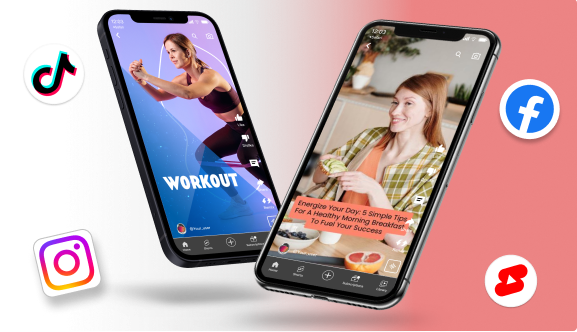
With the rise of short-form videos and live streaming, video content has become a dominant force on platforms like Instagram, TikTok, YouTube, and Facebook. To enhance video performance, focus on creating compelling hooks in the first few seconds, optimizing video length, and adding captions to boost accessibility. An AI reel maker can help automate the creation of short-form video content that’s optimized for watch time and engagement.
To enhance video performance, focus on creating compelling hooks in the first few seconds, optimizing video length, and adding captions to boost accessibility.
6. Influencer Marketing Metrics
Influencer marketing does not require you to track any special kind of metrics. But knowing what to look for can help you see if the campaign is proceeding in the direction that you want. And to do that, here are some metrics to keep your eye on:
- Reach
- Impressions
- Engagement
- Click-through rate
- Conversion rate
- Audience demographics
- Brand mentions and Sentiment analysis
- Follower growth
Effective KPIs start with accepted collabs. If your outreach isn’t earning replies, you’ll have little reach, CTR, or conversions to measure. Use an influencer collaboration email template featuring proven outreach examples (gifting, paid partnerships, giveaways, product reviews) to increase reply and acceptance rates, accelerate launch timelines, and set up campaigns you can accurately track. Stronger acceptance upfront typically lifts engagement rate, reduces CPE, and improves ROI across subsequent reports.
Pro tip:
- Avoid focusing solely on vanity metrics such as likes or follower counts—they don’t always reflect campaign success. Instead, prioritize actionable KPIs like engagement, conversions, and ROI.
Tools to Keep Track of Social Media Metrics:
Keeping track of Social media metrics does not require you to have a ton of tools. Infact, most social media channels come with their own embedded analytics dashboard that can offer you everything you need to know. But still, let us sum up a list of tools that you can use to monitor your numbers!
| Tool | Purpose |
| Predis AI | Conduct competitor analysis |
| HypeAuditor, Upfluence, Traackr | To monitor Influencers metrics performance |
| Google Analytics | Website metrics and conversion tracking |
| Sprout Social, Hootsuite | Unified dashboard for social media analytics |
| Meta business suite | Free software that helps track content performance on Meta platforms |
Best Practices to keep in mind when Tracking Metrics
Here are some things that you need to keep in mind when tracking and reporting your metrics so you and your stakeholder are on the same page:
- Include calculation in the report: Have a metrics glossary in the social media report, so you and your stakeholders do not interpret metrics in different ways.
- List observations: Do not just spit out numbers, show your customers what those metrics mean and what your inferences are.
- Track trends: Just looking at numbers alone, will not give a definitive answer. Instead track trends over a period of time to see if you are growing upwards or not.
Conclusion
Tracking the right social media marketing metrics is essential for businesses looking to optimize their social media strategy. These metrics provide valuable insights into audience engagement, brand awareness, conversion rates, customer retention, and content performance. By analyzing these social media metrics, businesses can identify what’s working, refine their approach, and maximize ROI.
To stay competitive in the ever-evolving digital landscape, businesses should leverage data-driven decision-making to enhance their social media efforts. Using insights from these metrics, brands can tailor content, improve engagement, and drive meaningful interactions that lead to long-term success.
For efficient tracking, businesses should invest in social media analytics tools like Google Analytics, Meta Business Suite, Hootsuite, or Sprout Social. These tools provide real-time performance data, helping businesses measure key social media marketing metrics and adjust their strategies accordingly.
Additionally, combining these insights with tools like an AI Instagram reel generator can help businesses quickly create high-performing video content that aligns with proven engagement trends.
By continuously monitoring and refining their social media approach, businesses can build stronger connections with their audience, boost brand visibility, and achieve sustainable growth.
FAQ:
Tracking social media metrics show you what works and what does not. It allows you to find content gaps, optimize content, allocate budget efficiently and better align your business goals with social media KPIs.
Some of the most important social media metrics to track include reach, engagement, impressions, conversion rate, follower growth, cost per result and so on.
Sentiment analysis gives insights into how your audience feel about your business. This helps you understand your brand reputation and work towards improving it.