

Explore this content with AI:
In the fast-paced world of Instagram, where users scroll past content in milliseconds, how do you make someone stop? It isn’t always a high-production video or a professional photograph. Often, it’s a single, well-placed yellow icon.
Emojis have evolved from simple “smilies” into a complex, nuanced dialect. On Instagram, they are the digital equivalent of body language and hand gestures. They provide the “vibe” that plain text simply cannot convey. Whether you are a brand trying to look relatable or a creator trying to decode what a “Skull” emoji means in your comments, this guide covers everything you need to know about the pictographic language of social media.
What Are Instagram Emojis and Why Do They Matter?
Defining the Digital Dialect
Instagram emojis are more than just “text decorations.” They are pictograms and icons used across captions, Stories, Direct Messages (DMs), and comments to express emotions, ideas, Instagram ads, and reactions. From the classic yellow faces to specialized icons like the “Nail Polish” or “Sparkles,” these symbols bridge the gap between the written word and human emotion.
Why They Aren’t Just Decorative
In a digital space, you lose tone of voice and facial expressions. If you write “Great job,” it could be sincere, or it could be sarcastic. Adding a 👏 (Clapping Hands) makes it celebratory; adding a 🙃 (Upside Down Face) makes it passive-aggressive. Emojis provide tone, personality, and context, acting as “tone markers” that tell the reader how to feel about your words.
The Impact on Engagement and Readability
- Engagement: Posts with emojis consistently see higher engagement rates. They make a brand feel “human” rather than a faceless corporation.
- Readability: Large walls of text are intimidating. Emojis act as visual bullet points, breaking up sentences and making captions easier to scan.
- Connection: Emojis are a universal language. They allow you to communicate with a global audience, transcending language barriers through shared visual cues.
The Golden Rule: Emojis should enhance your message, not replace it. If a user can’t understand your caption without knowing exactly what a specific emoji means, you’ve gone too far.
Where and How to Use Emojis on Instagram
To use emojis effectively, you must understand the different “real estate” areas of the Instagram app.
1. In Captions
The caption is where your storytelling happens. Use emojis to:
- Break up text: Use them as bullet points for lists.
- Highlight key points: Place a 📍 before a location or a ⏰ before a deadline.
- Set the vibe: Use ✨ for aesthetic posts or 🌿 for wellness content.
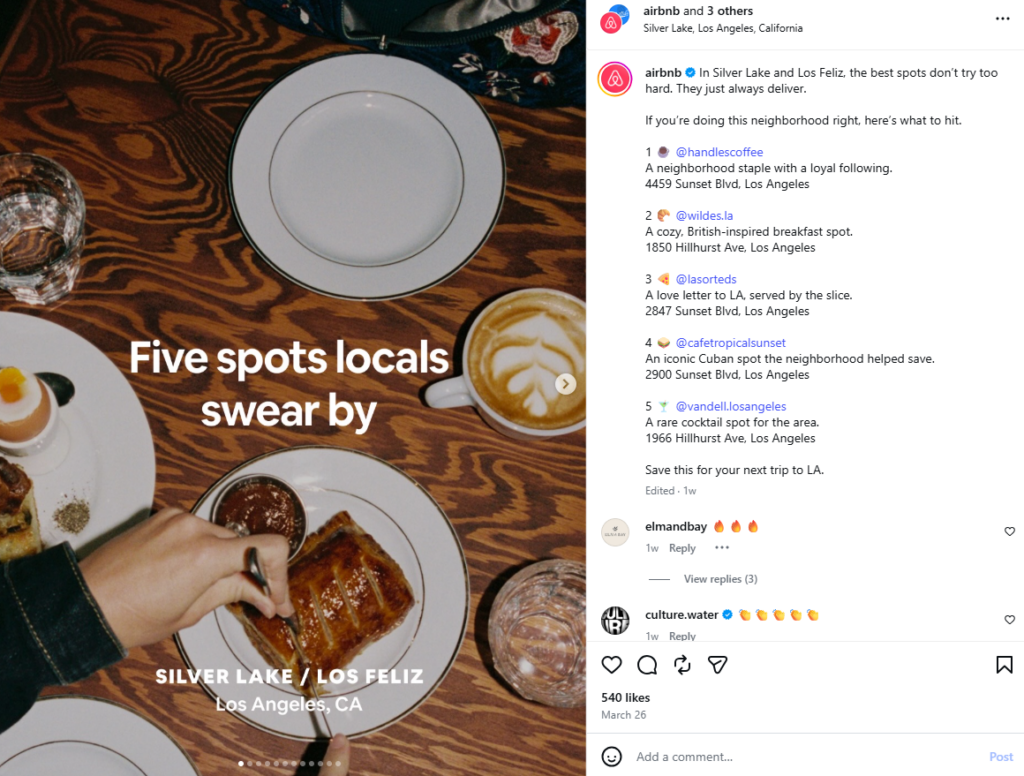
Check out this example where Airbnb uses emojis strategically to describe the places that they are mentioning.
Having trouble coming up with interesting Instagram captions? Check out this AI caption generator!
2. In Bios
Your Instagram bio is your digital elevator pitch. Because you are limited to 150 characters, emojis are essential for scannability. A 📧 icon before your email address saves space and looks cleaner than typing “Email:”.
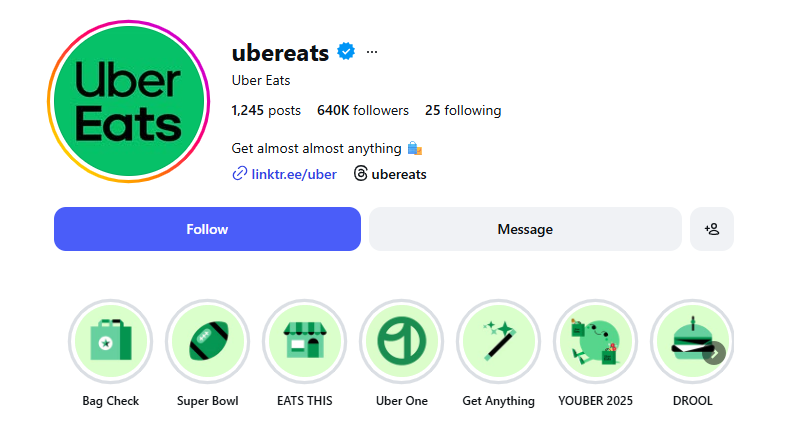
Here is an example where Uber Eats creatively uses emojis in their bio:
3. In Stories
Stories are the most interactive part of Instagram. Use emojis as:
- Stickers: Enlarge them to act as design elements.
- Poll Options: Instead of “Yes/No,” let users choose between 🔥 and ❄️.
- Quick Reactions: Allow your followers to “tap” an emoji to tell you what they think.
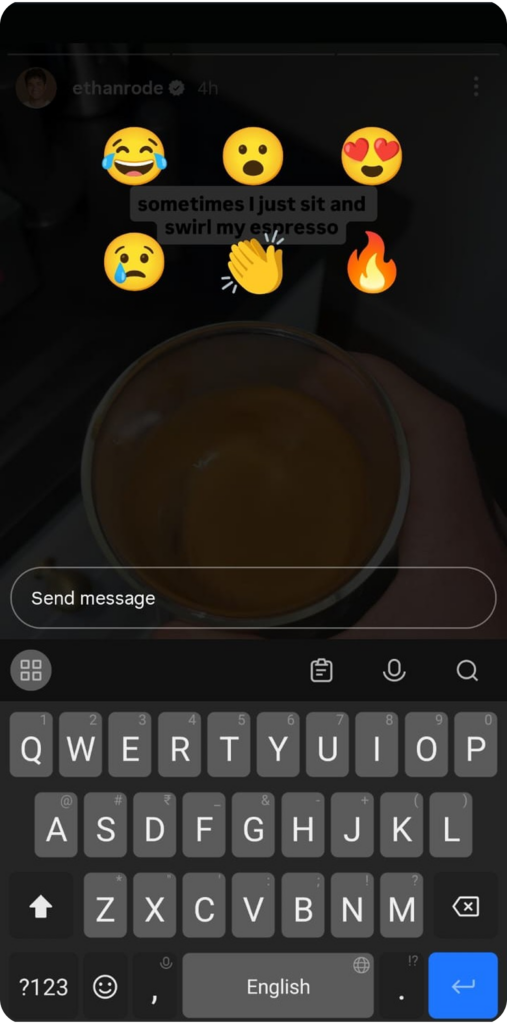
4. In Comments and DMs
In the fast-moving world of social media, a full sentence isn’t always necessary. An emoji reaction in a DM shows you’ve read the message and appreciate it without requiring a 5-minute typing session.
The Most Popular Instagram Emoji Meanings (2026 Edition)
Context is everything. Emojis set the vibe of the message only when it used in the right setting. Let us tackle that by understanding what these emojis mean exactly. Here is how the most popular emojis are actually being used today:
1. Most Popular Emojis
- ❤️ Red Heart: The universal sign of love and support. It’s the “safe” emoji that works in almost every positive context.
- 🔥 Fire: This means something is “lit,” trending, or that someone looks particularly good. It is the ultimate “hype” emoji.
- ✨ Sparkles: Used to denote a clean aesthetic, excitement, or “magic.” In some contexts, it’s used ironically to highlight something someone is being overly dramatic about.
- 💀 Skull: This is Gen Z’s version of “I’m dead.” It means something was so funny they “died” laughing. It has almost entirely replaced the “Crying-Laughing” face.
- 😭 Crying Face: Usually used ironically. It means “This is too relatable” or “This is so funny I’m actually sobbing.”
- 🤡 Clown: The “self-callout.” Use this when you realize you made a silly mistake or “played yourself.”
- 🧢 Cap (Blue Hat): Slang for “lie.” If someone comments this, they are calling your post fake or dishonest (“No cap” means “No lie”).
- 💯 Hundred: Total agreement. It means your take is 100% facts.
- 🙃 Upside Down Smile: The universal symbol for “I am frustrated but smiling through the pain” or “That was sarcastic.”
- 😏 Smirking Face: Used for flirting, suggestive comments, or when you’ve shared a “hot take” you know is a bit cheeky.
2. The “Vibe” and Aesthetic Markers
- 🪄 Magic Wand: Used when showing a “Before & After” or a significant transformation (like a room glow-up or a makeup transition). It signals that the result looks effortless.
- 🫧 Bubbles: The go-to for “clean girl” aesthetics, skincare routines, or high-vibe, airy photography. It represents purity and a light, refreshed mood.
- 🧿 Nazar Boncuk (Evil Eye): Extremely popular in 2026 for “protecting your energy.” Users post this when sharing a big win or a new relationship to ward off “bad vibes” or jealousy from followers.
- 🍒 Cherries: While it can be literal, it’s currently the hallmark of “Cherry Red” fashion trends and “Coquette” aesthetics—meaning something is cute, vintage, or trendy.
3. The “Post-Ironic” Expressionists
These emojis are used to communicate a specific brand of internet-aged humor—usually a mix of self-deprecation and hyper-fixation.
- 🫨 Shaking Face: The premier emoji for being “shook.” It’s used when a new album drops, a plot twist happens in a show, or you’re physically vibrating from too much caffeine. It replaced the standard 😱 (Shocked Face), which now feels “too cartoonish.”
- 🫦 Biting Lip: This has moved beyond its flirtatious origins. In 2026, it’s often used to signify anticipation or “holding back a scream” (both good and bad). It’s the “I’m obsessed with this” emoji.
- 🧎 Person Kneeling: Usually used in a row (🧎🧎🧎) to show extreme devotion or “simping” for a fashion drop, a celebrity, or a high-tier aesthetic. It’s a humorous way to say, “I am a humble servant to this vibe.”
- 🫡 Saluting Face: The universal sign for “I understand the assignment” or “Yes, Captain.” It’s used when someone gives a great piece of advice or when you’re “soldiering through” a long Monday.
Why the Shift Matters
In 2026, the “Uncanny Valley” of emojis is real. If you use a literal emoji (like using a 🚗 just because you bought a car), you look like an automated bot. The most successful creators use emojis that reflect internet culture—choosing the vibe of the car (like 🏎️ for speed or 🕶️ for cool) rather than the object itself.
Instagram Emoji Reactions: Signals to the Algorithm
What are Instagram Reactions?
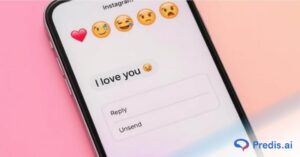
When you long-press a message in DMs or view a Story, Instagram offers a set of “Quick Reactions.” These are preset emojis that allow for instant feedback.
The Meanings Behind the Defaults
- ❤️: Love/Support
- 😂: “That’s funny” (Millennial leaning)
- 😮: Shock or surprise
- 😢: Touched or saddened
- 👏: Congratulations/Well done
- 🔥: “Amazing!”
- 💯: “Agreed.”
Why Reactions Matter for Creators
Every time a user reacts to your Story with an emoji, it sends a powerful signal to the Instagram algorithm. It tells the app that your Instagram story is engaging, which increases the likelihood of your future Stories appearing at the front of that user’s feed.
Why using the wrong emoji can kill your vibe?
Using the wrong emoji can make your brand look “out of touch.” Emoji trends act like a “generational accent.”
The Death of 😂
For Millennials, 😂 is the default for “funny.” For Gen Z, 😂 is what their parents use. Gen Z has shifted to 💀 (Skull) or 😭 (Loudly Crying) to express humor. If you are targeting a younger audience, avoid the “Crying-Laughing” face.
The 👍 Thumbs Up Divide
This is the most dangerous emoji in the workplace and on social media.
- Millennials: “Great! Good job! Got it!”
- Gen Z: “Cool, I’m done talking to you.” To a younger audience, a lone 👍 feels dismissive, cold, or passive-aggressive.
Tone Markers over Literal Meanings
Younger users use emojis as tone markers. The 🤡 isn’t about the circus; it’s about feeling foolish. The 🧢 isn’t about fashion; it’s about truth. Understanding your audience’s generational lens is the difference between “cringe” and “connection.”
Hidden and Slang Emoji Meanings
Some emojis have “secret” lives that have nothing to do with their official names.
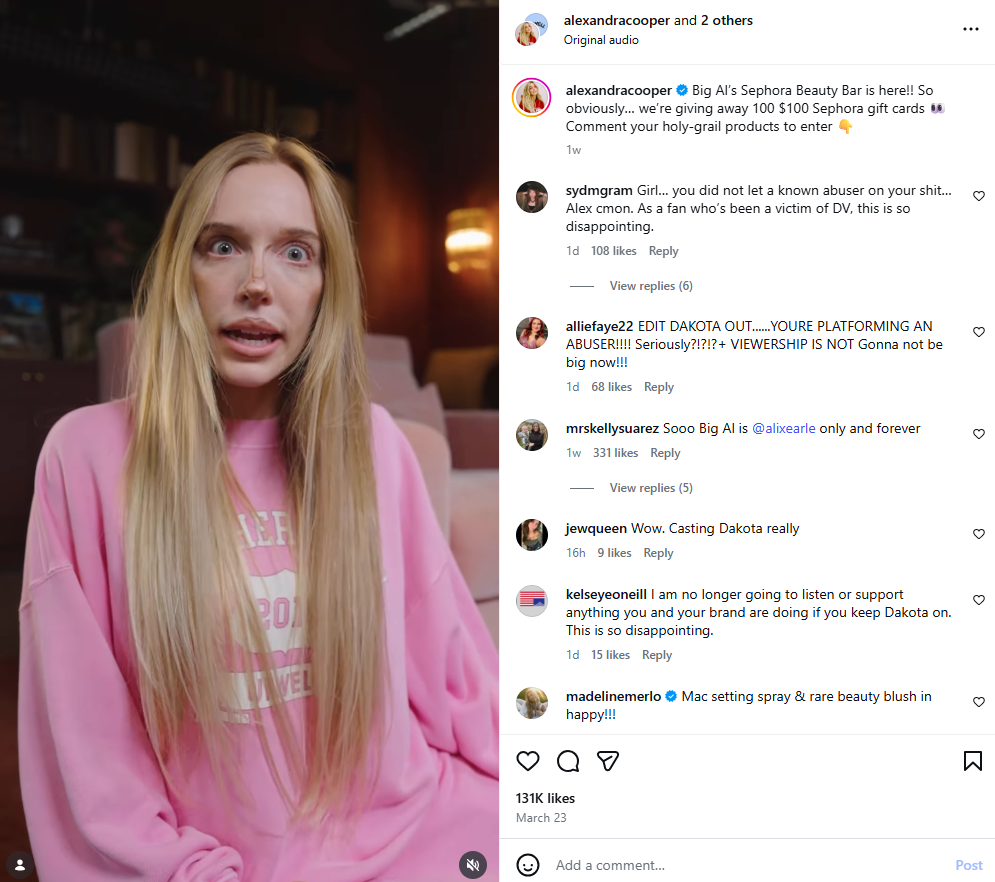
- 👀 Eyes: “I’m looking,” “I see what you did there,” or “I’m waiting for the drama/tea.” For example, look at Sephora spilling the tea and adding 👀 emoji to it.
- 😔 Pensive Face: Often used ironically for “relatable existential dread” or a “woe is me” joke.
- 🐸 Frog: Often paired with a tea cup (☕). It means “I’m just minding my own business and sipping tea (gossip).”
How to Use Emojis Strategically for Better Engagement
1. The Placement Rule
- Start: Use an emoji at the very beginning of a caption to grab the eye.
- Middle: Use them to emphasize a specific word.
- End: Use 1–2 emojis at the very end to “set the mood” of the post.
2. The 1–2 Emoji Rule
Avoid “Emoji Vomit.” Using a string of 10 emojis (🔥🔥🔥🔥🔥🔥🔥🔥🔥🔥) feels like spam and looks unprofessional. Use one for tone and two max for excitement.
3. Drive Action
Don’t wait for engagement—ask for it. Because sometimes you just have to guide them the right way to get the response you need.
- “Drop a 🔥 if you’re ready for the weekend!”
- “Comment a 💯 if this resonated with you.”
Emoji Etiquette: What to Avoid
- Don’t Overload: If your caption looks like a puzzle, people will skip it.
- Check Cultural Context: Be careful with hand gestures (like the ✌️ or 👌) as they carry different, sometimes offensive, meanings in different countries.
- Avoid Suggestive Emojis: Unless you are a very specific type of brand, stay away from the 🍆, 🍑, or 💦.
- Don’t Force It: If your brand voice is “Serious Legal Defense,” don’t use the 🤪 emoji. Stay true to your brand’s established voice.
Final Thoughts
Mastering the emoji landscape isn’t about memorizing a dictionary; it’s about staying curious and observant. Whether you are using the Melting Face 🫠 to show a moment of relatable chaos or dropping a Fax Machine 📠 to signal total agreement, these small symbols have the power to bridge the gap between a brand and its community.
As you move forward with your Instagram strategy, remember the golden rules:
- Context is King: Always consider the “generational accent” of your audience.
- Less is More: Use emojis to enhance your message, not clutter it.
- Stay Authentic: If a trending emoji doesn’t fit your brand voice, don’t force it.
By treating emojis as a strategic tool rather than an afterthought, you’ll not only improve your readability and SEO—you’ll build a brand that speaks the same language as its followers. Now, go ahead and update that bio, refine those captions, and watch your engagement reach new heights.
Frequently Asked Questions (FAQs)
It’s a slang shift. 💀 stands for “I’m dead [from laughing].” Using 😂 is now seen as “old-fashioned” or “Boomer-coded” by younger users.
It depends on the age of your audience. To older users, it’s a positive “OK.” To younger users, it can feel like a “conversation-ender.”
Ideally, 1 to 3 per paragraph. Any more, and you risk looking like a spam account.