

Explore this content with AI:
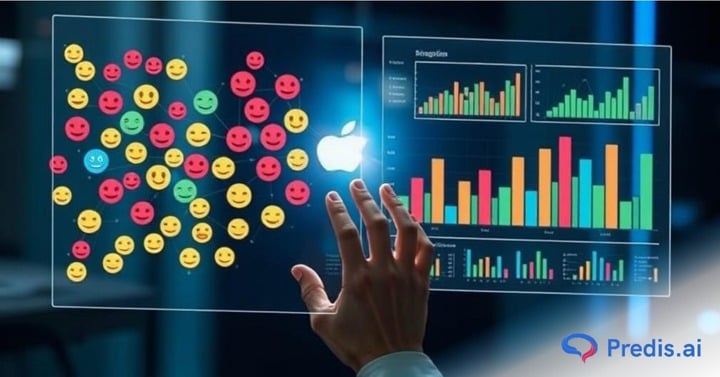
Likes, reach, and follower count tell you how many people saw your content. Sentiment analysis tells you whether those people trust your brand, resent it, or couldn’t care less. Only one of those data points predicts what happens next.
Most social media reporting stacks are built almost entirely on the first category — volume metrics that measure how much without ever asking how they felt. Sentiment data fills that gap. It’s the layer that turns a spike in mentions from a mystery into a message.
This guide covers 8 social media sentiment analysis tools that are worth your evaluation time — with honest tradeoffs, use-case fit, and a framework for choosing before you read a single pricing page.
What to Evaluate Before Committing to Any Platform
Before the social media sentiment analysis tools list, a faster way to narrow it down. Every sentiment analysis tool can be evaluated across five criteria:
| Criterion | What to Ask |
|---|---|
| Sentiment Accuracy | Does it handle slang, sarcasm, and industry-specific language — or does it misread irony as positive? |
| Platform Coverage | Does it monitor the platforms where your audience actually talks? (Instagram comments ≠ Reddit threads) |
| Real-Time Alerts | Can it notify you within minutes of a sentiment spike — or does reporting lag by 24 hours? |
| Reporting Depth | Does it give you trend lines, demographic breakdowns, and export-ready reports — or just a score? |
| Price-to-Value | Does the pricing scale match your monitoring volume, or are you paying for enterprise capacity you’ll never use? |
The tiered way to think about tool categories:
- Enterprise monitoring (Brandwatch, Meltwater, Synthesio): High-volume, cross-channel, research-grade — built for brands managing thousands of mentions daily with PR and strategy teams consuming the data
- Mid-market listening (Sprout Social, Talkwalker, Keyhole, Digimind): Solid sentiment depth with workflow integration — right for growth-stage brands and agencies running structured social operations
- SMB awareness tools (Brand24, Mention, Awario): Fast setup, actionable outputs, lower cost — built for lean teams who need sentiment signals without a six-week onboarding process
One more question that most buyers skip: the integration question. A standalone sentiment tool that doesn’t connect to your content calendar, CRM, or Slack workspace creates a reporting silo — data you see but don’t act on. The tools that compound in value are the ones that fit into the flow where decisions actually get made.

The 8 Social Media Sentiment Analysis Tools
1. Brandwatch

Best for: Large marketing teams, PR agencies, and brands with high-volume mention monitoring needs.
Brandwatch is the benchmark against which most other tools get measured. Its AI-powered sentiment categorisation runs across 100+ million sources, with demographic breakdowns that tell you not just what people feel but who feels it — age, gender, location, and interest cluster all factored into the sentiment read.
The real-world use case where Brandwatch genuinely earns its cost: tracking campaign sentiment shift in real time during a product launch or crisis window. When a brand moment is unfolding — good or bad — Brandwatch’s historical data lets you contextualise the current spike against past patterns and decide whether it’s noise or signal.
The honest tradeoff: Enterprise pricing and a steep onboarding curve that rules out most SMB teams before they’ve finished the demo.
2. Sprout Social
Best for: Teams who want sentiment data without adding another tool to their stack.
Sprout’s sentiment advantage is its location — it lives inside the publishing and reporting stack most social teams already use. The Smart Inbox tags incoming mentions and DMs with sentiment scores before a human reads them, which means your community manager is triaging a pre-sorted queue rather than starting from scratch.
Negative-sentiment messages bubble up automatically; the team responds faster; escalations get caught before they become crises.
The limitation worth knowing: Sentiment is a secondary feature inside a platform built primarily for publishing and CRM. If deep sentiment intelligence is your primary need — trend analysis, demographic breakdowns, competitor benchmarking — Sprout will leave you wanting more.
3. Mention

Best for: Growing brands and lean social teams monitoring mentions across news, blogs, and social simultaneously.
Mention wins on accessibility. Real-time alerts, sentiment scoring, and a UI that doesn’t require an onboarding call — you can have your first monitoring project running inside an hour. For a D2C brand tracking how its products get discussed across Instagram and consumer review blogs simultaneously, that low time-to-value is the differentiator.
On sentiment accuracy: At this price point, the AI gets most things right on straightforward positive/negative signals. Where it still needs human review is nuanced language — sarcastic praise, backhanded compliments, and highly contextual criticism. Build a review step into your workflow for anything flagged as high-priority before acting on it.
4. Talkwalker
Best for: Fashion, beauty, food, and consumer electronics brands with high visual UGC volume.
Talkwalker does something no other tool on this list does as well: it analyses sentiment in images and videos, not just text. Logo detection tells you how often your brand appears in user-generated content — even when there’s no caption mention. Brand association tracking maps which visual contexts your logo appears in, which matters enormously for perception management.
For a beauty or lifestyle brand where customers share unboxing videos, product-in-use Reels, and aesthetic flat-lay posts without tagging, a significant portion of brand conversation is invisible to text-only sentiment tools. Talkwalker closes that gap.
Who needs this specifically: Any brand where the visual presentation of the product is the brand experience. If your customer’s Instagram grid is more representative of brand sentiment than their tweet, you need visual analysis.
5. Keyhole

Best for: Brands running influencer partnerships and hashtag campaigns that need sentiment tracking across a defined campaign window.
Most sentiment tools are built for always-on brand monitoring. Keyhole is built for the campaign lifecycle — tracking how audience feeling shifts from launch through peak engagement to post-campaign wind-down, all within a defined hashtag or creator context.
The influencer sentiment analysis feature is particularly useful. It answers a question most post-campaign reports ignore: did this creator partnership generate positive, neutral, or negative brand association in the audience that engaged with the content? Reach and impressions tell you how many people saw the partnership. Sentiment tells you whether it helped or hurt.
Hashtag sentiment scoring gives campaign managers a live read on whether the audience is receiving the campaign as intended — and an early warning if the tone is drifting somewhere the brief didn’t plan for.
6. Awario

Best for: Bootstrapped D2C brands and solo marketing managers who need real-time sentiment alerts without enterprise tool budgets.
For small teams monitoring brand mentions across social, news, and blogs, it delivers a reliable signal at a price point that doesn’t require budget approval.
The Boolean search capability is the standout feature for advanced users. Query logic that filters out noise — excluding irrelevant uses of your brand name, including only mentions in specific geographic markets — means the sentiment data you see is actually relevant, not diluted by false positives.
Honest assessment: Awario’s sentiment model is less nuanced than enterprise alternatives. It handles clear positive/negative well; it struggles with ambiguous, ironic, or highly contextual language. The way to compensate is to use it for what it’s strong at — volume monitoring and trend direction — and apply human judgment to any mention that could trigger a response.
7. Meltwater
Best for: PR and communications teams who need sentiment tracking across social and traditional media in a single view.
Crisis detection is a core feature, not an add-on. Meltwater’s sentiment spike alerts are designed to catch negative signals early — before a story gains momentum — when reputational damage is most preventable. For a SaaS brand managing a product announcement or an issue that’s crossing from social into media coverage, Meltwater’s cross-channel view surfaces the full picture.8.
8. Brand24

Best for: Small and mid-size teams who need to be up and running with sentiment data in under an hour.
Brand24 consistently wins on implementation speed. Setup takes under 30 minutes; sentiment data starts populating within the hour. For a social media agency managing D2C brand accounts, that fast time-to-value means client sentiment reporting can be live before the end of an onboarding call.
The Discussion Volume Chart is a genuinely useful visualisation — it plots sentiment alongside mention volume on the same axis, so you can see the emotional shape of a conversation at a glance. A spike in mentions with flat-to-negative sentiment reads differently than a spike in mentions with positive sentiment trending upward. The combined view makes that distinction immediately visible.
The Sentiment-to-Strategy Pipeline
This is the section most sentiment tool reviews skip entirely. Getting the tool is the easy part. Knowing what to do when a signal surfaces is where most teams stall.
Sentiment data produces three types of signals. Each demands a different response.
1: Positive Sentiment Spike
Something is working better than expected. Mentions are up, sentiment is positive, and the conversation is moving in your favour. Most teams see this and feel good. The right response is to act on it immediately.
The amplification protocol:
- Identify exactly what drove the spike — specific post, format, topic, or campaign moment
- Create follow-on content in the same vein within 24–48 hours while the signal is still warm
- Repurpose the top-performing content into formats you haven’t used for that topic yet
- Flag the content type internally as a proven pillar — not a one-off win
The window for amplification is narrow. Positive sentiment spikes decay fast. Teams that can turn around follow-on content quickly — using an AI post generator to produce platform-native variants from the same brief — capture the momentum. Teams that wait to discuss it in next week’s planning meeting miss it.
2: Negative Sentiment Spike
A sharp increase in negative mentions is the signal most teams have no protocol for. The 4-step response:
- Triage: separate genuine criticism from noise and bad-faith pile-ons — they require different responses
- Diagnose: Is this product-related, service-related, or perception-related? The root cause determines who needs to be involved
- Respond: acknowledge publicly, quickly, and without defensiveness — silence amplifies negative sentiment faster than any other variable
- Adjust: if the spike reveals a real issue, the content calendar needs to reflect that adjustment — not pretend the spike didn’t happen
What not to do: flood the feed with positive content to drown out negative sentiment. Audiences notice the pivot and interpret it as avoidance.
3: Sentiment Drift
Drift is the most dangerous signal because it’s the slowest. Unlike spikes, drift is a gradual decline in positive sentiment over weeks or months — often invisible without a monthly review ritual because no single week looks alarming.
The monthly sentiment review that catches drift before it becomes a crisis:
- Week-over-week sentiment score comparison for the past 30 days — is the trend line flat, rising, or declining?
- Platform breakdown — is drift happening everywhere or on one channel specifically?
- Topic clustering — are negative mentions clustering around a specific product, feature, message, or team member?
- Competitor cross-reference — is sentiment declining across the whole category, or only for your brand?
That last check — cross-referencing your trend against competitor patterns — is where tools like Predis.ai’s competitor analysis add genuine strategic value. If your sentiment is declining while competitors in the same category are flat or rising, you have a brand-specific problem to diagnose. If the whole category is declining, the cause is likely external — market conditions, a news cycle, a regulatory shift — and the response strategy is different.
The Bottom Line
Sentiment data doesn’t replace creative instinct or strategic judgment. What it does is make both sharper — by replacing guesswork about how audiences feel with an actual read of the room. The teams that use it well aren’t the ones with the most sophisticated social media sentiment analysis tools. They’re the ones who’ve built a system for turning the data into a decision.
Frequently Asked Questions
Social listening is the broader practice of monitoring what’s being said about your brand, category, and competitors across social channels. Sentiment analysis is one output of social listening — the emotional classification of that content. All sentiment analysis requires social listening; not all social listening tools include meaningful sentiment analysis.
Inconsistently. Enterprise tools like Brandwatch have made advances in sarcasm detection, but it remains an industry-wide challenge. The practical approach: use automated sentiment for volume triage, apply human judgment to any mention that will drive a public response.