

Explore this content with AI:
Carousel vs Reel vs Image ads – Three Instagram ad formats. Three very different jobs. The mistake most advertisers make is picking one based on what they like to create — not what their campaign actually needs.
Here’s what the data says: Reels deliver 2.25× the reach of single image posts. Carousels generate the highest engagement rates of any format. And image ads consistently carry the lowest CPMs, making them the most efficient format for closing a sale with audiences who already know your brand.
The format you choose should depend on where you are in the funnel — not your production budget or personal preference. This guide breaks down the characteristics, performance benchmarks, and ideal use cases for each format so you can match the right creative to the right moment.
The Instagram Ad Format Matrix – Carousel vs Reel vs Image ads
Use this as your go-to reference when planning any Instagram ad campaign.
| Reels | Carousel | Image | |
|---|---|---|---|
| Primary goal | Discovery & reach | Engagement & education | Conversion & retargeting |
| Funnel stage | Top of funnel (TOFU) | Middle of funnel (MOFU) | Bottom of funnel (BOFU) |
| Engagement rate | 1.23% | 1.38% | 0.72% |
| Reach vs images | 2.25× more | 1.65× more | Baseline |
| Production effort | High | Medium | Low |
| Best for | Demos, UGC, BTS content | Product ranges, tutorials, social proof | Abandoned cart, flash sales, reminders |
| Key metric to track | Video view rate, CTR | Save rate, swipe-through rate | ROAS, CPA |
Carousel Ads – General Characteristics
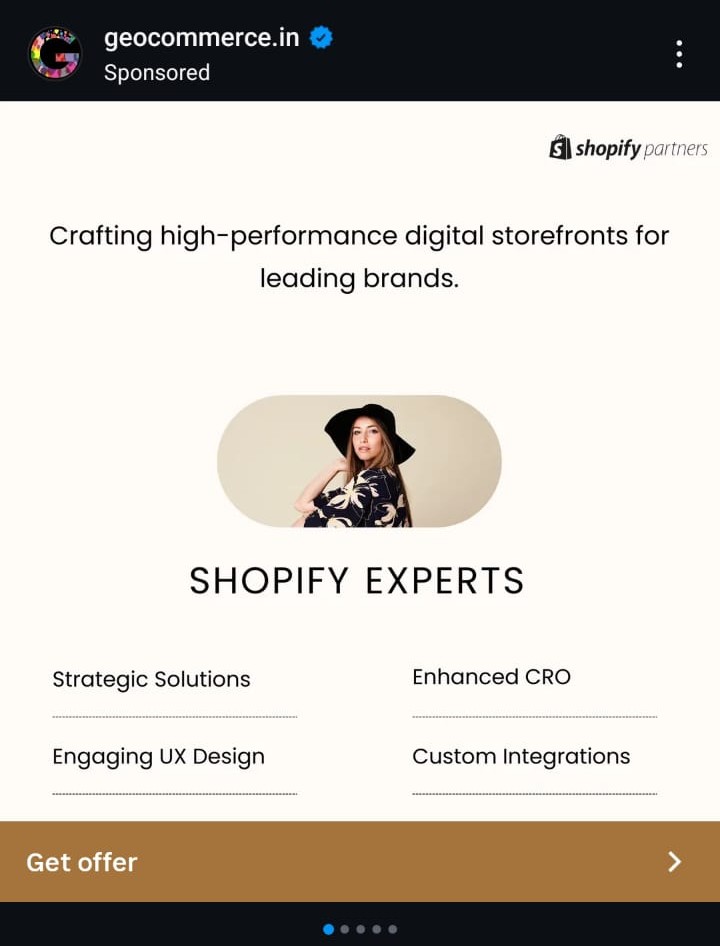
Carousel ads are the kings of engagement. Among all formats of ads, they receive the most engagement, yes, even exceeding Reels. Sounds shocking, right?
These rotating forms of content can hold up to 10 images or videos and can build a cohesive story better than image or reel ads. With clever images and copy, you will get ample time and space to provide the details that can help convert your customers. Hence explained the engagement rate is explained.
Conversions are also easy with carousels. This fact is backed by data, where Lacoste experienced a 61% click-through rate and a significantly lower CPC with carousel ads in comparison to other ad formats.
Sell More via Instagram 💰
TRY FOR FREE
When to Use Carousel Ads?
Carousel ads are built for the consideration stage — when a potential customer needs more information before making a decision. Here’s when to deploy them:
- Multiple products in one post: Showcase a product range, collection, or product line without splitting budget across separate ads. Each card can feature a different SKU with its own link.
- Storytelling with a beginning, middle, and end: The swipe mechanic is uniquely suited to narratives — a problem on card 1, the journey in cards 2–5, and the resolution (your product) on the final card.
- Tutorial or how-to content: Break a multi-step process into one card per step. Skincare routines, recipe steps, assembly guides — anything with a sequence works beautifully here.
- Objection handling: Anticipate your buyer’s hesitations and dedicate a card to each one. “Is it durable?” → Card 3. “What sizes are available?” → Card 4. “What do customers say?” → Cards 5 and 6.
- High retention, high engagement campaigns: Carousels generate 12% more interactions than Reels and 2.1× more than single images. If your campaign objective is engagement or video views, carousels frequently outperform.
Budget note: Carousel CPMs sit in the more affordable region than Reels but are more expensive than image ads. They’re the best value format when conversion rates need to improve rather than just reach.
Image Ads – General Characteristics
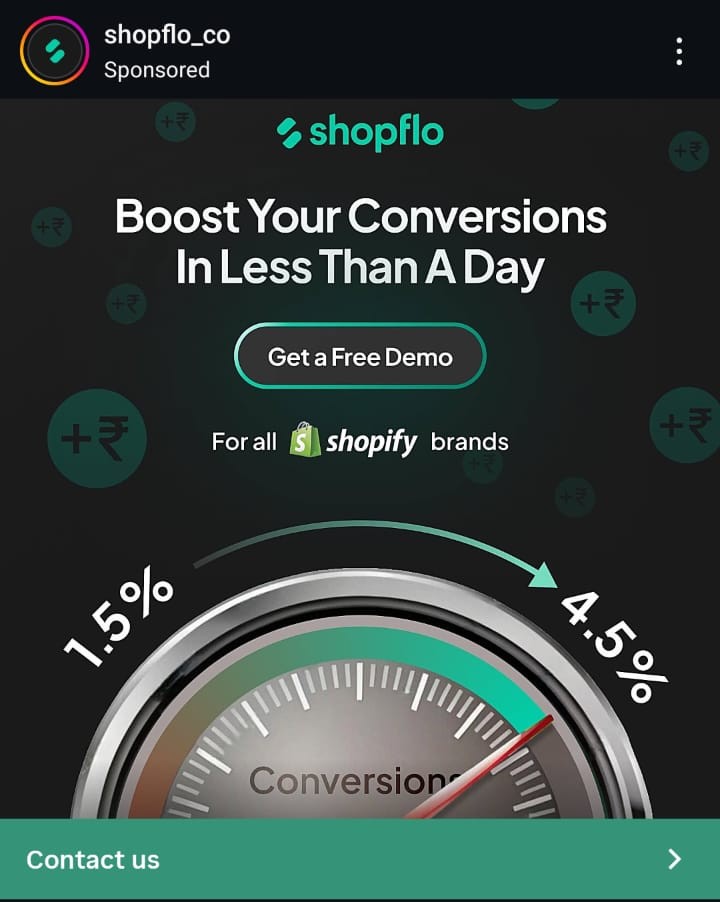
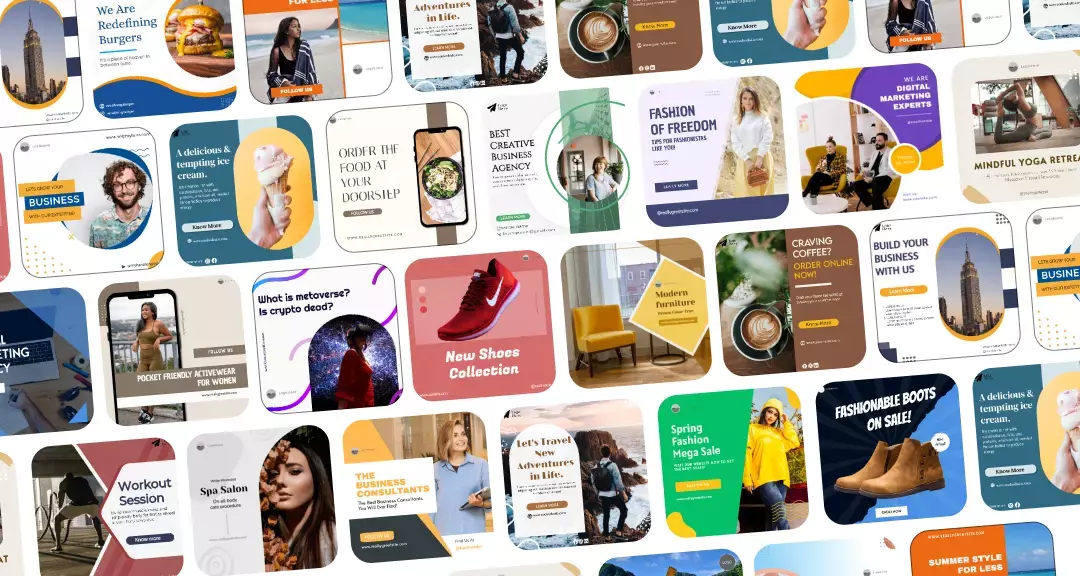
Image ads are just a simplified version of carousel ads with a single image in them. These kinds of ads are simple, convey a direct message, and are engaging as well.
With image ads, you can reach a substantial set of audience without the production budget of a reel ad or a carousel ad.
When to use Image Ads?
Image ads are often dismissed as the “basic” option — but for the right use case, they’re the most profitable format in the entire playbook. Their strength is efficiency: low CPMs, zero production overhead, and instant loading on any connection.
Use image ads when:
- Retargeting warm audiences: Anyone who visited your website, watched 50%+ of a Reel, or engaged with a previous ad is a warm lead. A clean product image with a discount code or clear CTA is all they need. Don’t spend Reel CPMs on people who already know you.
- Running flash sales or time-limited offers: Bold text, high contrast, and a clear deadline. No swipe required, no video to sit through — the message lands in one glance.
- Promoting a single product with a strong visual: If your product photographs beautifully and the image alone sells the story (luxury goods, food, lifestyle products), a single image often outperforms more complex formats.
- A/B testing copy and creative quickly: Image ads are the fastest creative to produce and test. You can run 5 Instagram ad variants, each testing a different headline, CTA, or offer against the same image, in hours — invaluable for optimisation.
- Working with a limited production budget: You don’t need video or design skills to run effective image ads. A high-quality product photo, a clear headline, and a CTA are sufficient.
Reel Ads – General Characteristics
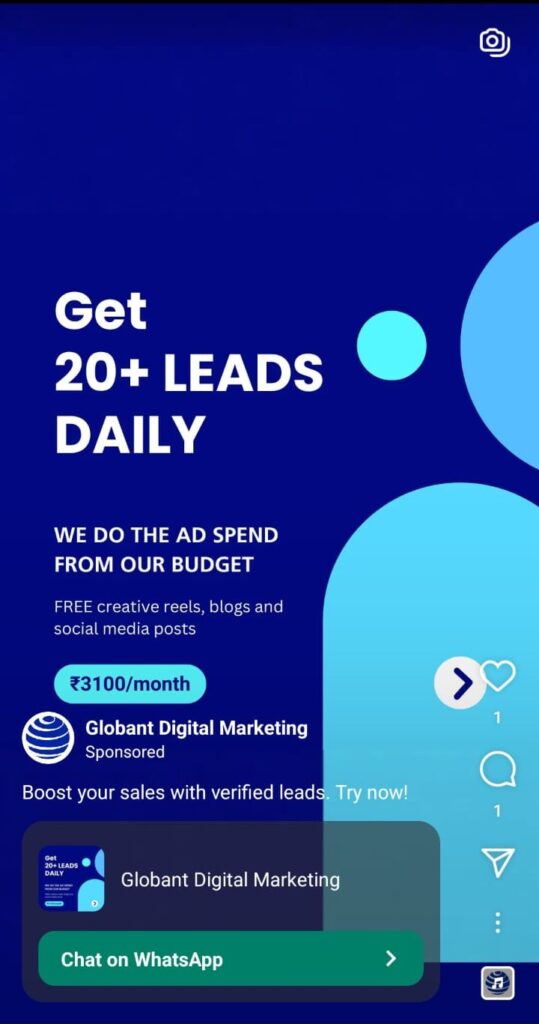
Short-form videos have been a hit across all social platforms. And Reels was no exception. Ever since its inception, Reels have managed to gain and retain the attention of their audience. And businesses, too, have jumped on the bandwagon for Reels because it allows us to tap into and get access to users who do not follow you yet.
When to use Reels Ads?
Reels are Instagram’s highest-reach format — the algorithm actively distributes them to non-followers, giving them the organic discovery capability that no other ad format matches. But they also carry the highest CPMs, which means deploying them strategically matters.
Use Reel ads when:
- Reaching new audiences who’ve never heard of you: Reels deliver 2.25× the reach of image posts and 1.36× the reach of carousels. For brand awareness and new customer acquisition, there’s no better tool.
- Your product needs to be demonstrated to be understood: A video showing the product in use communicates what a hundred words of copy can’t. Cleaning products, fitness tools, software features, food — anything where “seeing is believing” calls for Reels.
- Targeting younger demographics (18–34): Reels consumption skews young. If your primary audience is Gen Z or younger Millennials, Reels is where you meet them.
- Publishing UGC, testimonials, or behind-the-scenes content: Authentic, unpolished Reels consistently outperform heavily produced brand ads. A customer testimonial filmed on a phone often delivers better CPAs than a $2,000 production.
- Launching a new product or brand: Top-of-funnel reach campaigns benefit most from Reels’ distribution advantage. Get as many eyeballs as possible before moving audiences into retargeting with carousels and images.
Production note: Reels have the highest production overhead of any format. For brands that need volume without per-video production cost, AI-generated ad creatives can replace the traditional shoot-and-edit workflow. Predis.ai’s Ad Creative Generator lets you generate Reel-ready video creatives from a product URL — no camera or editing software required.
Making Successful Instagram Ads With Predis AI
No matter what kind of ad you want to create, Predis AI has something that can help you get started. To publish an ad, you first need to create one. Let us check out how Predis.ai can make the AI process a breeze for you!
- Click “Create New” in the dashboard and then click “Ad creative”.
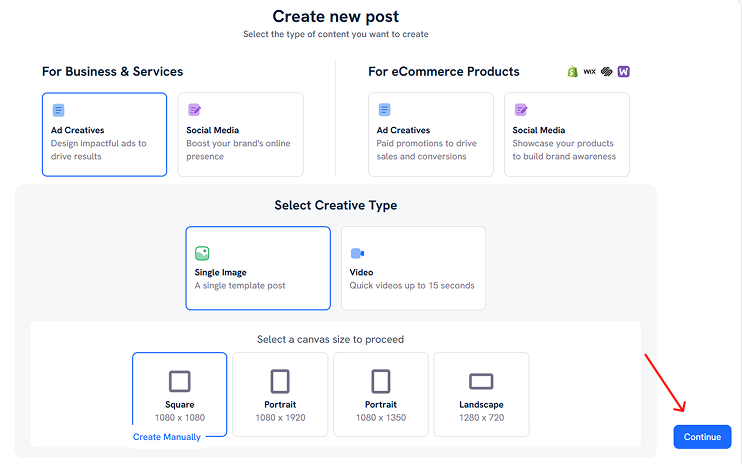
- Select the type of ad creative that you want to create and select the ad dimension. Once done, click “Continue”.
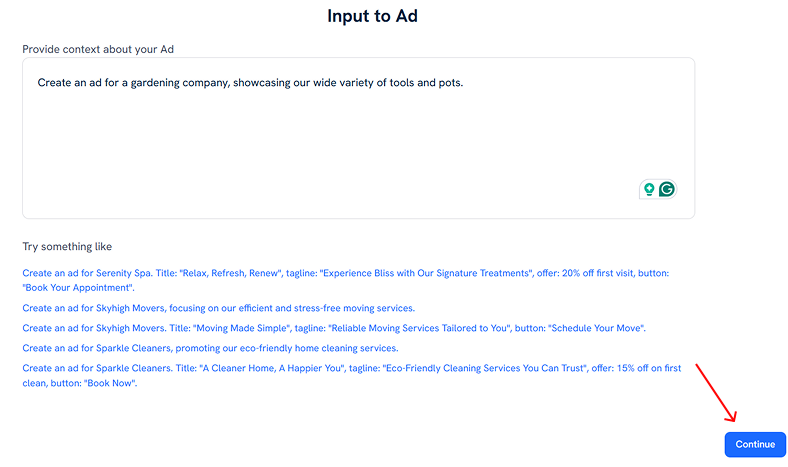
- Add inputs on the type of ad creative you want. Be as detailed as possible. And then click “Continue”.
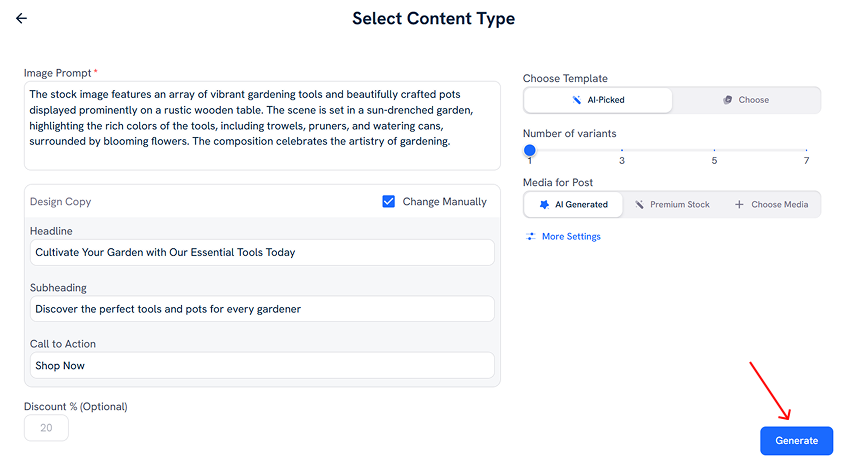
- Based on the input you provided, Predis AI will automatically generate an image prompt, headline, sub-headline, and so on. You can click on “Change manually” and make any modifications you want. Once satisfied, click “Generate”, and the post will be generated as per your preference.
- If you are not satisfied, you can edit further with our built-in reader. If you are happy with the outcome, then download the creative and head to Facebook Ads Manager to make the post live.
Uploading The Post To Facebook Ads Manager
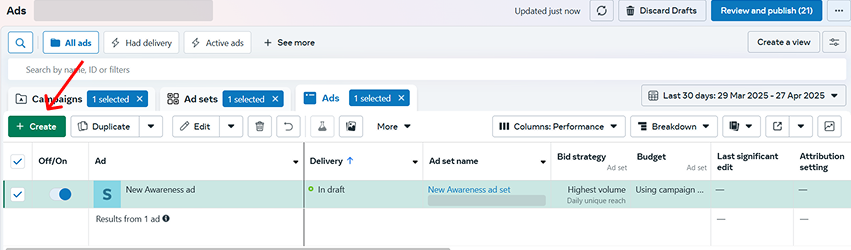
- Once you are in Facebook Ads Manager, click on the “Create New” option to start creating your ad campaign.
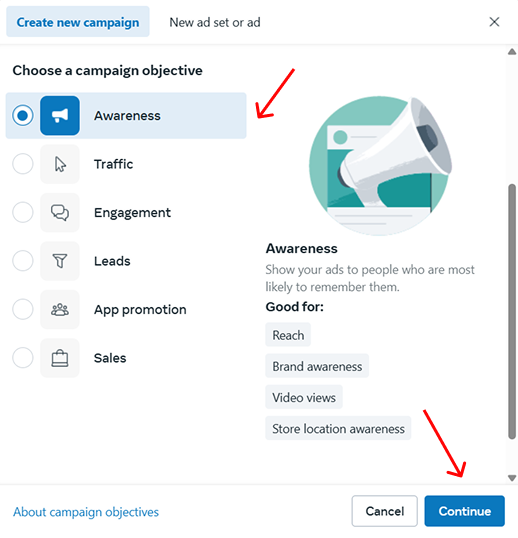
- Choose your campaign objective, which can be anything, irrespective of the ad format that you will eventually pick. Once you are okay with the objective, hit “Continue”.
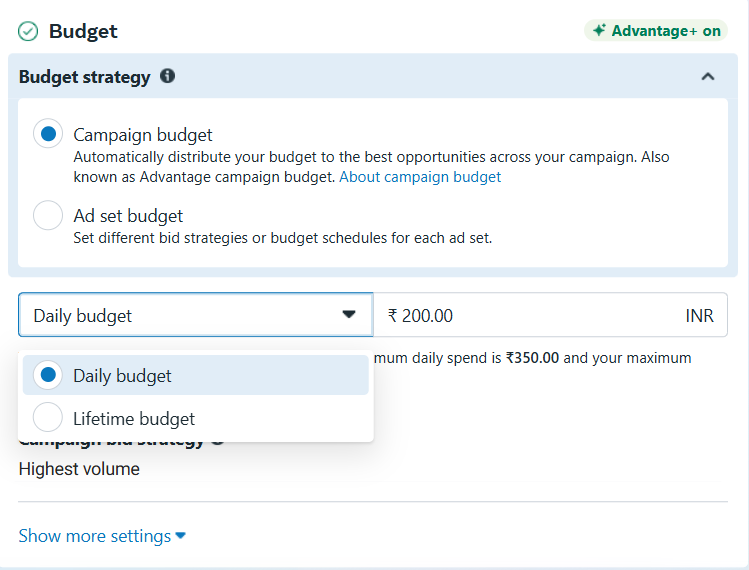
- Next, pick the budget for your ad, the frequency with which it is supposed to be displayed, and the audience to which it is supposed to be displayed. The bar on the right-hand allows you to visualise if your ad is going to be displayed for a broad or narrow audience. (Pro Tip: Brand awareness ads need to be displayed for a wider audience, whereas conversion ads can be displayed for a narrower audience.)
- Once all the settings have been finalized, you can upload the ad creative you created before and upload it here. Preview the said creative, and once you are all set, hit “Publish” and let Ads Manager do its magic.
Pro tip: Choose the Advantage+ option if you want Meta to help you with anything from creatives, audience segmentation, to placements, and so on.
Format-to-Goal Quick Reference – Carousel vs Reel vs Image ads
If you know your campaign objective but aren’t sure which format fits, use this as a starting point:
| Campaign goal | Recommended format | Why |
|---|---|---|
| Brand awareness / new audience | Reels | Highest reach, algorithmic distribution to non-followers |
| Product launch | Reels → Carousel sequence | Reels drive initial discovery; carousels educate and convert |
| Retargeting website visitors | Image ads | Lowest CPM, fastest load, no pitch needed for warm audiences |
| Abandoned cart recovery | Image ads | Simple nudge with urgency — no need for full creative |
| Product range showcase | Carousel | Multiple SKUs in one unit, each with its own link |
| Tutorial or how-to | Carousel | Sequential swipe mechanic maps naturally to step-by-step content |
| Flash sale / time-limited offer | Image ads | Clarity and speed — message needs to land in one glance |
| UGC or social proof campaign | Reels | Authentic video builds trust faster than any static format |
| Engagement campaign | Carousel | Generates 12% more interactions than Reels per impression |
The most effective Instagram ad strategies don’t pick one format — they use all three in sequence: Reels to build awareness, carousels to build consideration, and image ads to convert.
The Final Takeaway
Carousel vs Reel vs image ads — every format wins in the right context. The mistake isn’t choosing the “wrong” one; it’s deploying a format at the wrong funnel stage. Use Reels to get discovered, carousels to earn consideration, and image ads to convert.
The second challenge is keeping up with creative volume. Instagram’s algorithm rewards fresh content, and creative fatigue sets in fast — especially on Reels. The brands that scale their ad results are the ones that can produce and test creative quickly, not just strategically.
Start creating Instagram ad creatives with Predis.ai → Generate carousel slides, Reel-ready video ads, and image ad creatives with AI — from a product URL or a brief prompt. Schedule, publish, and track performance in the same platform.
FAQ:
A study of 10,000 posts found carousels generate a 1.38% engagement rate on average — higher than Reels (1.23%) and significantly higher than single images (0.72%). Mixed-format carousels combining images and videos perform even better, averaging 2.33%.
Yes. Reels typically carry CPM, compared to carousels and image ads. This makes Reels best suited for top-of-funnel awareness, where volume matters, and image ads best for bottom-of-funnel retargeting, where efficiency matters most.
Not in the same ad set, but absolutely across a campaign. The most effective approach is a funnel sequence: run Reels to capture new audiences, retarget engagers with carousels to build consideration, then close with image ads targeting high-intent users. Each format has a distinct job at a distinct stage.