

Explore this content with AI:
In recent years, the rise of online marketplaces has made it easier than ever to buy and sell goods. Consumers love how easy it is to browse, compare, and buy goods whenever and wherever they are. In this age, any business or brand can no longer thrive in the online marketplace without going the extra mile to hook and hold their customers. This is where social media marketing steps up! This blog is a complete guide to e-commerce social media marketing, what e-commerce SMM is, why it matters, and will also learn about the important strategies, trends, and success metrics.
What is E-commerce Social Media Marketing?
E-commerce social media marketing refers to promoting, selling, and engaging with customers via social media networks. Understanding the benefits of e-commerce and aligning them with effective e-commerce website development helps brands leverage social platforms not just for engagement, but for streamlined shopping experiences and scalable growth.
SMM strategy includes a blend of organic feed, influencer posts, paid ads, and engaging questions. Brands attract users’ attention and drive purchases through beautiful product photography, persuasive product explainer videos, and compelling copy. With features such as Instagram Shopping, Facebook Marketplace, and even TikTok Shop, it is easier than ever for businesses to display their products and allow transactions to occur within the app. For sellers expanding beyond social platforms, professional Amazon listing services help optimize product visibility, improve search rankings,
Partnering with an experienced E-commerce Development Company and a reliable digital marketing company can further enhance these efforts by ensuring seamless integration of social media features with online stores. Additionally, using Mailmodo, an AI email marketing platform, helps brands convert social media engagement into sales by sending interactive, personalized emails that drive higher conversions. Partnering with an experienced E-commerce Development Company and a mobile app development company can further enhance these efforts by ensuring seamless integration of social media features with online stores.
What is Dropshipping?
Dropshipping is an effective approach that enhances the growth of online retailing. Businesses can sell products without taking the hassle of producing, manufacturing, building stocks, inventory management, or shipping. Instead, they establish an online presence with a set of products and focus on marketing these products for better revenue.
Entering the dropshipping business doesn’t mean you need to stock products or own inventory. Instead, you connect with dropshipping suppliers who manage this aspect for you. Which makes a business building much easier.
Why is E-commerce Social Media Marketing Important?
Many platforms now offer direct shopping features, and Ecommerce Development Companies are making it easier for customers to buy products without leaving the app. CaliforniaBizTech can help businesses explore digital solutions that support seamless ecommerce experiences and customer engagement.
Below are some benefits of social media marketing for e-commerce businesses:
- It allows businesses to connect with customers worldwide by removing geographical barriers.
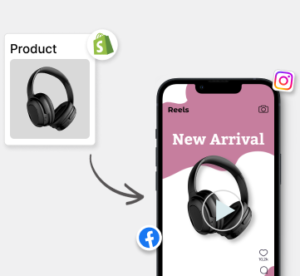
- E-commerce brands can keep their Reels feed active by using Predis.ai to create reels with AI directly from product descriptions, saving hours per week.
- Sharing valuable and original content helps to drive potential customers to an e-commerce website without depending solely on paid ads.
- Interactive features like polls, stories, and live videos make it easier to connect with the audience and help to increase engagement.
- Social media analytics help businesses to understand user behavior, such as customer preferences, their buying habits, and trends, etc.
Boost Sales on Social Media with AI⚡️
TRY NOW
Best Social Media Platforms for E-commerce & Dropshipping
Each social media platform has its own strengths. Choosing the right platform depends on your target audience and the type of product.
- Facebook: Best for all types of businesses. It offers Facebook Shops, targeted ads, and a marketplace for selling products directly to users.
- Instagram: Great for fashion, beauty, and lifestyle products. It has features like Shoppable Posts and Instagram stories that make the shopping experience easy.
- Pinterest: Ideal for home decor, DIY, and fashion brands. People use Pinterest mostly for inspiration. Pinterest features, such as Product Pins, help the target audience to discover new products.
- TikTok: Perfect for businesses whose target audience is younger. A lot of viral trends and influencer collaborations help to drive sales.
- YouTube: It is best suited for long videos; you can share videos on product reviews, tutorials, and so on. It can help brands establish authority and drive more conversions. For short content, you can use YouTube Shorts. They are suitable for quick promotional content.
- Twitter (X): X is well known for trending news/information. It is great for brand awareness, customer service, and trending product discussions. It’s useful for engaging with audiences in real-time and monitoring trends.
- LinkedIn: Ideal for B2B e-commerce businesses that are looking to target professionals and industry leaders by sharing valuable thoughts and connecting with industry professionals.

Strategies to Grow an E-commerce/Dropshipping Business Using Social Media
Below are some steps that you can use to grow your e-commerce brand on social media:
- To build your brand’s unique identity, make use of complimentary or consistent colors, fonts, and messaging to make your brand recognizable and build a unique identity.
- Start making engaging content to connect with your audience. You can make videos showcasing your product or your business space, share client testimonials, or some behind-the-scenes stories with your followers. Using an AI reel maker makes it easy to produce short product videos and promotional Reels directly from your product catalog, no video editing expertise needed.
- You can make use of influencer marketing by partnering with influencers who can showcase your products to their followers. While partnering with influencers or brands, you need to make sure that your target audience is the same.
- For targeting specific users on the basis of their interests and behaviour, you can use social media ads powered by AI decisioning. Predis.ai is an ad generator that makes this process easy. These ads will be directed to specific audiences to engage them and push them to take the required actions.
- You can also boost engagement and conversions by using interactive content marketing like product recommendation quizzes, giveaways, polls, and calculators. Interactive campaigns not only capture attention but also help collect zero-party data and personalize the shopping experience.
- Make use of in-app shopping features like Instagram Shops and TikTok Shop to allow users to buy products without leaving the platform, Collaborating with an experienced E-commerce Development Company can help integrate these features smoothly with your online store especially when paired with reliable ecommerce hosting, while clearly showcasing discounts with a WooCommerce sale badge, while clearly showcasing discounts with a WooCommerce sale badge. As social commerce grows, brands may need eCommerce software development services to connect Instagram Shops and TikTok Shop with their existing catalog, inventory, payment, fulfillment, and customer management systems.
- Collaborating with an experienced E-commerce Development Company and app development company can help integrate these features smoothly with your online store especially when paired with reliable ecommerce hosting, while clearly showcasing discounts with a WooCommerce sale badge, while clearly showcasing discounts with a WooCommerce sale badge
- Encourage user participation and increase brand exposure by hosting contests and giveaways.
- Posting at peak times or when your user is mostly active ensures maximum engagement from your audience.
- Tag products and sync your catalogue with posts to ensure that your audience gets the right information at all times. Sellers working across several marketplaces can also use catalog management software to keep product information organized across their sales channels.
- Utilize social listening tools to gauge changing interest in your customers and adapt to the trend.
- Use the latest technologies like AR and virtual try-on to provide a more immersive shopping experience to the users.
- Get AI chatbots and unified text boxes to address customer concerns expressed even on social media channels. Automated chat support for online stores usually starts on WhatsApp, where order questions, size queries and return requests all arrive in the same thread.
Content Ideas That You Can Use For E-commerce & Dropshipping Marketing
With the following content ideas, you can mindfully bring in customers for your e-commerce and dropshipping business. E-commerce brands watching their marketing spend can still produce consistent Reel content using an AI reel maker free to generate product videos at no upfront cost. Let us check out what those ideas are:
- Releasing a new product? Announce it!
- Does a product have excellent features? Do a deep dive and break it down!
- Show your products in action so your audience can understand what it does.
- Compare your product with competitors and show how you are the best.
- Have a blockbuster product? Announce when it comes back in stock!
- Did a customer drop a positive review? Time to feature it in your socials.
- Sent a PR package? Make sure to repost the unboxing video.
- Post a before-and-after transformation image to show how your products can be of use.
- Show the team behind the business and connect better with your audience.
- Is there a myth in your niche? Debunk it!
- Announcing a black friday sale? Post a countdown and encourage shoppers to claim a Shopify discount before the promotion ends.
- E-commerce brands can stay consistent across all platforms by using a social media post generator to produce product-focused posts from their catalogue.
Common Mistakes That You Need To Avoid
When doing e-commerce social media marketing, businesses often make one or more of the following mistakes:
- Posting for the sake of it and not adding value to their customers.
- Not adopting storytelling in their social media strategy.
- Not listening to customers complaining in their social DMs and comments.
- Failing to plan paid ad campaigns and simply boosting posts.
- Not retargeting customers who showed interest in your products.
How to Measure E-commerce SMM Success?
Tracking performance helps improve social media marketing efforts. Below are the top 10 metrics and KPIs to track:
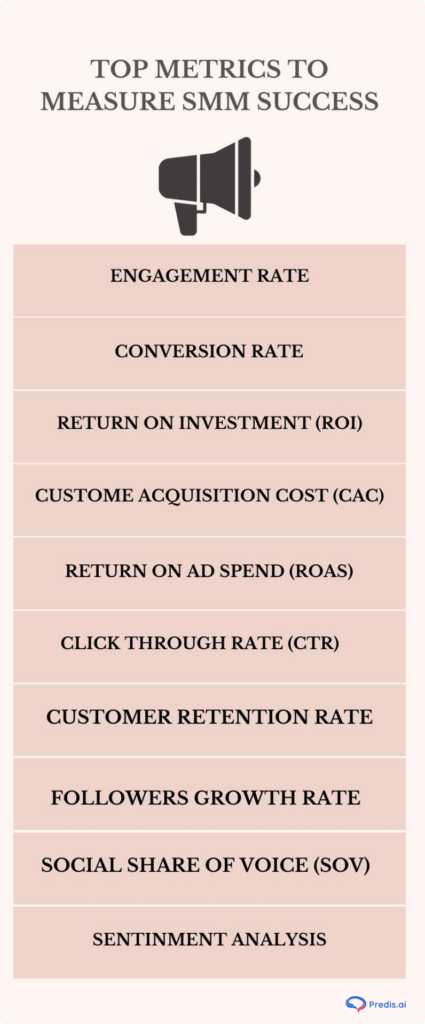
- Engagement Rate: Measures how well users have interacted with your content; you need to monitor the number of likes, comments, and shares.
- Conversion Rate: Tells about the number of people who buy or take the required action after seeing your content or ad.
- Customer Acquisition Cost (CAC): Helps understand how much you spend to get a new customer.
- Return on Investment (ROI): ROI tells about the revenue generated in comparison to the investment made or money spent, which is critical when planning a SaaS marketing budget.
- Return on Ad Spend (ROAS): This evaluates how effective paid campaigns are by comparing revenue generated against the advertising costs. If the ROAS is higher, it indicates the ad spend is well-optimized.
- Click-Through Rate (CTR): CTR is the percentage of people who click on your social media ads or posts.
- Follower Growth Rate: Indicates how many new followers your brand attracts over a period of time. If the growth is steady, it suggests the audience interested in the brand is expanding.
- Customer Retention Rate: Helps to measure how many customers remember your brand and return to make repeat purchases. With consistent monitoring and engagement, you can reduce subscription churn and keep more customers coming back. You can also send Customer Retention Emails to re-engage existing customers, encourage repeat purchases, and strengthen long-term relationships.
- Sentiment Analysis: This metric measures customer feedback, reviews, and social mentions. It tells what the public thinks about your business or brand. People may have positive, negative, or neutral feedback regarding your brand/business.
Future Trends in E-commerce Social Media Marketing
Below are some latest trends in e-commerce social media marketing that should be followed by businesses and brands to grow:
- AI and Automation: Chatbots and AI-driven recommendations are making shopping easier. You can check out the Predis AI social media tool for your e-commerce brand. Brands are also using Higgsfield, an AI Creative Suite with an integrated tool like Nano Banana to generate studio-quality product visuals in seconds, cutting down the time and cost of traditional photo shoots.
- Live Shopping: Brands host live events where influencers showcase products in real time.
- Augmented Reality (AR): Features like virtual try-ons are allowing customers to see how products look before buying by just being where they are.
- Micro and Nano Influencers: Smaller influencers with niche audiences drive more engagement than celebrities.
- User-Generated Content (UGC): Customers sharing their experiences helps to build trust and credibility.
- Sustainability Marketing: More consumers prefer brands that support eco-friendly and ethical practices.
Conclusion
E-commerce social media marketing is more than just posting pictures of products. Over a period of time, it has become a place for creating a connection with customers, building trust, and offering a smooth shopping experience. Businesses that use social media effectively can attract new customers, retain existing ones, and grow their online store. The key is to stay consistent, be creative, and keep up with changing trends.
If you haven’t started using social media to market your e-commerce business, now is the time! Sign up with Predis.ai and make use of AI for generating content from your e-commerce products. You can also make craft visual social media posts from your e-commerce product catalog in seconds!
FAQ:
Social media increases your brand visibility, provides social proof, has direct shopping features, and enhances your marketing capacities. These are some of the reasons why social media can provide a boost in sales.
Some of the content that works best for ecommerce brands includes user reviews, testimonials, product demos, behind-the-scenes content, and limited-time promotions.
Related Content,