



Explore this content with AI:
One off-brand tweet from a new hire. One unapproved campaign post. One complaint was left unmoderated for 12 hours. That’s all it takes.
Most teams don’t have social media guidelines because they think they don’t need them. They operate without them because writing a document that people will actually use feels harder than just trusting the team to figure it out. The problem is that “figure it out” scales badly — and the cost of getting it wrong shows up publicly.
This guide gives you the 7-component framework for building social media guidelines that work and a rollout playbook for actually getting your team to use what you build.
The Real Cost of Operating Without Guidelines
Brand reputation incidents trace back to social media team actions more often than most marketing leads want to admit. Unapproved posts, mismatched tone, a response to a crisis that contradicts what the CEO said simultaneously — these aren’t failures of intent; they’re failures of documented process.
A social media guidelines document isn’t a restriction on creativity. It’s the infrastructure that lets creativity move faster — because everyone knows the boundaries and nobody spends time second-guessing whether a caption is on-brand or a reply is appropriate.
Who needs one:
- Any team with more than one person posting on behalf of a brand. That includes a founder who’s hired their first social media coordinator, an agency managing client accounts, and a 50-person marketing department. The complexity of the document scales with team size; the need for one doesn’t.

The 7 Core Components of Every Social Media Guidelines
Most social media policy documents fail because they’re either too legal to be readable or too vague to be useful. The seven components below cover everything a working team actually needs — in plain language.
| Component | What It Covers | Who Uses It Daily |
|---|---|---|
| Brand Voice & Tone | How the brand sounds, per platform and context | Content creators, copywriters |
| Approval Workflow | How content moves from draft to published | Social media managers, leads |
| Employee Posting Rules | Personal vs. brand account boundaries | All staff |
| Crisis Protocol | Escalation ladder and response standards | Social media managers, leadership |
| Visual Identity | Creative specs, templates, logo usage | Designers, content creators |
| Engagement Rules | Comment, DM, and mention handling | Community managers |
| Legal & Compliance | Disclosure, data, copyright | All team members |
1. Brand Voice and Tone
Brand voice is fixed — it’s the consistent personality of your brand regardless of context. Tone is contextual — it shifts based on what you’re communicating and who you’re communicating with. Both belong in your guidelines, and combining them is the reason most voice sections end up useless.
A useful way to document voice: pick 3–4 adjectives that describe your brand’s personality, then for each one, give a “we are / we’re not” pair. “We are direct — not blunt. We are warm — not sycophantic.” That pairing immediately tells a writer where the boundary is, whether they’re drafting a caption, a campaign brief, or creating a useful AI presentation maker for a product launch.
For tone, build a matrix: map common scenarios (product launch, customer complaint, trending topic, company milestone, crisis) against how the tone shifts.
2. Content Approval and Publishing Workflow
A publishing workflow documents how every piece of content moves from idea to live post. Without it, “who approved this?” has no answer.
The right approval model depends on team size. A solo social media manager might only need a self-checklist before posting. A team of five needs a draft → review → approve → schedule → publish flow with clear owners at each stage. A team of fifteen across multiple markets needs a formal approval tool and a defined escalation path for time-sensitive content.
Every publishing checklist should include:
- Caption proofed for brand voice
- Visual checked against spec
- Link tested
- Hashtags reviewe
- Disclosure included if required
- Posting time confirmed against peak audience windows.
3. Employee Posting Rules
This component answers two questions every employee eventually asks: “Can I post about work on my personal account?” and “What can’t I share publicly?”
The boundary between personal and brand accounts needs to be explicit. A general principle that works: employees can share their genuine experience of working at the company, but should not share:
- Unreleased product information
- Financials
- Client details, or anything that implies a company position on a topic the brand hasn’t addressed officially.
Encourage employee advocacy — people who work at a company and genuinely enjoy it are the most credible marketing channel available — while making clear what requires approval. A post like “Proud of what we shipped this week” is fine. A post that names a client or previews an unannounced feature is not.
4. Crisis and Escalation Protocol
A crisis protocol is the component that gets skipped most often and is needed most urgently. It answers: who decides what goes out, how fast, and through which channels.
A three-level escalation ladder works for most teams.
- Level 1 (isolated negative comment): The Community manager handles with a standard empathetic response template.
- Level 2 (complaint gaining traction, media inquiry received): Social media lead and marketing manager involved, holding statement issued within 60 minutes.
- Level 3 (trending hashtag, media coverage, product safety issue): CEO or brand director approves all responses, legal reviewed, and cross-channel messaging is aligned within two hours.
Pre-write holding statements before you need them. A holding statement makes no factual claims and no promises — it acknowledges the situation, signals that you’re taking it seriously, and commits to a follow-up timeline.
Having three or four pre-written versions across common crisis types (product failure, customer harm, false information) means the team isn’t drafting under pressure when a crisis hits.
5. Visual Identity and Creative Standards
The visual standards section answers: what should every piece of content we post look like, and who is responsible for making sure it does?
At minimum, this covers:
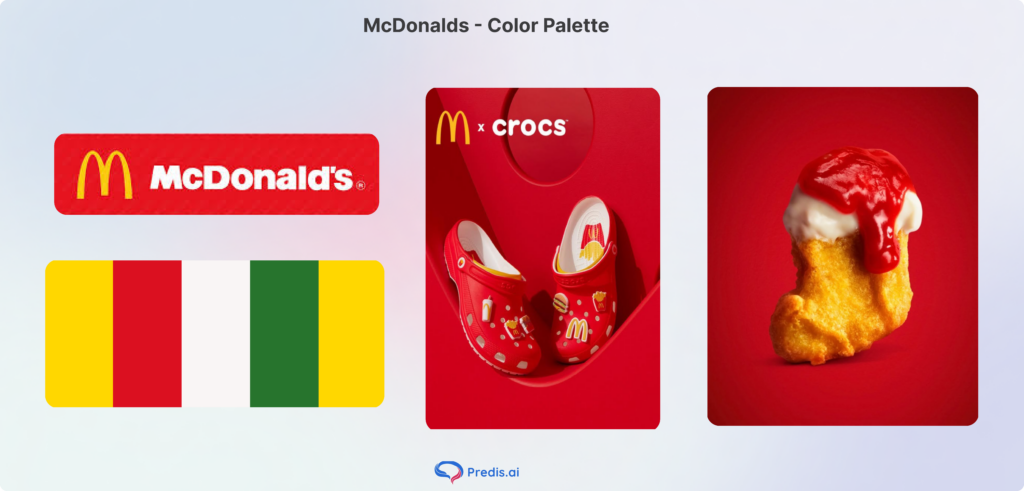
- Approved brand colors (with hex codes)
- Primary and secondary fonts
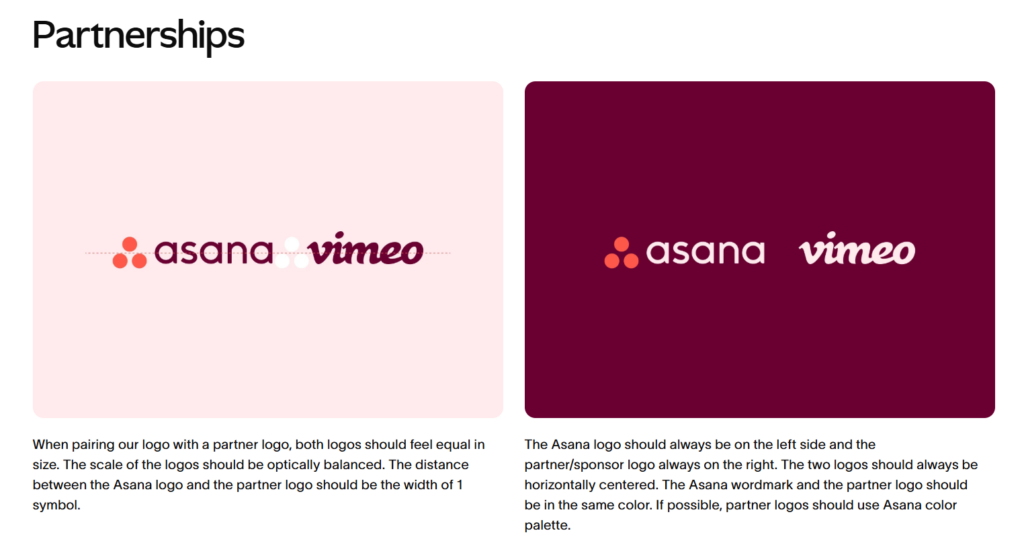
- Logo usage rules (minimum size, clear space, what it can’t be placed on top of)
- Approved image style (photography direction, illustration approach, whether stock images are acceptable and which libraries)
- Platform-specific format specs.
Tools like Predis AI help teams like this enforce visual consistency through branded templates — every team member posts from the same template library rather than building creatives from scratch.
Here is a sample of how some brands ensure visual consistency across platforms:
6. Engagement Rules
Engagement rules define how the brand responds to comments, DMs, mentions, and reviews — and crucially, who is responsible for each channel.
Three different protocols for three types of responses:
Negative but genuine complaint: Acknowledge publicly, thank them for raising it, route to DM or email for resolution. Never get defensive in comments.
Trolling or bad-faith criticism: Assess whether engagement increases visibility. If yes, do not engage — log it, monitor, and escalate if it gains traction.
Crisis-level complaint volume: Escalate immediately. The community management team should not be handling crisis volume without leadership involvement.
7. Legal, Compliance, and Disclosure
This is the section most teams either skip entirely or hand entirely to legal — producing something too complex to be useful in practice.
The non-negotiables in 2026: any sponsored content, gifted product, or affiliate relationship must be disclosed — in the caption, not buried in hashtags. In most markets, this means a clear label (“Ad,” “Gifted,” “Paid Partnership”) in the first line of the post, not at the end.
Data privacy rules affect what content you can repurpose: customer photos, UGC, and screenshots require explicit permission before a brand can redistribute them on its own channels, regardless of the original post’s public visibility.
Common Mistakes That Make Social Media Guidelines Useless
1. Writing for compliance instead of clarity
Guidelines full of legal language get filed and never consulted. Write them for the person who’s drafting a caption at 9 pm under deadline pressure.
2. Building a document nobody was trained on
A guidelines document that gets emailed to the team once is not a guidelines document — it’s a paperwork exercise. Training is the activation event. Training materials are often easier to follow when employees receive only the guidance relevant to their responsibilities. Teams can use a tool to split a PDF online to turn a lengthy master policy into shorter, role-specific sections for onboarding and refresher sessions.
3. Updating guidelines once and never again
Platforms change. Brand strategy evolves. A guidelines document from 2022 that still treats TikTok as optional is working against you. Build a quarterly review cadence into the document itself.
4. Treating all platforms the same
A single “social media voice” that doesn’t differentiate by platform ignores how differently audiences behave on LinkedIn vs. Instagram vs. X. Platform-specific tone guidance takes an extra page. It’s worth it.
5. Forgetting to define what “good” looks like
Principles without examples are interpretation prompts, not guidelines. Every core rule should have an example of content that follows it and content that doesn’t.
The Rollout Playbook: How to Get Your Team to Actually Use It
Most guidelines documents fail at the point between “document exists” and “team uses it.” Creating the document is the easy part. Embedding it into how people actually work is the challenge — and competitors almost universally skip this.
Add a version changelog to the document — a simple table at the front with the date, what changed, and who updated it. This signals that the document is maintained, not abandoned, and makes it easy to track what the current standards are after multiple revisions.
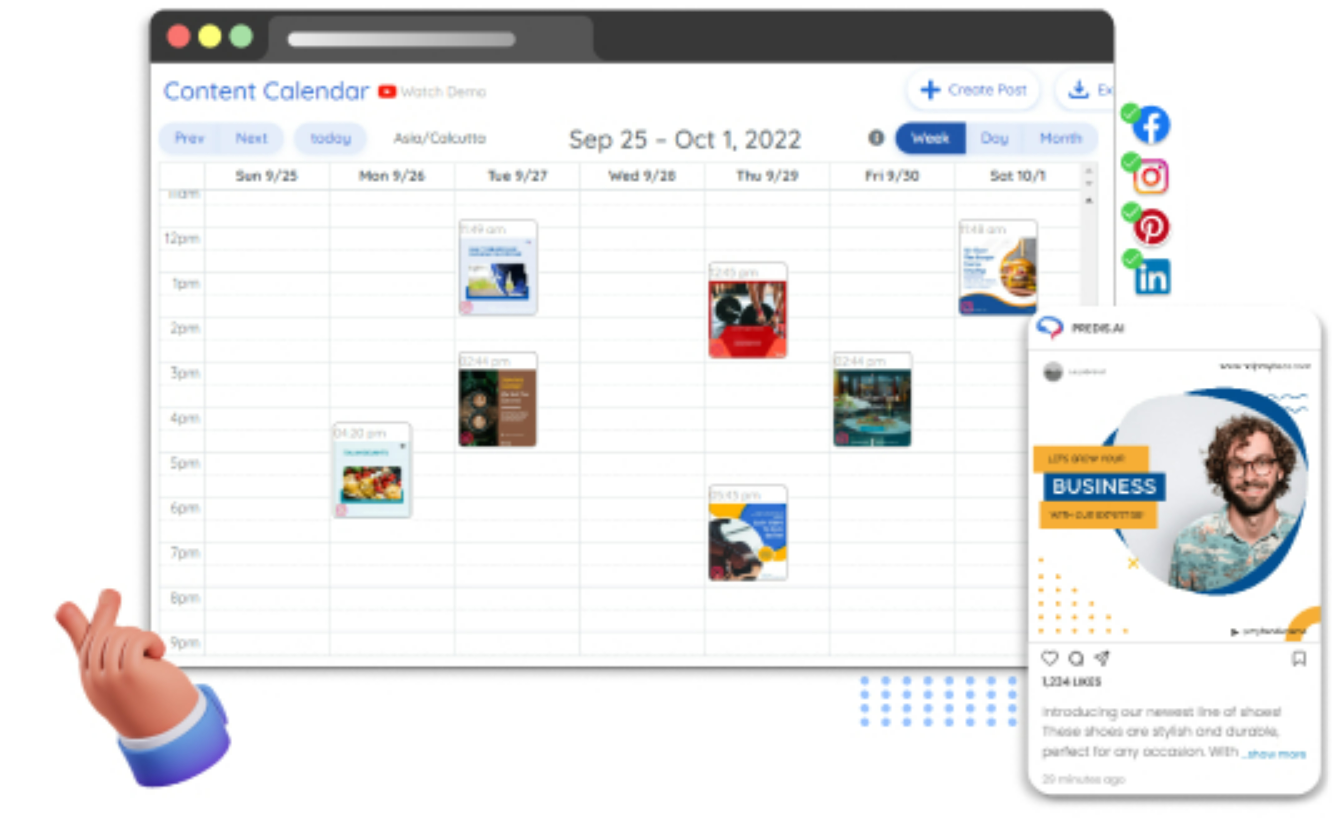
Predis AI’s content calendar helps operationalize guidelines into daily posting by giving teams a structured workflow where content is created, reviewed, and scheduled inside a single system — making the guidelines a practical constraint, not a reference document people have to remember to check.
The Bottom Line
A social media guidelines document that sits in a Google Drive folder and gets shared once is infrastructure nobody uses. One that’s built around the seven components, illustrated with real examples, and rolled out through training and onboarding is how a team of five consistently sounds like one coherent brand — across every platform, every day, regardless of who’s posting.
Build it. Train on it. Review it quarterly. The next off-brand post you prevent is worth the afternoon it takes to write.
FAQs
At minimum, annually. In practice, a quarterly review of platform-specific sections keeps guidelines current as features and algorithm behavior change. Significant brand pivots, new product categories, or major platform changes should trigger an unscheduled review.
A social media policy is typically an HR document — focused on employee conduct, legal compliance, and what staff can and cannot do on company and personal accounts.
Social media brand guidelines are a marketing document — focused on how the brand sounds, looks, and behaves on social channels. The most useful documents combine both into a single operational reference.
Build the guidelines into the workflow rather than relying on people to remember them. Approval checklists, branded template libraries, and scheduled tools that require content to pass through a review step enforce standards without requiring a manager to approve every caption manually.