

Explore this content with AI:
Most brands don’t lose trust during a crisis. They lose it in the response.
A product recall handled with transparency and speed rarely ends careers. A tone-deaf reply to a complaint, a promotional post that goes live mid-controversy, or three days of silence while a hashtag trends — these are the moves that turn a manageable situation into lasting brand damage.
Social media crises escalate in minutes. A single post can reach 100,000 impressions before your team has finished its first internal meeting. What you do in that window — and in the days after — determines whether your brand comes out intact or spends months rebuilding.
Here’s a 9-step framework for handling it.
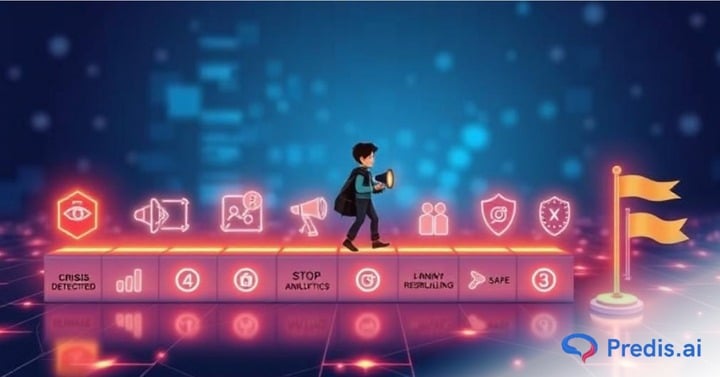
The 9 Steps at a Glance
Before the detail: here’s the full sequence.
| Step | Action | Time Sensitivity |
|---|---|---|
| 1 | Detect the crisis | Immediately after the response |
| 2 | Activate your crisis team | Within 15 minutes |
| 3 | Pause all scheduled content | Within 15 minutes |
| 4 | Assess severity | Within 30 minutes |
| 5 | Draft your first public response | Within 60 minutes |
| 6 | Move resolution to the right channel | Immediately after response |
| 7 | Align messaging across all touchpoints | Same day |
| 8 | Monitor fallout and sentiment | Ongoing |
| 9 | Lead the post-crisis recovery | Days to weeks after |
Two types of crises most brands face:
- Internal crises (a product failure, an employee controversy, a data breach, a tone-deaf campaign)
- External crises (false information spreading about your brand, an industry-wide issue your brand gets associated with, a customer complaint that goes viral).
The framework applies to both — the key differences are in severity assessment (Step 4) and response tone (Step 5).
1. Detect the Crisis
The brands that handle crises well almost always detect the problem before it hits critical mass. Detection is the leverage point. A complaint spike at 200 mentions per hour is containable. The same complaint at 20,000 mentions per hour is a media story.
Set up keyword and brand mention alerts across platforms — your brand name, your product names, key executives, and your industry’s common complaint language. Even Google Alerts for your brand name catch early signals most teams miss.
The difference between noise, a complaint spike, and a full crisis:
- A single negative comment is noise.
- A pattern of identical complaints across multiple accounts in a short window is a spike worth investigating.
- Coordinated sharing, media pickup, or a hashtag forming around a complaint is a crisis.
The early warning signals most brands miss:
- A sudden increase in DMs from customers
- Drop in Story reply sentiment
- Unusually high comment volume on a specific old post
- A competitor making indirect statements
2. Activate Your Crisis Response Team Immediately
When a crisis is confirmed, the first failure mode is unclear ownership. Everyone waits for someone else to make the call. Define this before it happens.
A functional crisis team has four nodes:
- Social media lead: monitors platforms, captures screenshots, drafts initial holding statement
- Legal or compliance representative: reviews external statements before publication, assesses liability exposure
- Senior decision-maker (CEO, CMO, or brand director): has final approval on every public-facing response
- Customer support lead: manages inbound volume and ensures the front-line team has a consistent answer
The one non-negotiable: a single person must have explicit final approval authority over every response that goes public. Committees make slow decisions and produce hedged language. Crises require speed and clarity.
3. Pause Scheduled Content Instantly
This step is missed more often than any other, and the consequences are reliably catastrophic.
Scheduled promotional content going live mid-crisis is one of the fastest ways to turn public sympathy into public fury. A “Treat yourself this weekend 🎉” post running during a product safety recall, a product launch email deploying while a PR controversy trends — these signals tell your audience that you either don’t know what’s happening or don’t care.
Predis AI’s scheduler lets you pause, review, and reschedule queued content across platforms from one dashboard — which matters when you’re managing multiple accounts and every minute of manual platform-switching costs response time.
Review each paused piece once the immediate crisis is contained, and filter them post-crisis.
4. Assess Severity Before You Respond Publicly
Not every crisis demands the same response. Over-responding to a minor complaint escalates it. Under-responding to a serious issue amplifies it. Severity assessment is the decision that shapes everything that follows.
| Crisis Type | Characters | Response |
| Contained complaint | A negative post or review with limited reach is a contained complaint. | 1. Personal 2. Direct 3. Empathetic reply within a few hours 4. No brand-wide statement is needed for such complaints |
| Escalating complaint | 1. A complaint gaining traction 2. Media inquiry received 3. Influencer amplification | 1. Public acknowledgment within 60 minutes 2. Activate the team and infotm leadership |
| Full crisis | 1. Trending hashtag 2. National media coverage 3. Significant follower loss 4. Threat to public safety | 1. CEO or senior spokesperson statement 2. A legal review 3. Cross-channel unified messaging 4. PR agency engaged. |
The severity matrix also determines the question of fault:
Is the brand clearly responsible, partially responsible, or falsely accused? Each scenario demands a different tone.
- False accusations require a clear, evidence-backed rebuttal.
- Clear fault requires an apology with specific corrective action, not vague empathy.
- Partial responsibility requires nuance — acknowledge the impact without inflating the brand’s role.
5. Draft Your First Public Response
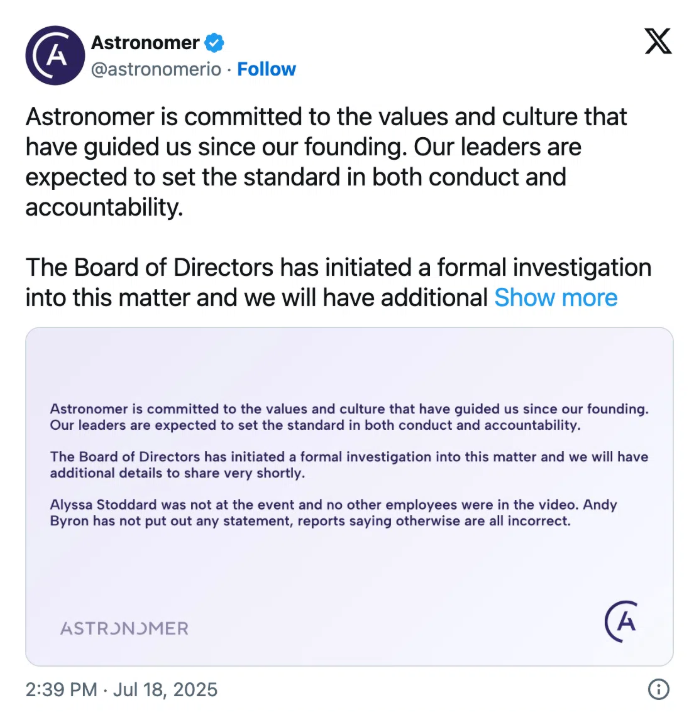
The first response is the highest-stakes piece of writing your brand will produce during a crisis. It sets the tone for everything that follows.
What a strong crisis response includes:
- Acknowledgment of the situation (without minimizing)
- Empathy for those affected (without admitting specific legal liability before facts are confirmed)
- Statement of what you’re doing or investigating right now
- Commitment to follow up with more information by a specific time
What it must never include:
- Deflection (“We’re sorry you felt that way”)
- Legalistic hedging that reads as uncaring
- Promises you can’t keep
- Humor, sarcasm, or brand voice that feels tone-deaf next to the complaint
6. Move the Conversation to the Right Channel
Public acknowledgment is for your audience. Resolution is for the individual.
After your first public response, route affected parties toward a private resolution channel — a dedicated email address, a DM, or a customer support ticket system.
The public-to-private handoff should be warm and specific: “We’ve seen your message and want to make this right. Please DM us directly, and a member of our team will respond within [timeframe].”
When managing comment sections during a crisis:
- Do not delete critical comments unless they contain personal information, harassment, or false factual claims that could cause harm.
- Respond publicly to the pattern, not to every individual negative comment. A single public reply that acknowledges the common theme (“We’re hearing this concern from multiple customers and we’re addressing it in our statement above”) is more effective than 50 individual defensive replies.
7. Maintain a Consistent Narrative
The second wave of brand damage in a crisis isn’t the original controversy — it’s the inconsistency. Different messages from different team members, a customer support rep saying something that contradicts the CEO’s statement, a regional account posting content that doesn’t acknowledge the crisis. Each inconsistency is a new story.
Build a single holding statement — 3–5 sentences that every team member and channel uses as the source of truth. It answers:
- What happened
- What we’re doing about it
- When we provide more information
This statement goes to social, email, customer support, press, and any executives who might be asked for comment.
8. Monitor the Fallout in Real Time
Social media crisis management without measurement is reactive guesswork. During an active crisis, track:
- Mention volume per hour: Are you approaching peak, at peak, or declining?
- Sentiment ratio: What percentage of mentions are negative vs. neutral vs. positive?
- Share of voice: Is the narrative primarily being driven by your own communications, by media, or by critics?
- New hashtag formation: Is a new frame of the crisis emerging that your holding statement doesn’t address?
Knowing when the crisis has peaked (mention volume declining, sentiment stabilizing) versus a temporary lull (a brief dip before a second wave from a new media story or influencer) determines whether to shift from crisis mode to recovery mode.
Monitoring competitor behavior during a crisis is also worth tracking — some competitors capitalize on industry-wide issues by positioning against the affected brand.
Predis AI’s competitor analysis tools can flag unusual shifts in competitor content and messaging during the window your brand is under scrutiny.
9. Lead the Post-Crisis Recovery
An apology post is not a recovery strategy. Recovery happens in the weeks after a crisis through consistent action, transparent follow-through, and a deliberate reintroduction of your brand’s normal voice.
A recovery content plan in sequence:
- Resolution confirmation post (within 48–72 hours of the crisis resolving): specific about what was done, not vague about intentions.
- Value content week 1–2: Return to content that demonstrates your brand’s core purpose — educational, helpful, community-focused. No promotional content yet.
- Social proof and customer stories (week 3–4): Let satisfied customers speak. UGC, testimonials, and community responses to your recovery actions carry more weight than brand-generated content at this stage.
- Gradual return to promotional content (week 4+): Only once engagement signals show that sentiment has normalized.
The mistake brands make at this stage: returning to normal too fast. A promotional campaign in week one after a serious crisis signals that the apology was performance, not principle.
Build a Brand That’s Harder to Break
The most underused section of any crisis management strategy is the part that happens before the crisis. Reactive response is table stakes. Proactive prevention efforts are what separate brands that weather crises from brands that get defined by them.
1. Quarterly crisis vulnerability audit
Review your active campaigns, product claims, customer complaint patterns, and social team’s escalation knowledge. Ask: what could blow up, and do we have a plan if it does?
2. Pre-write five crisis response templates
Write one for product failure, one for a customer harm complaint, one for a PR controversy, one for false information spreading, and one for a data or privacy issue – use these templates whenever necessary. Generic templates won’t go out verbatim, but they halve your drafting time when a real crisis hits.
3. Train your social team on escalation protocol
Every community manager should know exactly when to escalate (severity threshold), who to contact first (the decision tree), and what not to say publicly without sign-off. This training needs to happen before the crisis, not during it.
4. Monitor competitor sentiment
Industry-wide issues often surface in competitor conversations before they reach your brand. A wave of customer complaints about a competitor’s product formulation is worth paying attention to if your product shares similar ingredients or a supply chain.
The Bottom Line
A social media crisis won’t be the last hard moment your brand faces. What matters is whether you face it with a plan or improvise under pressure.
Build the framework before you need it. Pre-write the templates. Define who approves what. Set up the listening alerts. The brands that come out of crises stronger are rarely the ones that responded perfectly — they’re the ones that responded fast, consistently, and with enough genuine accountability to give their audience something to believe.
FAQs
Social media crisis management is the process of detecting, responding to, and recovering from events that threaten a brand’s public reputation on social platforms. It matters because crises escalate in minutes on social media — without a plan, brands make reactive decisions under pressure that often compound the damage.
The first acknowledgment should come within 60 minutes of detecting a Level 2 or Level 3 crisis. That acknowledgment doesn’t need to have all the answers — it needs to signal that you’re aware, you care, and you’re working on it. Silence for hours while a crisis trends is its own message.
When hourly mention volume has returned to the pre-crisis baseline, the sentiment ratio has stabilized, and no new media or influencer amplification is occurring. A 48-hour period of declining mentions and a neutral-to-positive sentiment shift is the minimum signal before transitioning from crisis mode to recovery mode.